– a piece of writing from The Diary of a Tree Standing On It’s Head
Ad Astera
awakened into the dark day desperate
the shame of days disused
heaved their defiling way into the new air
(the now air)
 tilting hope into a tainted air
peace pierced pressed throbs
instinctively the leper calls unclean
a reflex of grief from deep wounds
unclean
son of David, have mercy on me

then a sign in the heavens
for the penitent under the stars, starwatching
and to see so instant a reply
to the cry, for mercy, so fleet
delicate and sensitive to the time
a meteor in a tiny blue white line
quits the bright sky to kiss me in the night
the stars now singing
across my soul a song
do they, great beings, all light and fire and mass,
who I see as a remote and pulsing brightness,
do they perceive me as a speck of distant darkness?
a black dot dancing upon great luminous eyelids
closed against the internal glowing abyss of their being

I sense the song singing
dreaming into my soul's slumber
heard by spirit into spirit waking
Everything's own sonorious drawl
near and warm as seems my blood
distant and cool as seem the stars:
oh, my beloved, oh, my heart
do not be afraid, I am for you now
you, who have been thinking you are too slow
too slow of your hands you thought
and your feet and your heart you thought
too slow in your great labors you thought
but I say, no, not slow enough, no not yet
the trees are slow and the rocks still more
the earth prodigious in slowness
but not yet you, you must be slower still

oh, image, oh, self-discerning self
you, who have been thinking
that you have become too small
too obscure and too insignificant
you who have been thinking
that you can measure meaning
by size and shape and outward things
but I say no, no, not yet have you become truly small
not as the small beings whose life doesn't weigh on the moral scales
you must become as obscure as the undiscovered
as insignificant as the poor
no not yet, my dear, you must be smaller still

dearest dear, heart of my own heart
you who have been thinking that you are too foolish
foolish beyond what is acceptable, even for an artist
even for a fool, and what miracles are there
to make it ok?
but I say no, not yet
you are not yet foolish enough to contain me
be foolish until all is lost and squandered
and as a fool go on, and then we'll talk
I am not far

oh, beloved god-knowing self
you who have been thinking
that you have failed too often
and too greatly too grievously
you who have been thinking much
that I will disown you
that I would spit you out
because the great practice you have made
of failing and of shame
but I say no, not yet
you have not failed enough nor greatly
not yet enough to receive me
when I come like water and
when I come like fire
fail still, fail and fear not
I will not abandon you
fail and do not abandon me
(silence for one minute)
(silence for one hour)
(silence for one day)
(silence for one month)
(silence for one year)
(silence for a week of years)
(silence for a generation)
(silence for an age)
(silence for an epoch)
(silence)
the hands of the stars touch me
their billion flashing fingers reach out tingling
very nearly, but not quite, painful
pinpricks like little electric shocks
in a limb waking up from awkward sleep
and receiving blood again
receiving life again and new

something big entering into something small
I wake
something high lifting something low
I rise
not slow enough,
I sigh slowly into the long morning of an eternal presence
not small enough,
I sigh quietly into the deep obscurity of Everything's smallness
not foolish enough,
I sigh foolishly into the unknowing of Everything's beautiful foolhardiness
not enough of a failure,
I sigh falling into the vulnerable nakedness of Everything's own fall into me
I hear the star's laughter now
like children they laugh without derision
for joy they laugh
and for love, they twinkle
like stars in the sky




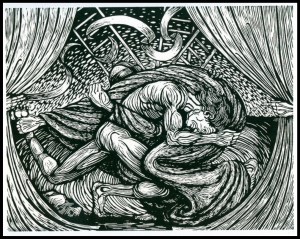
 The School of the Transfer of Energy