The Outsider’s Blessing

Amor Ordinem Nescit

I bless you as an outsider

not as an outsider

not with drama

not as an identity

I bless you to be outside of those things

 to be outside as one unattached

as one dispossessed of system

upside down

as one upside down

limbs and branches arms and hands as roots

outside in rain as rain

outside in the sun as sunshine

sky as sky

unattached as one bound to dream

dreaming the great dreams

I bless you to be an outsider

an image of existence being wrung out

or as one that has died

I bless you to be outside as one remembered but not known

dislocated from the collective body of mankind, but for it

for it, to give it pleasure and to give it pain

so that it might remember with attention and awareness and openness

I bless you as outside as belonging to God alone

outside as one belonging only to Everything

outside as smoke leaving by the smoke hole

I bless you as smoke rising from hills and valleys 

smoke rising from the high places

I bless you to be an outsider

as one who is a fool and a friend; kin to the wind

the great winds that quiet the voices of the world

I bless you to be an outsider

outside as one who is open

open to the forces that sing God

the strong forces and the week forces that sing God

open to accidents that sing God

open to the damned who sing God

I bless you to be outside as one who is empty

as one deconstructed and deconstructing

a mockery 

unknowing and unknown

alone and outside with God in unknowing

alone and outside with Everything and Nothing cloud-gazing

I bless you to be an outsider 

as one who is unclean

who dances on the graves with the dead

outside as one who speaks to the dead who are living

the martyrs who are living

the stoned faced gods who are living

the stones who are living

the waters who are living

I bless you to be outside

as one too loud for inside

too uncouth for inside

a bronze bell ringing out across the land and for the land

resounding across fields and farms

a voice crying in the wilderness

as one who beholds the great openness of the city of God

outside as one who courts misunderstanding

outside as one who stands chaos

I bless you as an outsider

weeping the strong tears of Mary with Mary

being healed with Mary

waiting in the garden with Mary and with Eve

waiting under the Earth with Mary and Eve

outsider, hairy and horny

subterranean glories

crawling like a beast through the bush

the lord is my wall

the lord is my roof

the lord is my covering

Yes, outsider,

I bless you to be so far outside as to be inside

Ad Astera

– a piece of writing from The Diary of a Tree Standing On It’s Head

Ad Astera


the stars now singing
across my soul a song
do they, great beings, all light and fire and mass,
who I see as a remote and pulsing brightness,
do they perceive me as a speck of distant darkness?
a black dot dancing upon great luminous eyelids
closed against the internal glowing abyss of their being

I sense the song singing
dreaming into my soul's slumber
heard by spirit into spirit waking
Everything's own sonorious drawl
near and warm as seems my blood
distant and cool as seem the stars:

oh, my beloved, oh, my heart
do not be afraid, I am for you now
you, who have been thinking you are too slow
too slow of your hands you thought
and your feet and your heart you thought
too slow in your great labors you thought
but I say, no, not slow enough, no not yet
the trees are slow and the rocks still more
the earth prodigious in slowness
but not yet you, you must be slower still

oh, image, oh, self-discerning self
you, who have been thinking
that you have become too small
too obscure and too insignificant
you who have been thinking
that you can measure meaning
by size and shape and outward things
but I say no, no, not yet have you become truly small
not as the small beings whose life doesn't weigh on the moral scales
you must become as obscure as the undiscovered
as insignificant as the poor
no not yet, my dear, you must be smaller still

dearest dear, heart of my own heart
you who have been thinking that you are too foolish
foolish beyond what is acceptable, even for an artist
even for a fool, and what miracles are there
to make it ok?
but I say no, not yet
you are not yet foolish enough to contain me
be foolish until all is lost and squandered
and as a fool go on, and then we'll talk
I am not far

oh, beloved god-knowing self
you who have been thinking
that you have failed too often
and too greatly too grievously
you who have been thinking much
that I will disown you
that I would spit you out
because the great practice you have made
of failing and of shame
but I say no, not yet
you have not failed enough nor greatly
not yet enough to receive me
when I come like water and
when I come like fire
fail still, fail and fear not
I will not abandon you
fail and do not abandon me

I hear the star's laughter now
like children they laugh without derision
for joy they laugh
and for love, they twinkle
like stars in the sky


This Dirt Is Older Than I, or Elizabeth Duffy’s Witness

Nigh on two years ago I received an email from Elizabeth Duffy, a writer from Indiana, wanting to ask me a few questions about my art for her blog at Patheos.  She sent questions and I sent back my answers.  It went on for three or four months like that, and trust was built.  In the end she shared our interview in four parts on her blog.  Meanwhile Elizabeth felt the fruit of our dialogue merited a wider audience, and she went in quest.  Image Journal took the bet, and Elizabeth went to work.

Image1

I owe a debt to Elizabeth, but not necessarily for publishing an article about me in a magazine, although, that too is cool, and I expect that the measure of artistic validation it lends me is not insignificant.  It is for her time and her witness that I am grateful, it is for her trustworthiness.  I suspect most artists wonder, like me, if all the labor and turmoil that goes into making art, which purports to have emerged from a deep place in the created heart, is not the dead end of futility that it so often seems to be.  I know at least that it matters to Elizabeth, so much so that she built a soap box and voiced it to as large an audience as she could muster.  More sacred, she proved her trust with those treasures in my heart which I was able to share with her.  That carries weight.  Thank you Elizabeth.  You came along side me and we plowed together.  We even made the cover.

Image3

You can read the article online if you wish, or even buy the whole journal it here.

With genuine authenticity (I know it’s redundant) and authentic hunger, Elizabeth writes for a variety of different outlets, including Image Journal’s blog, Good Letters.   The best place to start and catch most of it, is at her personal blog.

Symbolism of Jacob (Violence and Intimacy)

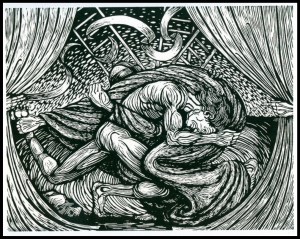
This is a blog about images and stories, technology and craft.  For the sake of Yaakov as well as others I will risk a distance from the normal sparseness of words and do my best to write a little about the symbolism in Jacob Wrestling With God.

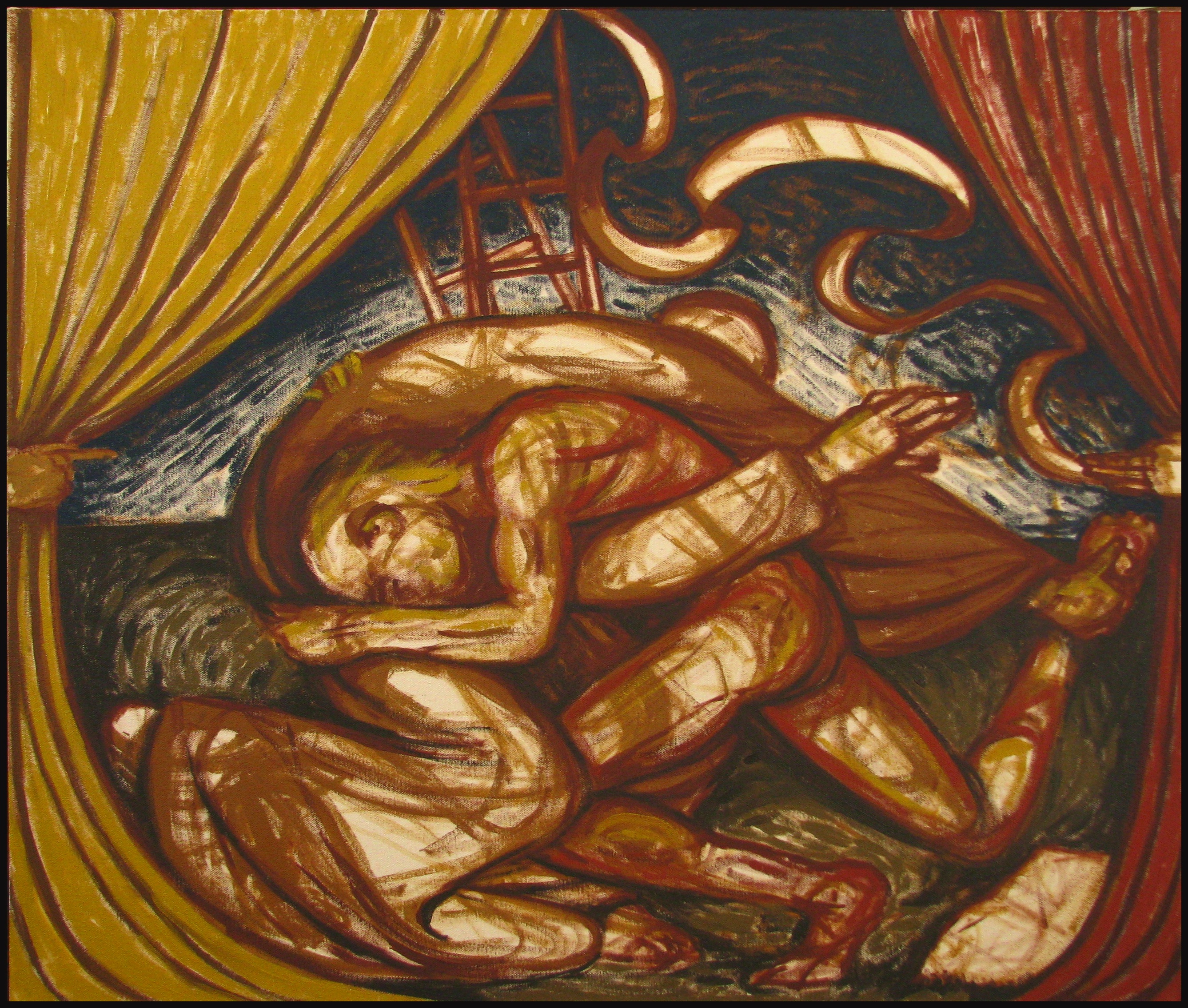
When I make a painting, there is always a tension between intent and intuition.  In the painting of Jacob, there is meaning that I intended to place there and there is meaning that emerges as I work, often pointed out by an outside observer.  Both are placed there in faith, and both are discovered again in faith.  I receive requests to reproduce the image of Jacob Wrestling with God regularly.  Whatever other arrangements are made, I always beg the insight of the requestor, because I want to know what has been placed in my work by God, which is hidden to me, but perhaps not to them.  One gracious responder was Robbie Pruitt, who actually wrote a review of the work, which can be read on his blog.

Violence and intimacy.  The violence and intimacy of this wrestling match.  What did it sound like, how did it smell, the sweat of God and Jacob mingled in the dust?  Those who are willing to pursue God and his blessing with such force receive honor from me.  I don’t know what Jacob was thinking.  But I know I wish I had the guts to engage my God with such an intertwined closeness.  I despise the distance of religion.  I use that distance to keep myself “safe” in this life, but at what cost.  Even if I am annihilated, at least I may have a glimpse of His glory before I am withered back to dust.  I want to know who He made me to be, why I am here, what my name is, even if I have to wrestle with one who could wither me with a glance.  This story is a profound mystery to me, but I love it because God made himself vulnerable for the sake of this man whom He loved.  I don’t get that, but it makes me love Him even more.  I would rather be undone by the _ord than sit here safe and placid before my computer.

Visual Symbolism:

The banner has been present in my work for decades.  I won’t go into all it’s permutations, but in this case I think of it as God’s declaration and promise over Jacob.  It contains mysteries and words spoken in the Spirit from the beginning of creation until the end of days.  They are blank, because, who am I to presume.

The curtains speak both of intimacy and story, as they are drawn back to reveal a glimpse of the man Jacob’s story and intimacy with his God.  The curtains as well always recall to me the curtain that separated the most holy place of the temple, where the presence of God would come.  Then when it was torn apart when Jesus was crucified;  another time of violence and intimacy, when God made Himself vulnerable for those He loved.

The hands reveal the glory.

There is something important to me concerning of the knee of Jacob near the stone in the corner, but I do not understand what.

The nudity of Jacob, perhaps goes without saying.  But nothing is hidden from God.

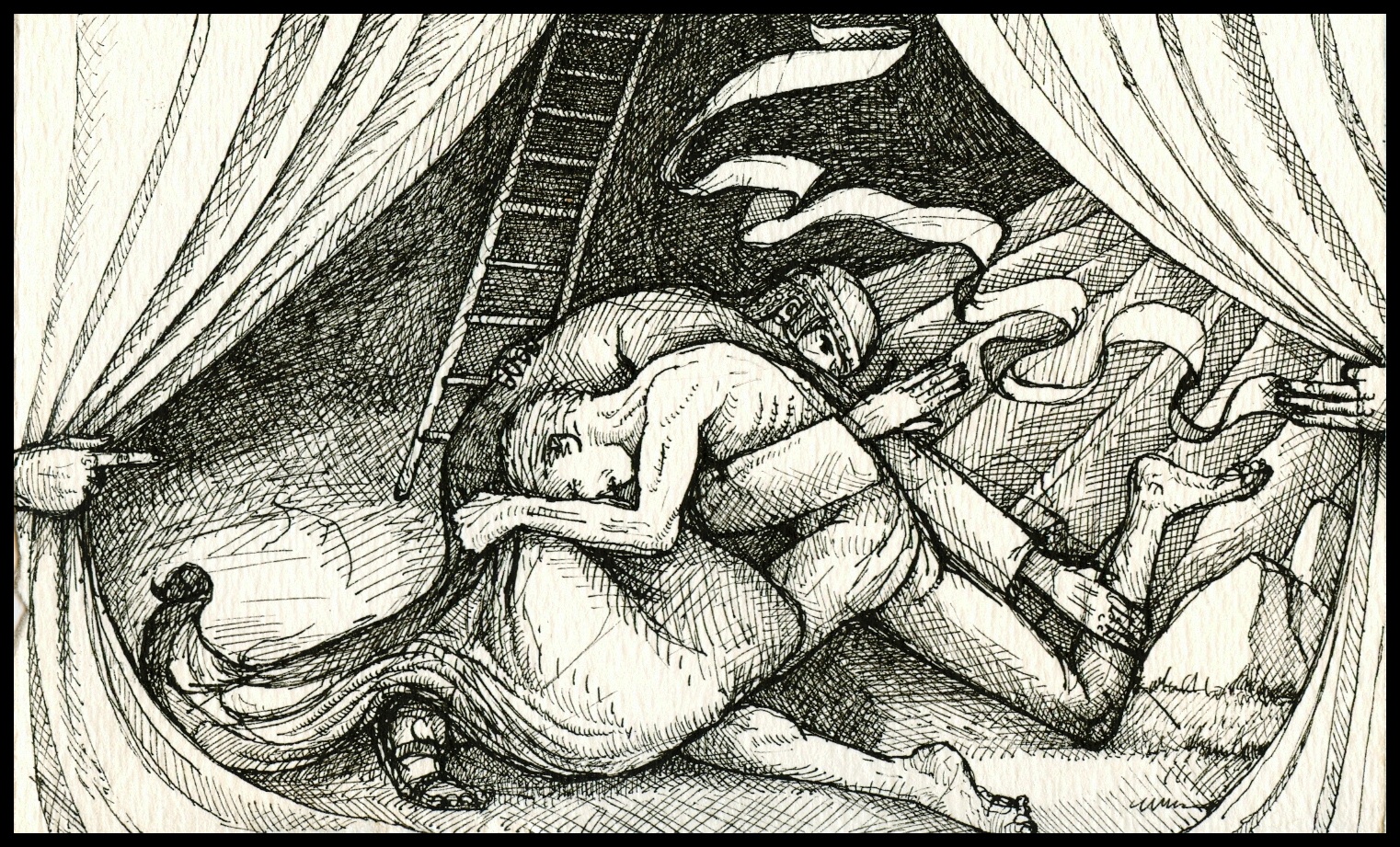
There used to be a couple of ladders toppling about in the struggle, recalling a previous encounter Jacob had, but I decided to paint over them.

There is more in this story, because it is God’s.  But this is what I have painted.  Please, be welcome to offer your insights, and I thank those of you who have risked writing comments and emails.

Jack

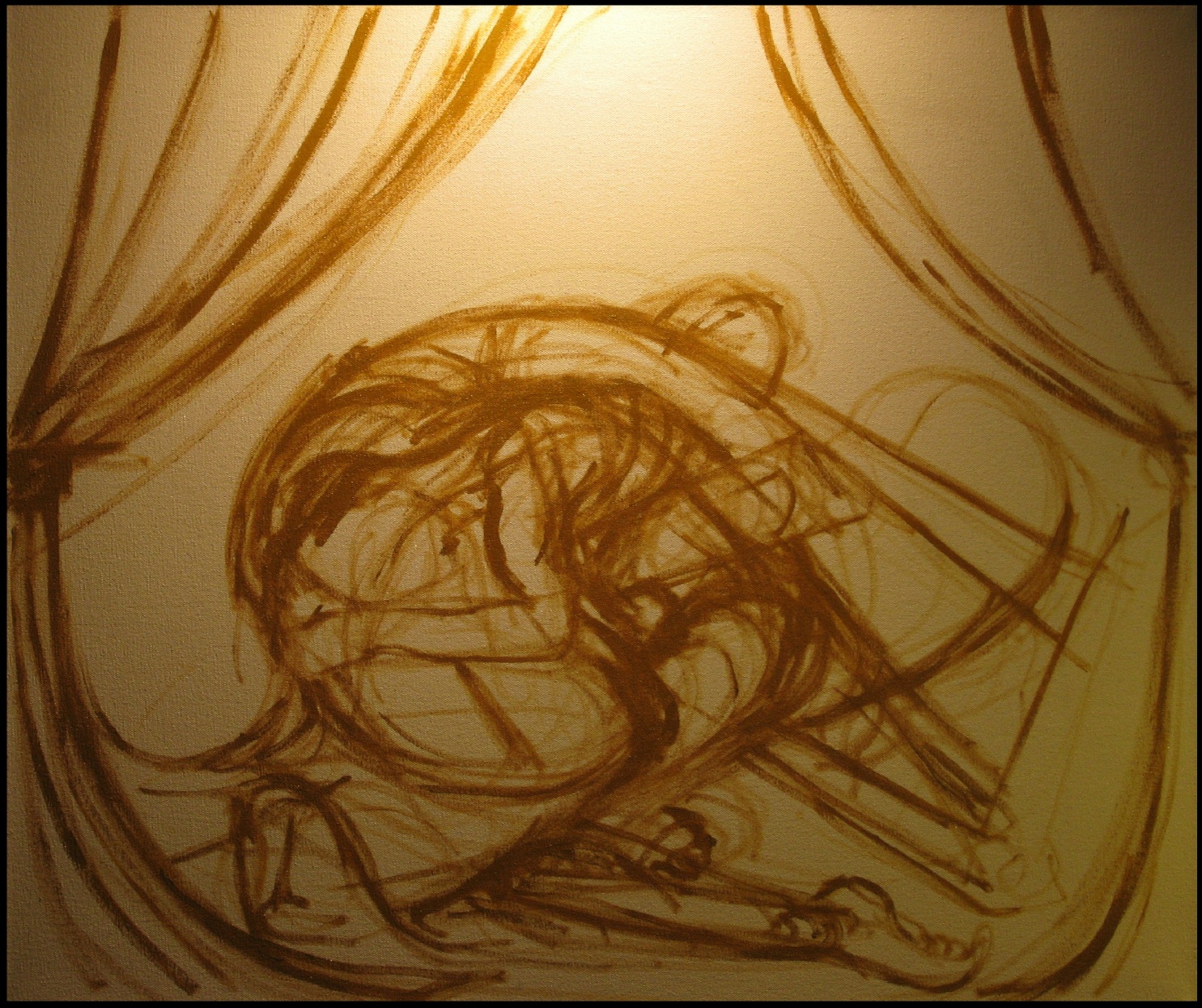
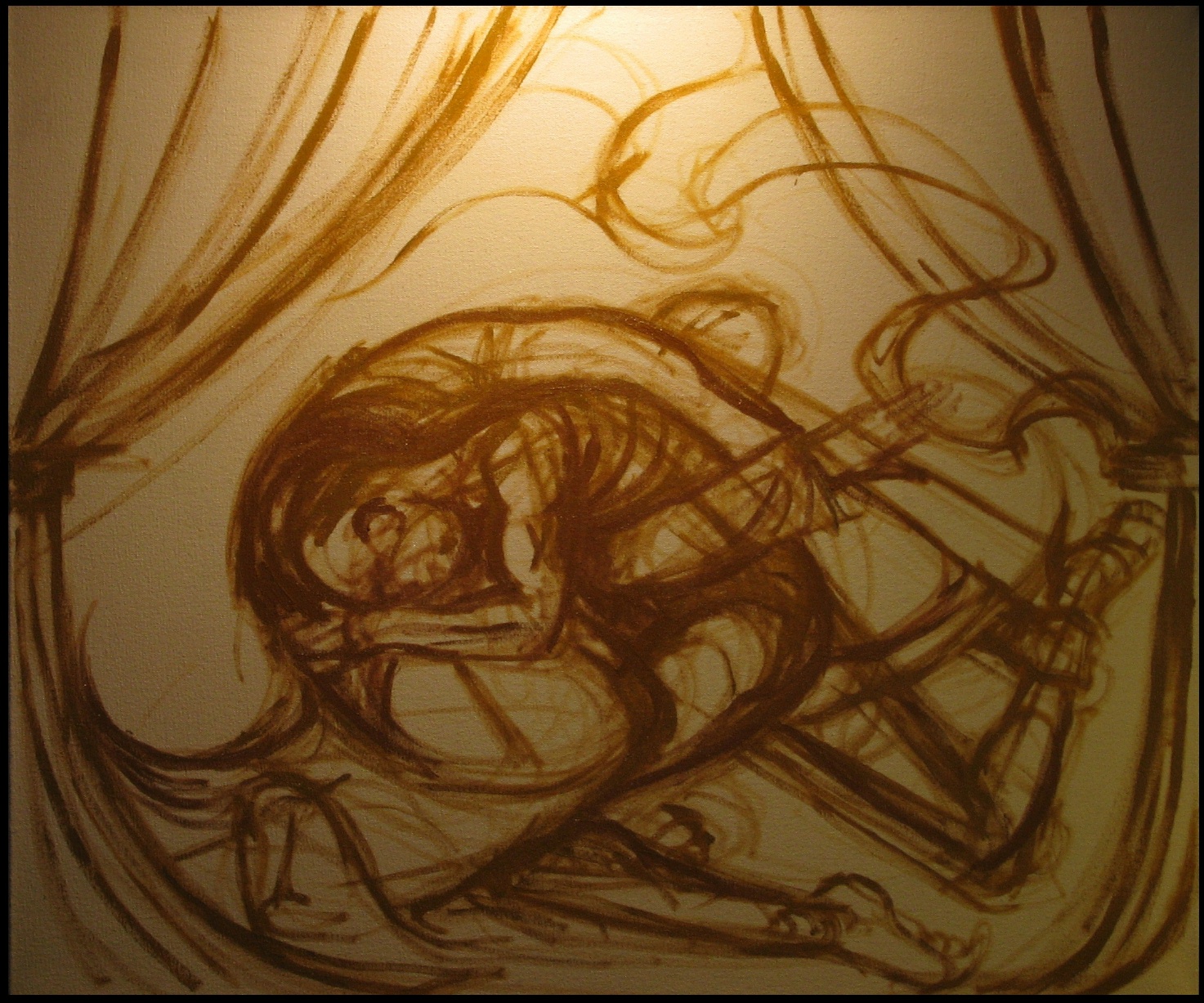
(Below is a progression of the painting)


Below is the drawing that came first, and a linocut based on the painting.