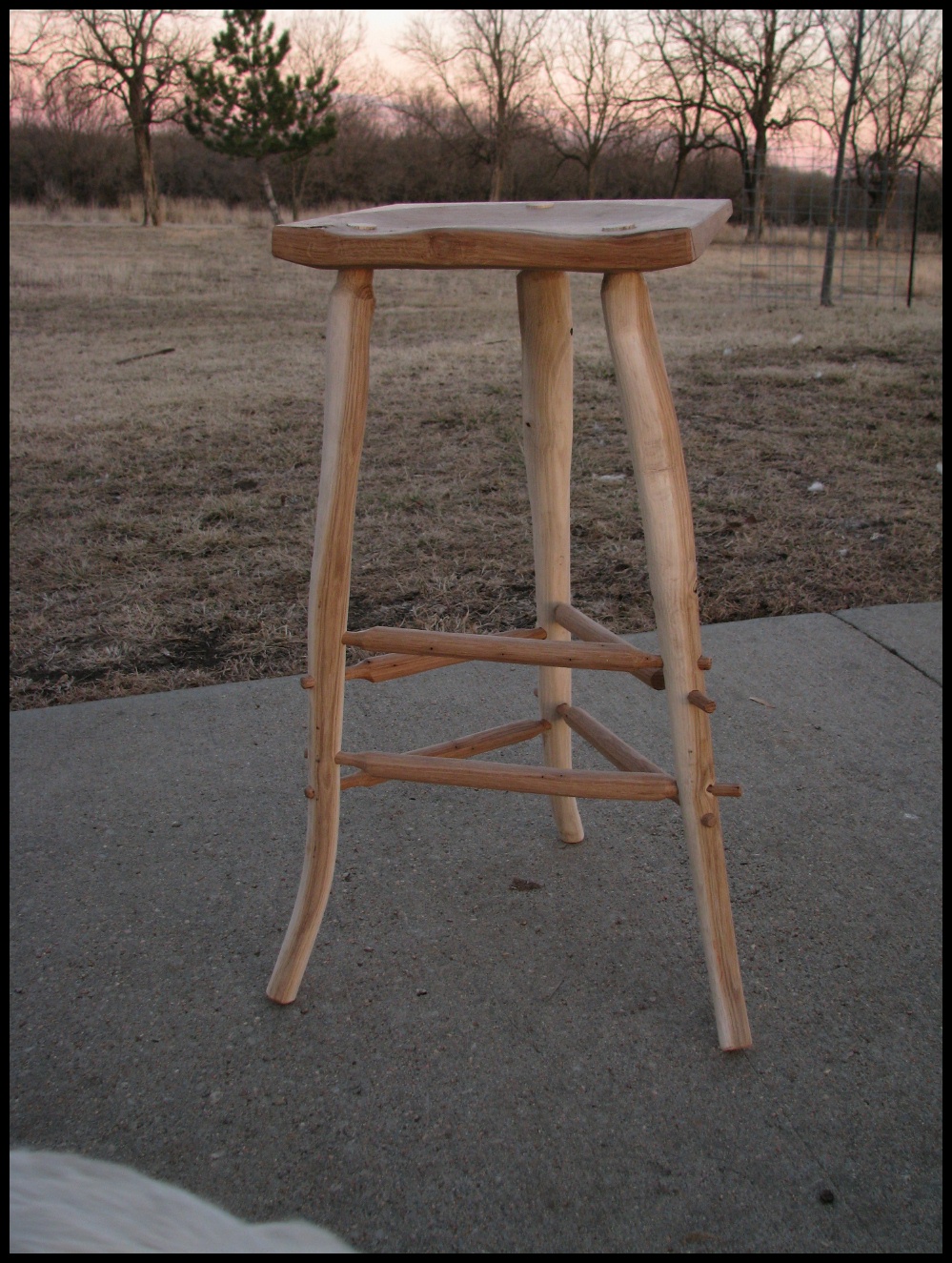
Here are some pictures of the finished three legged stools in post oak. The finish is danish oil and wax.


Here are some pictures of the finished three legged stools in post oak. The finish is danish oil and wax.
Below are some pictures of the second three legged stool of post oak. They are a pair but with differences. The rungs on this newest stool are in a “T” rather than forming a triangle connecting leg to leg as in the first. Also, the legs in this stool are a bit more cantankerous.

The legs dry fit with rungs.
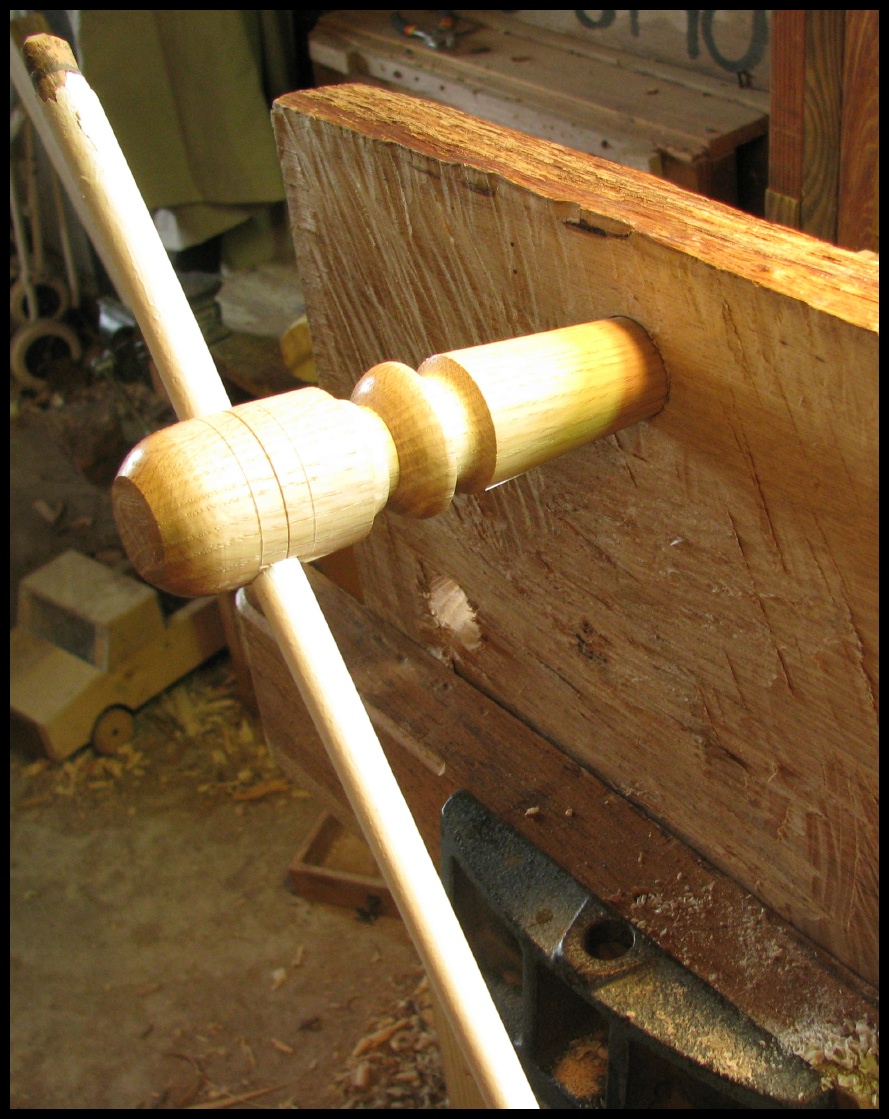
Reaming for the legs.

The seat. I counted over 100 annual rings in this seat.
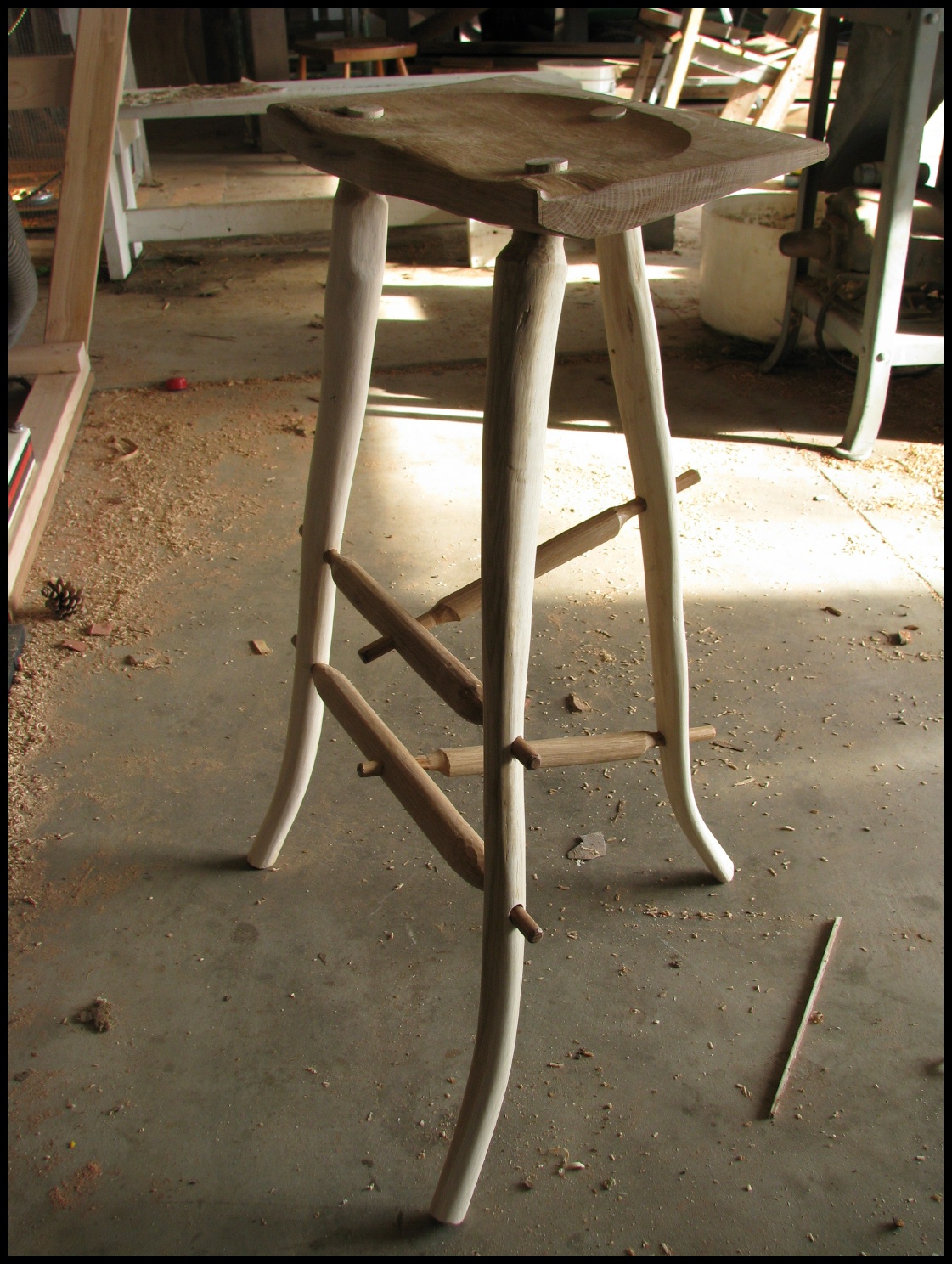
Fully assembled, and awaiting finishing touches.

Both stools together. Here you can see the difference in the rung layout, the “T” on one and the triangle on the other.
Black Walnut spoon carved “E.S.”

Here are some photos as I am working on the top for a cedar table.

being glued up
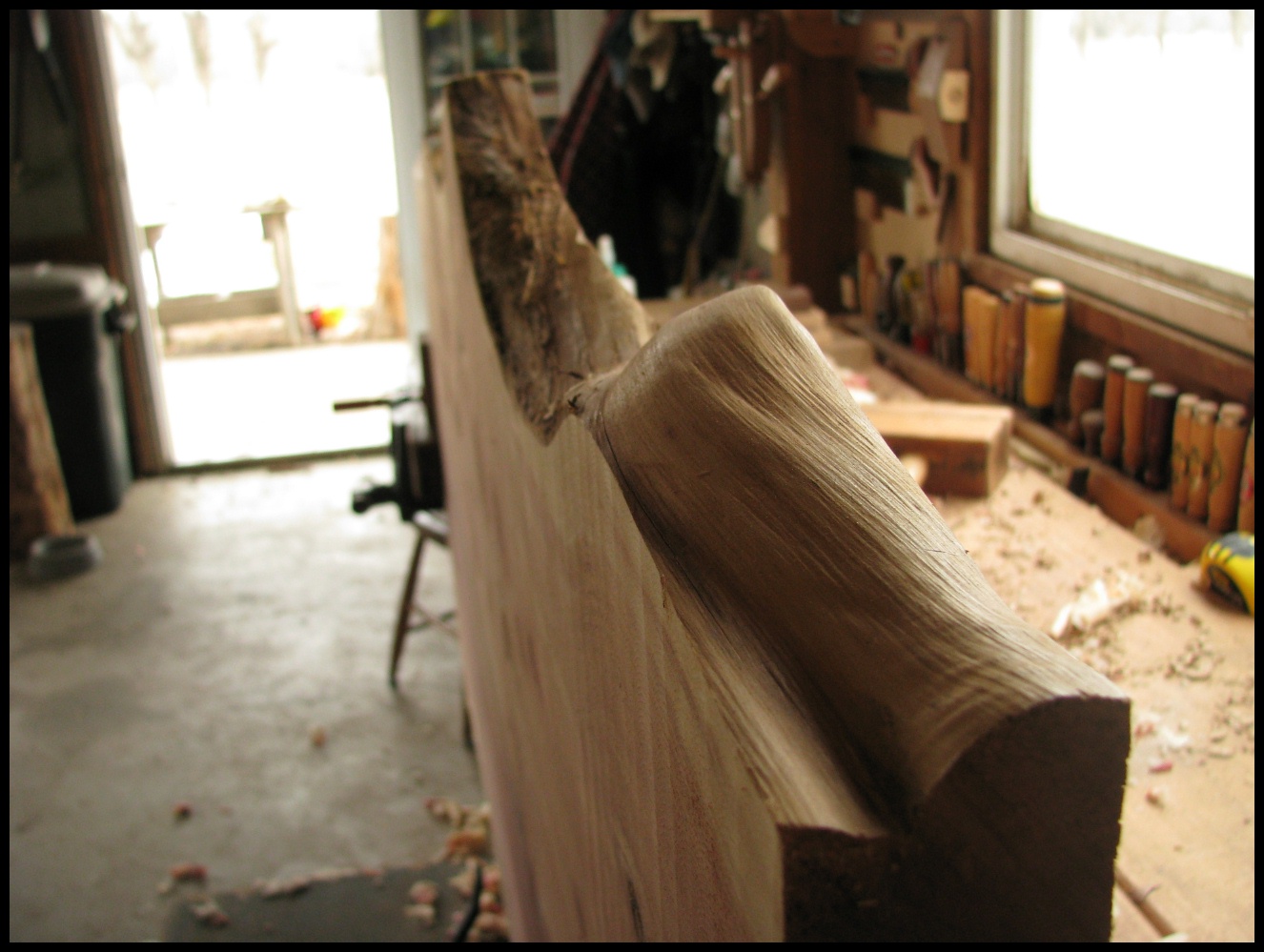
the edge with the bark peeled

trimming the ends
arty saw picture

beautiful red sawdust

planning the end…
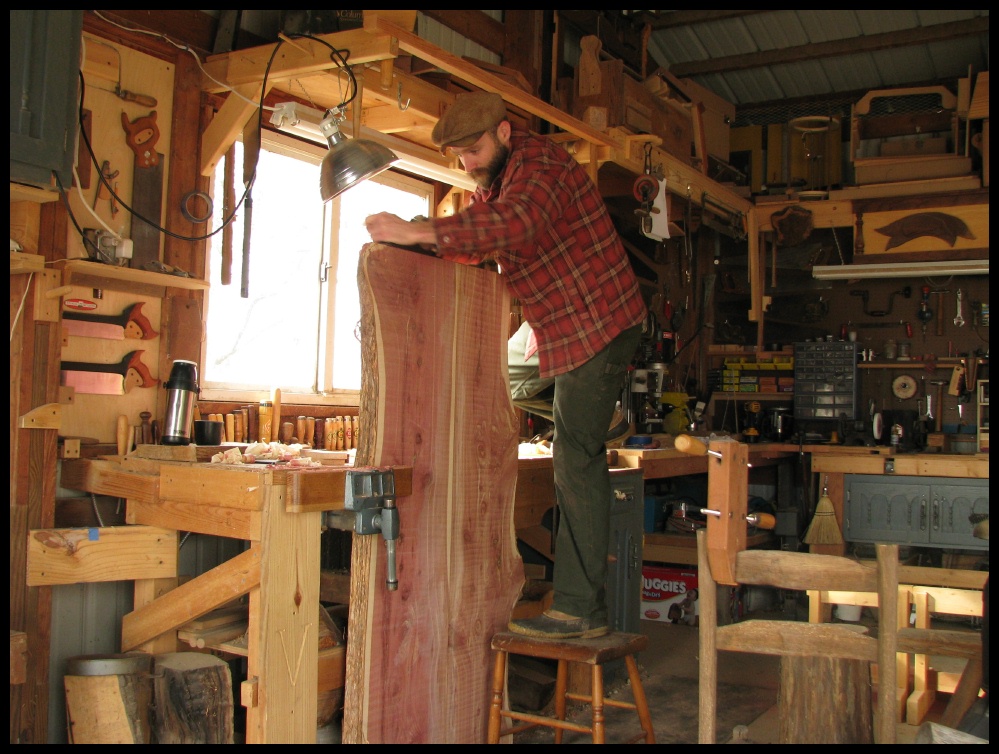
…up in the air
Some soft maple and walnut spoons carved by the stove this winter.

The stool declared loudly by snapping every black walnut rung I made- that it must be white oak throughout. OK, says I, you win.

Still much work to be done, however, as of yet the most complete sense of a stool that has pretty much dictated itself, and made me sweat in the process, and I still have to build his hopefully less mercurial brother.
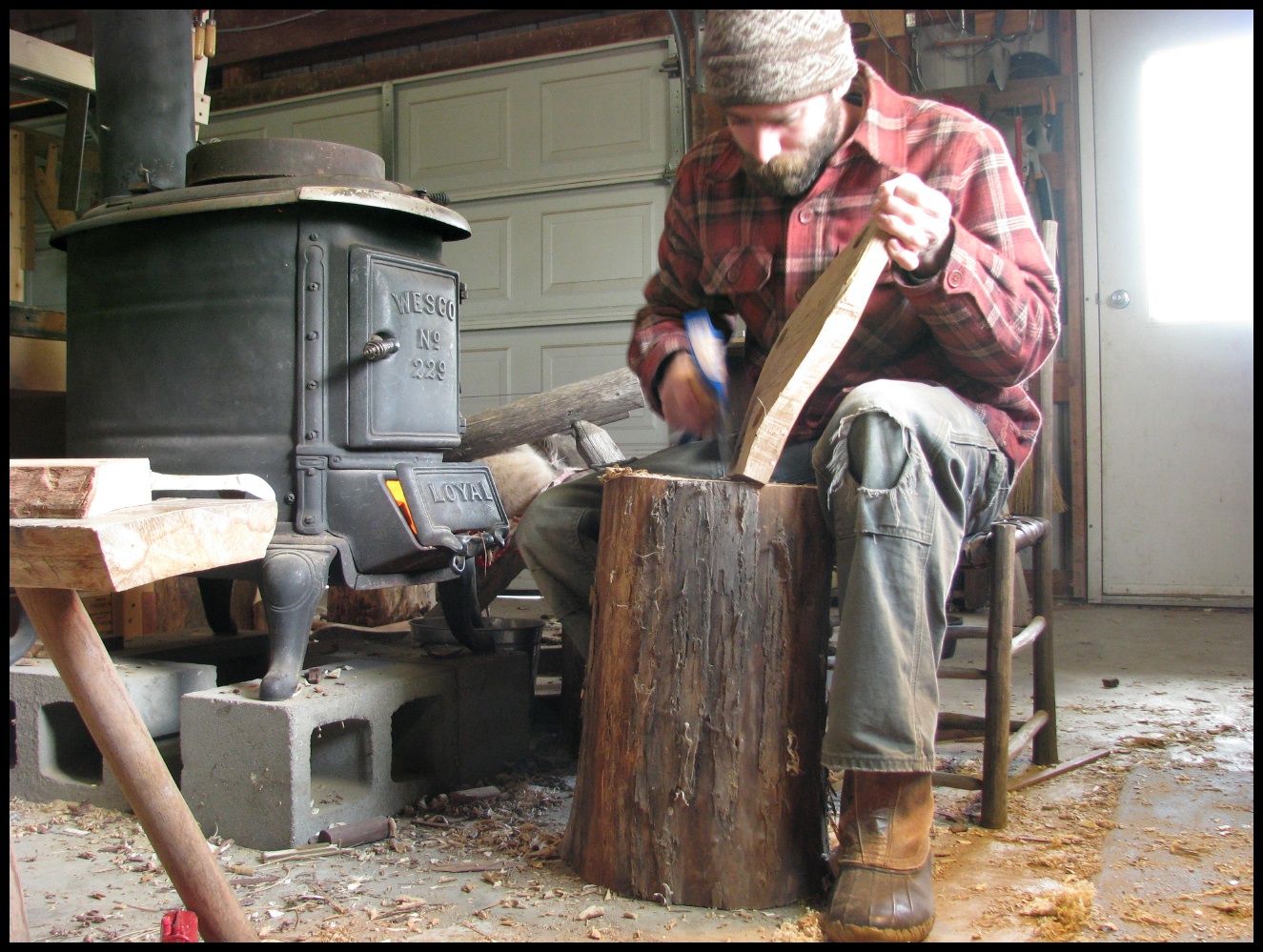
Below: shaping the underside of the seat.


Photos in the workshop of one of a pair of three legged post oak stools. Still in a very raw – and experimental state.

The busy bench top.

The bend and splay and stance of the legs.
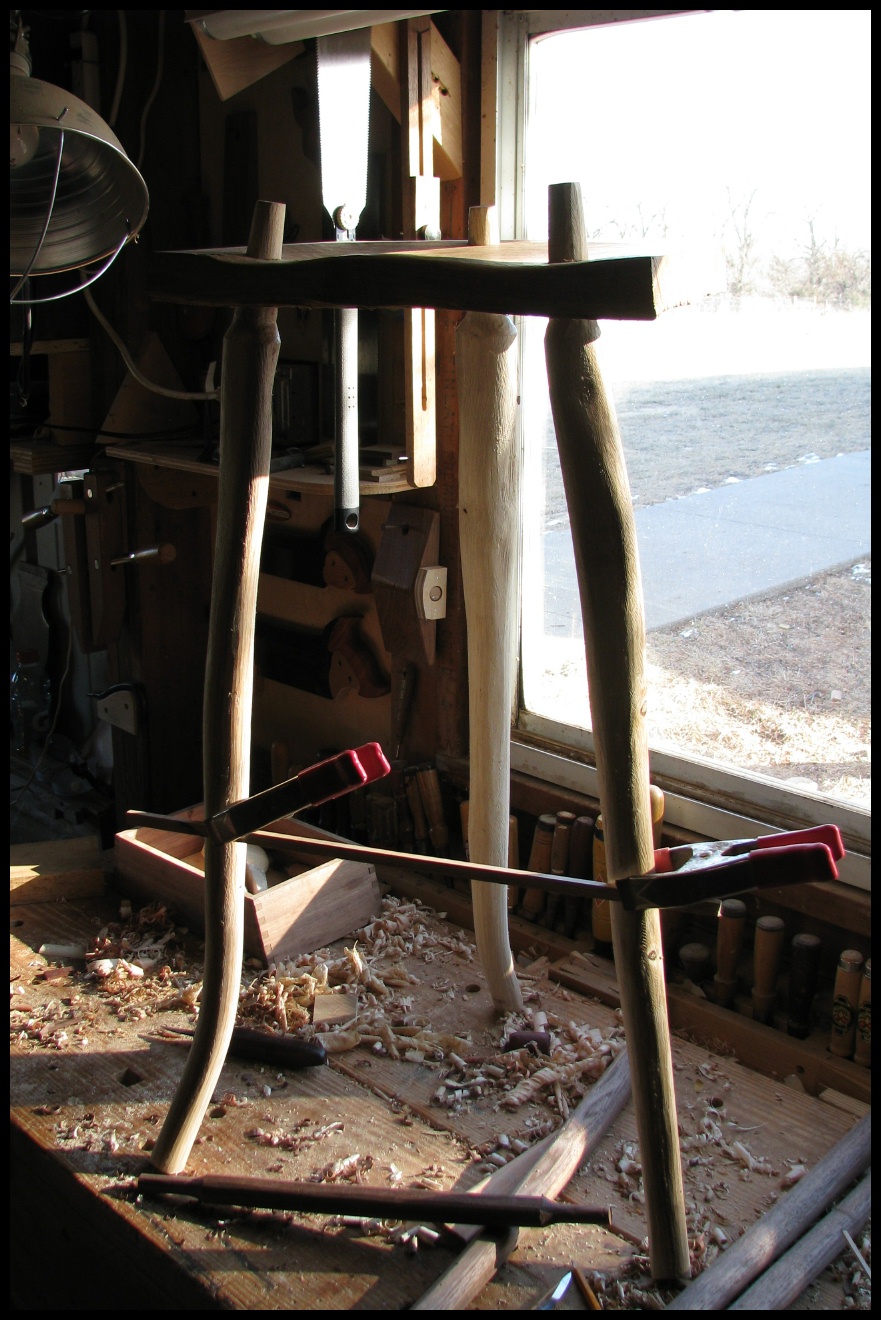
Laying out for the black walnut rungs.

Post Oak seat.
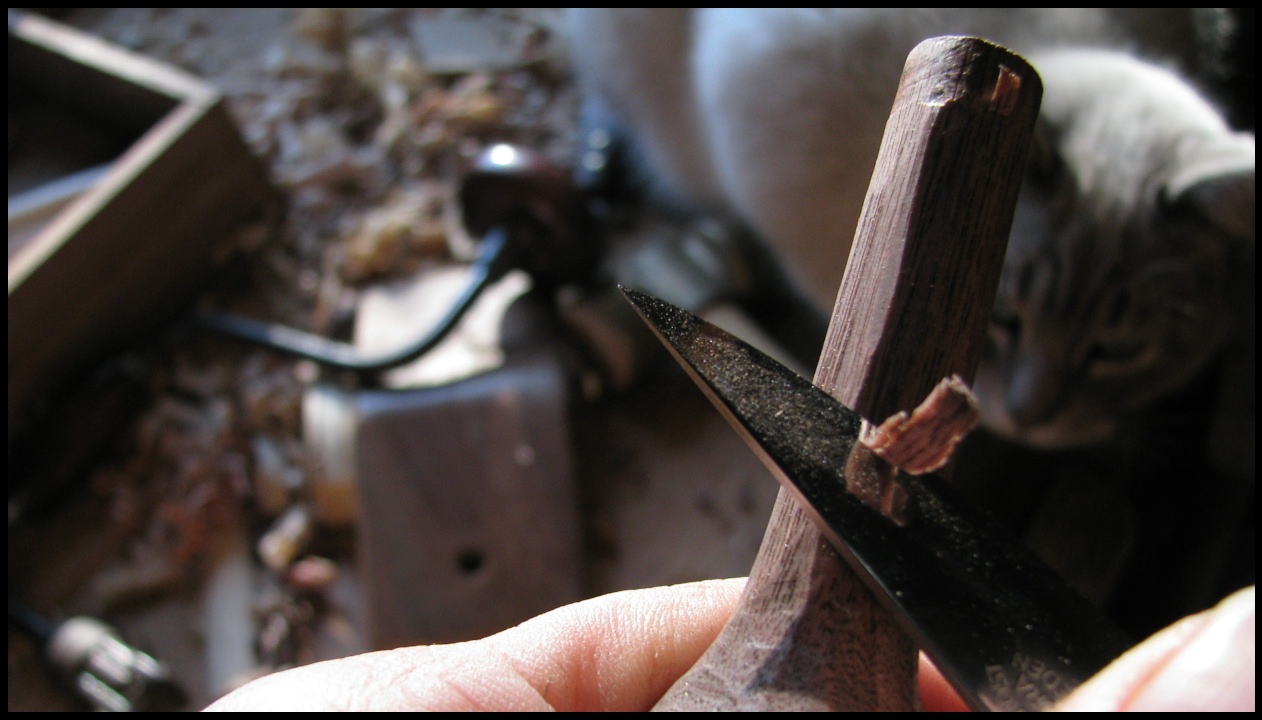
Shaping tenons on the rungs.
Here are some pictures of current work from the workshop. First is a white oak Quercus alba pedestal commissioned for a bronze ballerina. Second are three green-bent post oak Quercus stellata (also a white oak variety) stool legs in the midst of shaping and their black walnut rungs that have been roughly shaved for another commission.
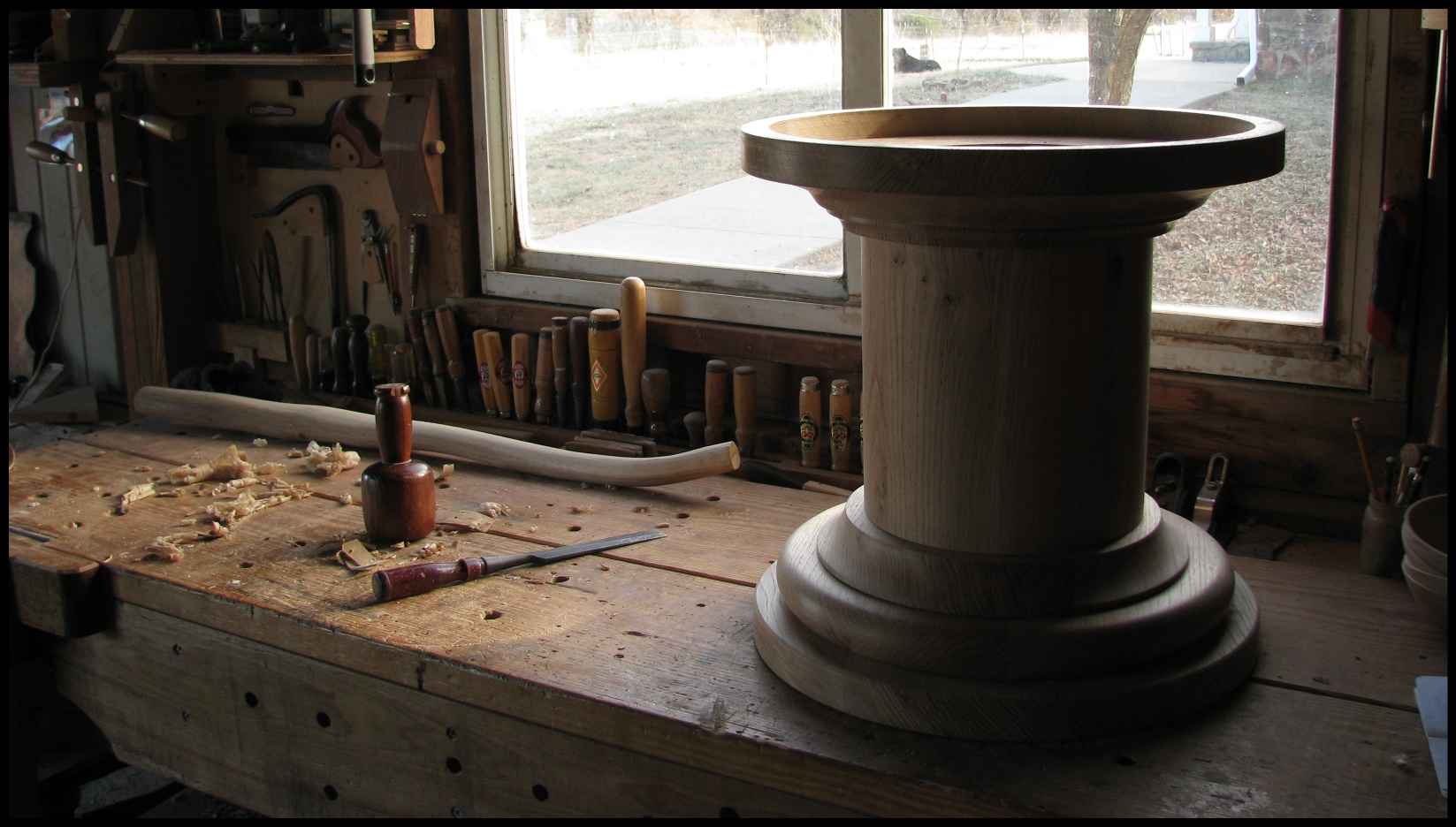
The pedestal, nearing completion here, was turned in segments on a faceplate made more broad with plywood. The main cylinder was turned between centers.
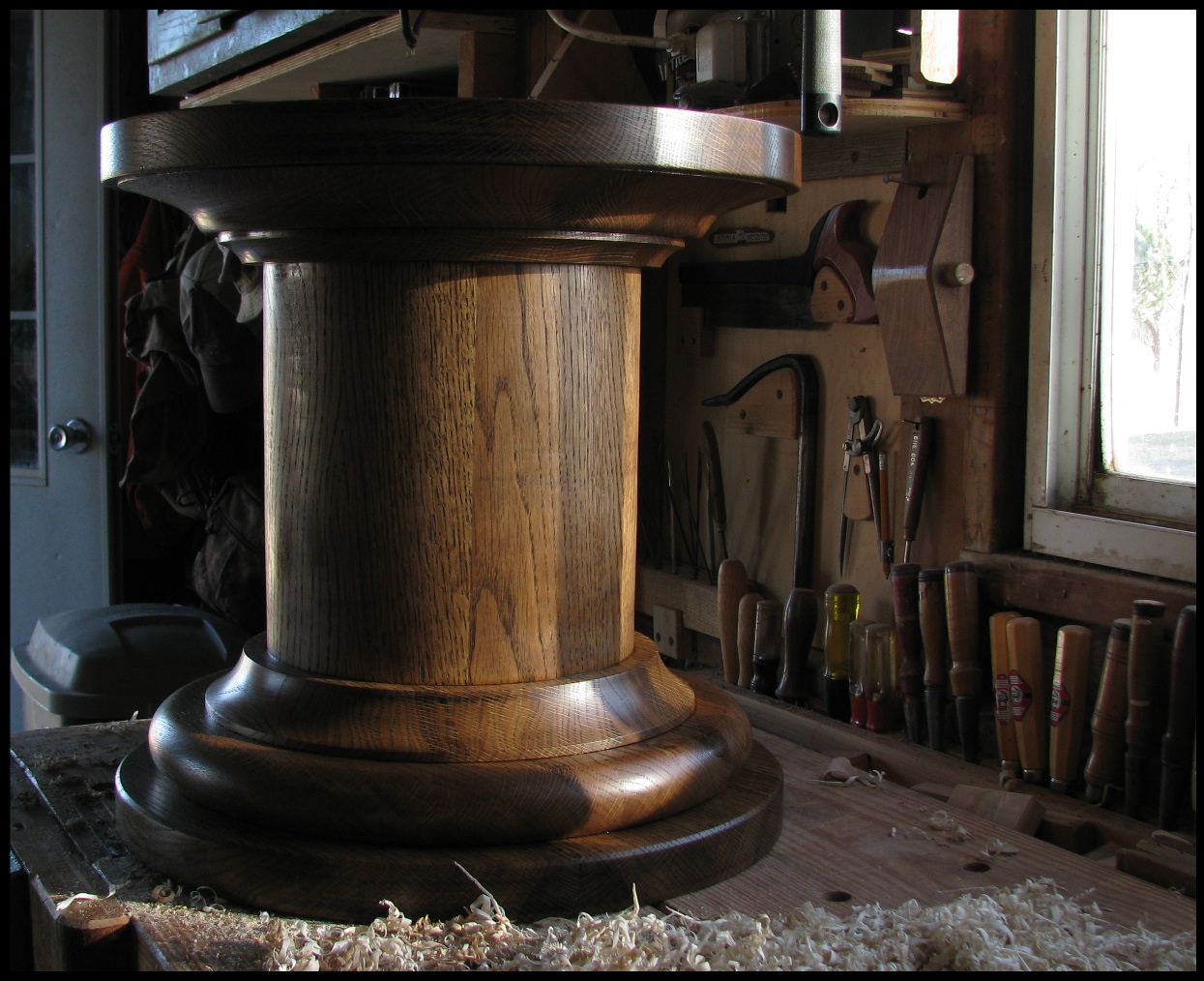
The pedestal with one coat of min-wax black walnut, and one coat of Watco black walnut, which isn’t as dark as the min-wax, but has a little more red which warms the tone. I will add at least one more coat of the Watco.
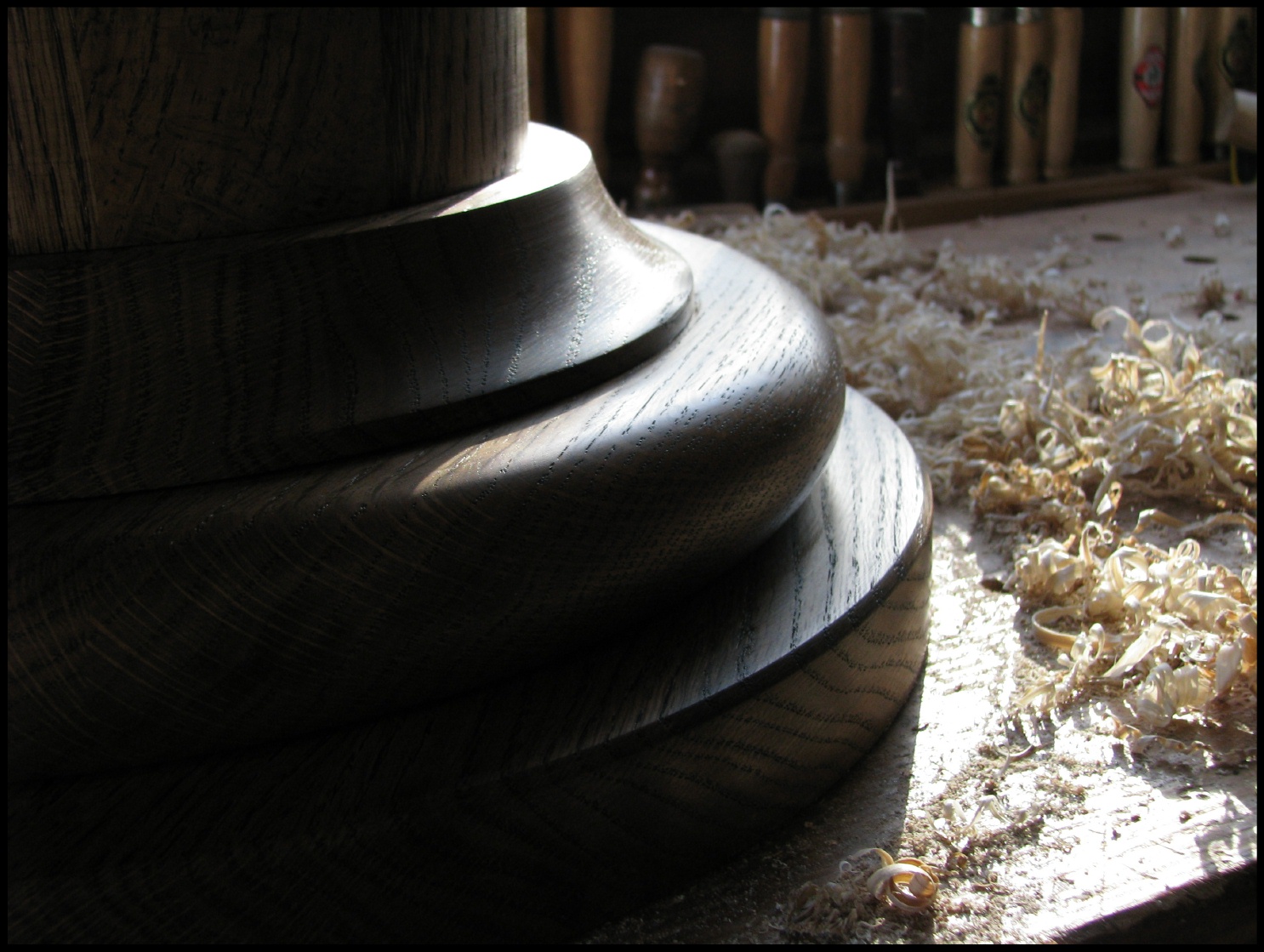
Detail of the large bead, cove, and fillets.

The post oak stool legs.
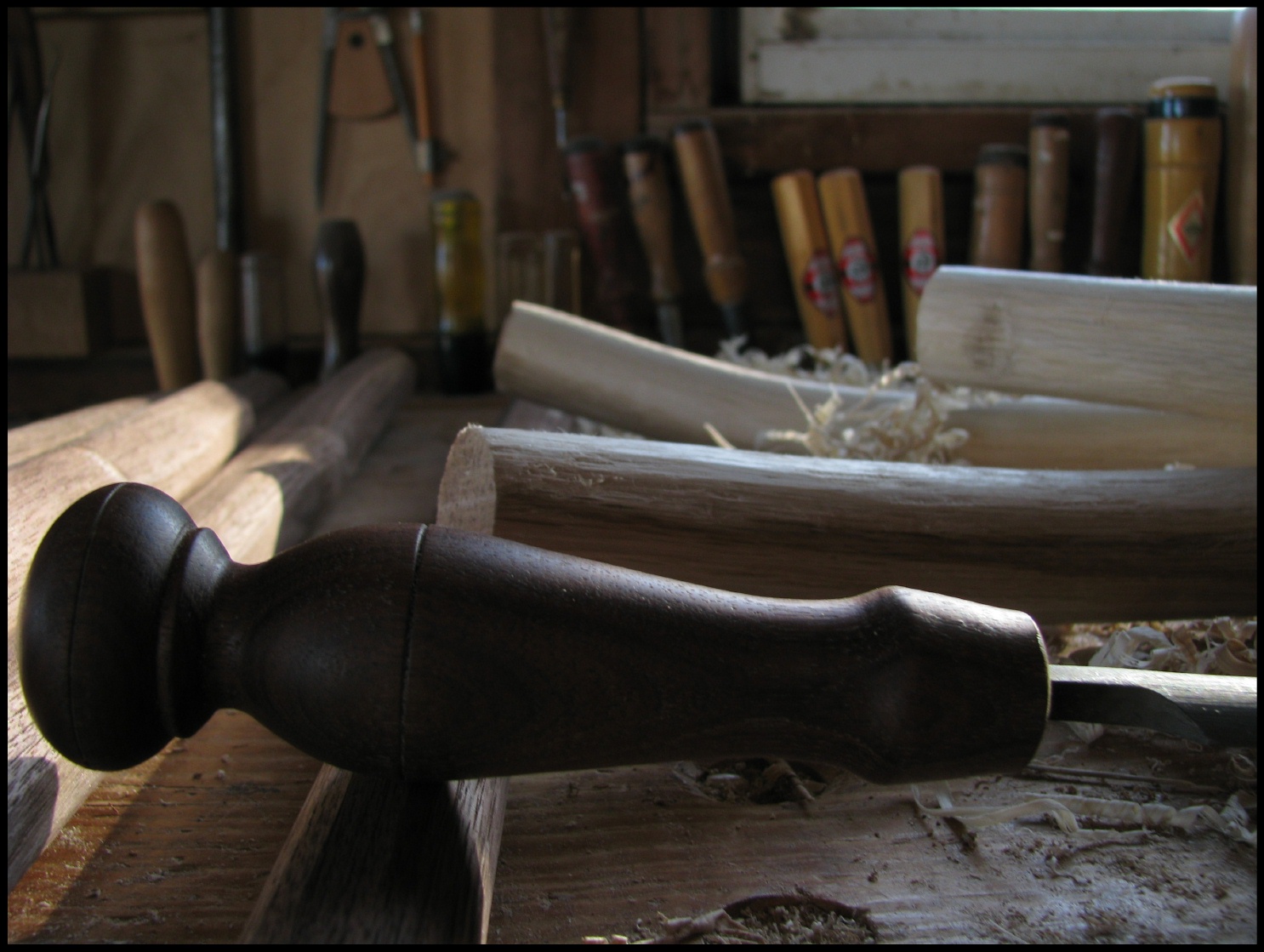
Walnut rasp handle.
Making of the Pedestal Cylinder:
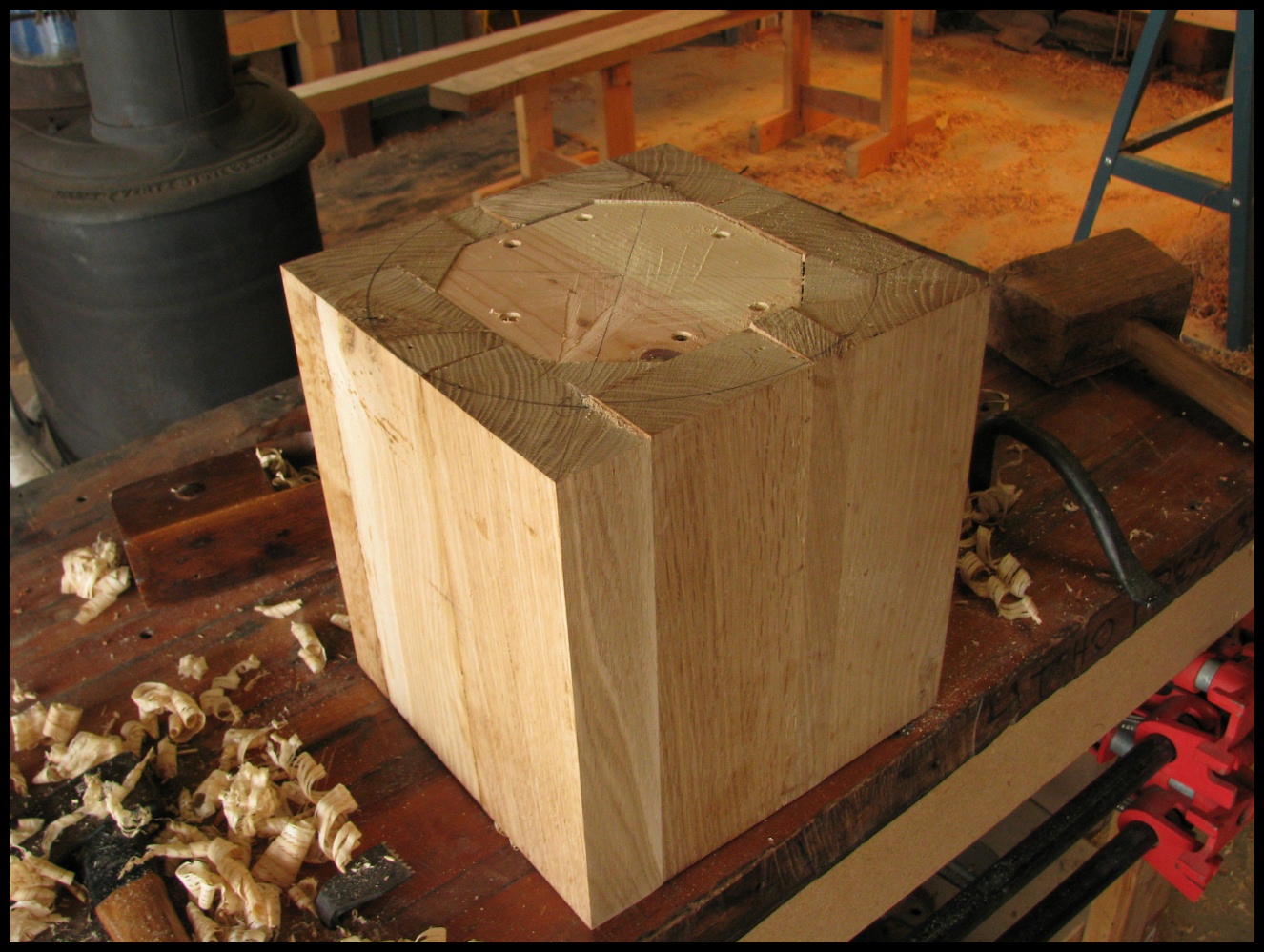
Composite box of 8/4″ white oak (harvested at Boaz, KS). Recessed blocks were glued inside the box and then pine plates fitted and screwed on either end to allow installation on the lathe.

The corners trimmed at the table saw.
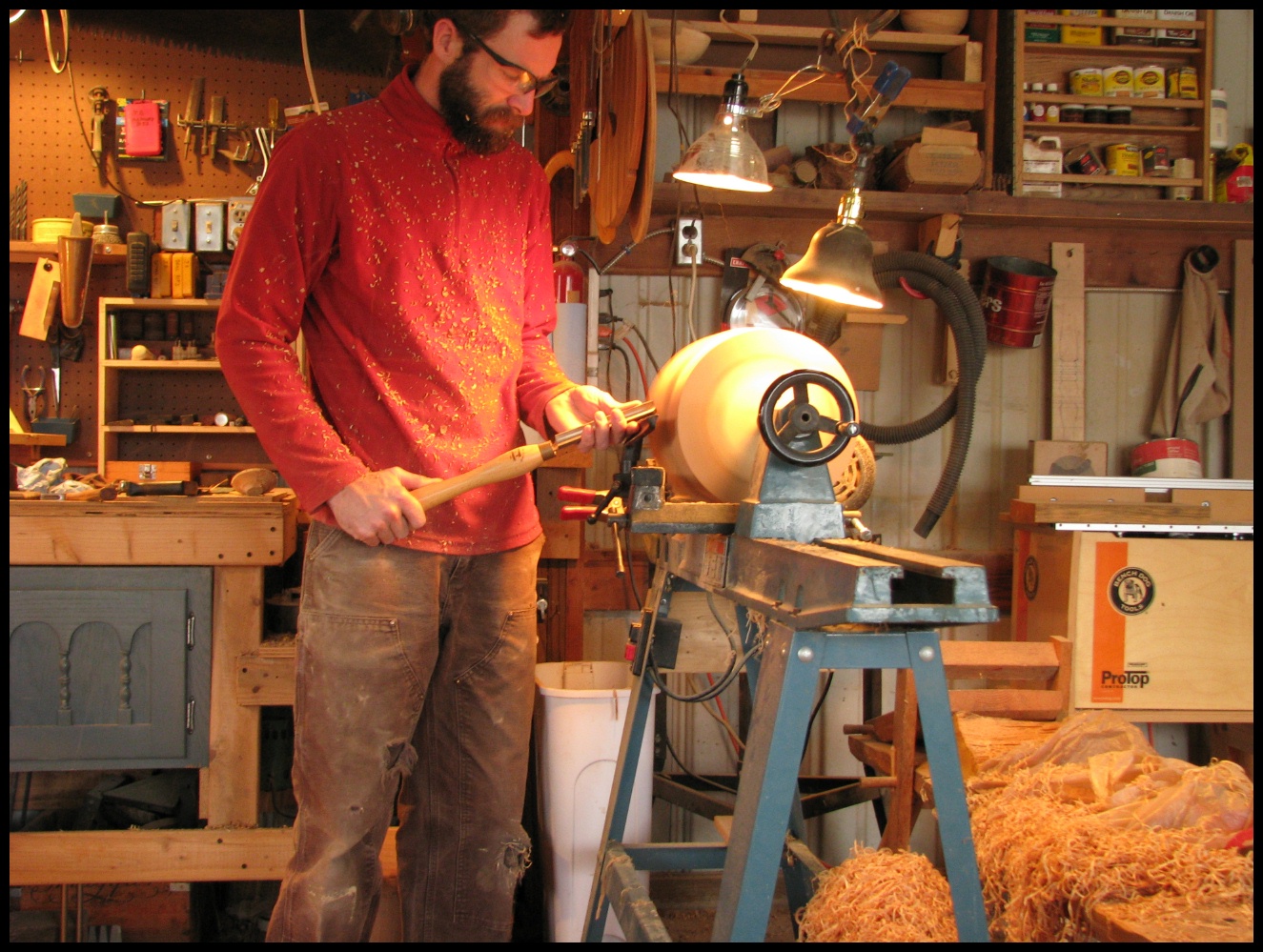
Spinning the box into a cylinder with a roughing gouge. Very heavy, lots of inertia, but well balanced.
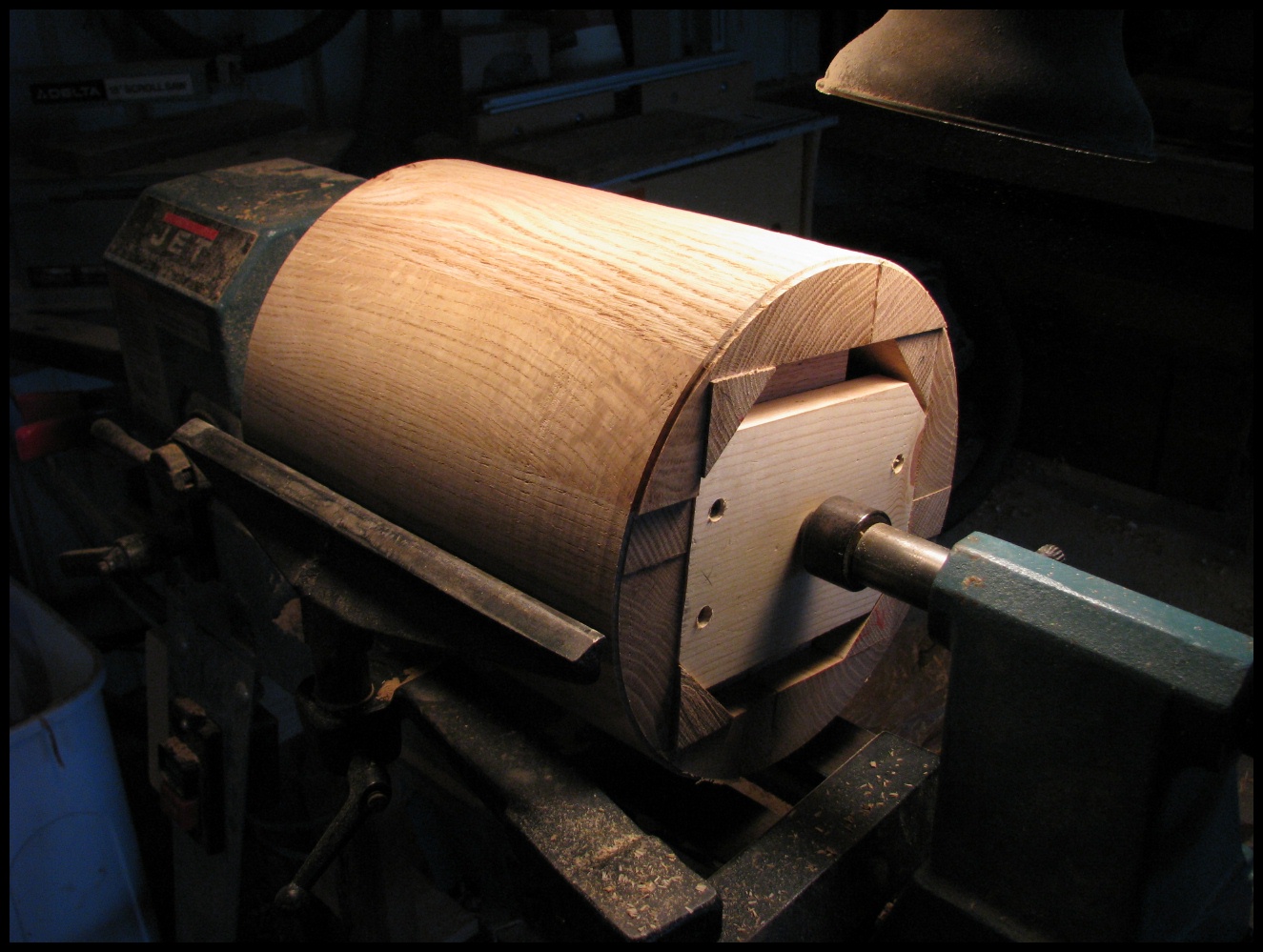
Cylinder.
Below are some photographs from the process of the rough-shaping and bending (green) of post-oak, which is a variety of white oak, for use as legs in a pair of 3-legged stools -hopefully.
First the log was cut and split. This one has quite a of twist, which I am hoping to integrate into the design of the stools.
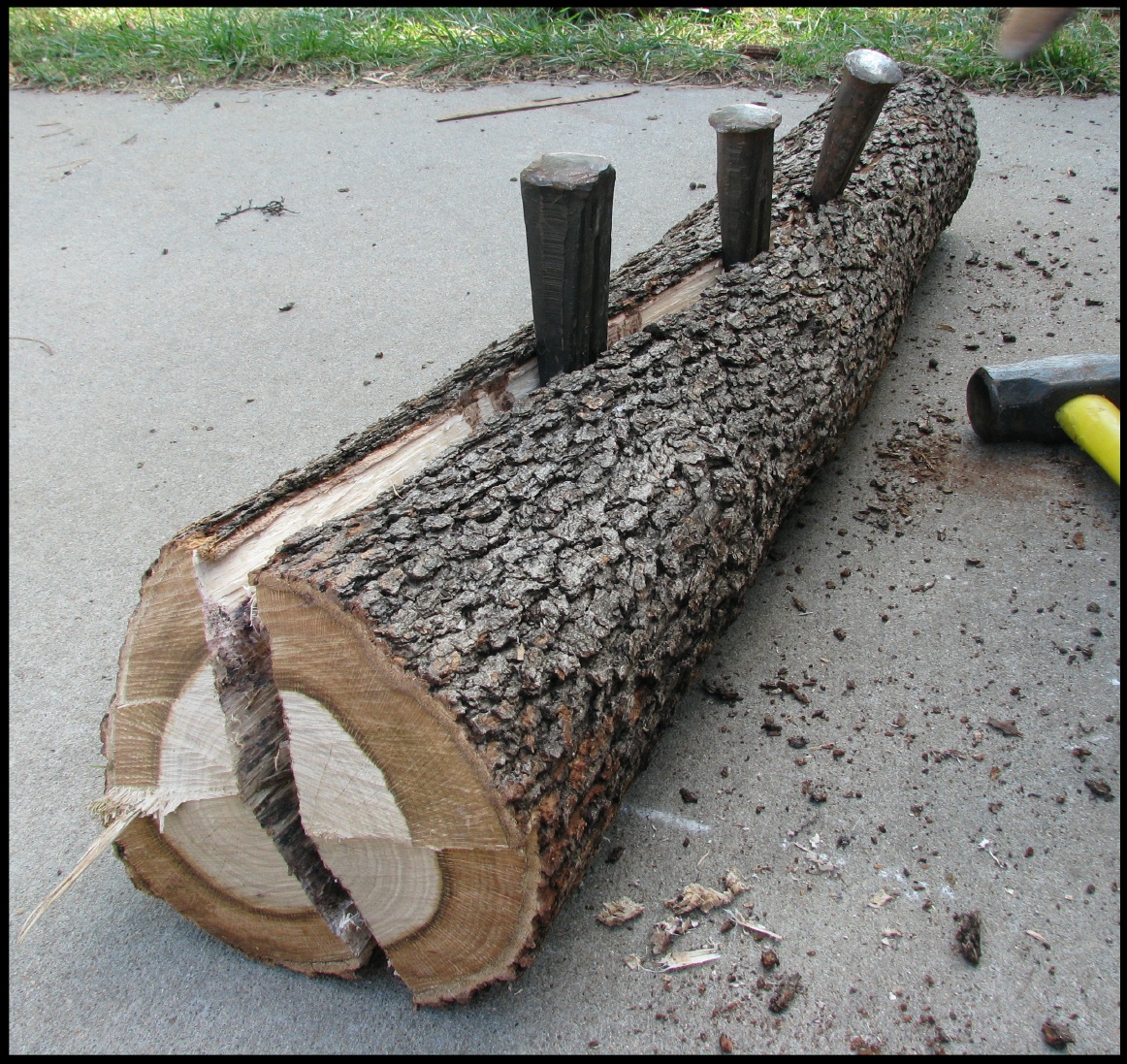
Next the halves are split into quarters and then into eighths with froe at the brake (no photos), then the eighths were trimmed with the hatchet.

After trimming the pieces are shaped down with drawknife at the horse.
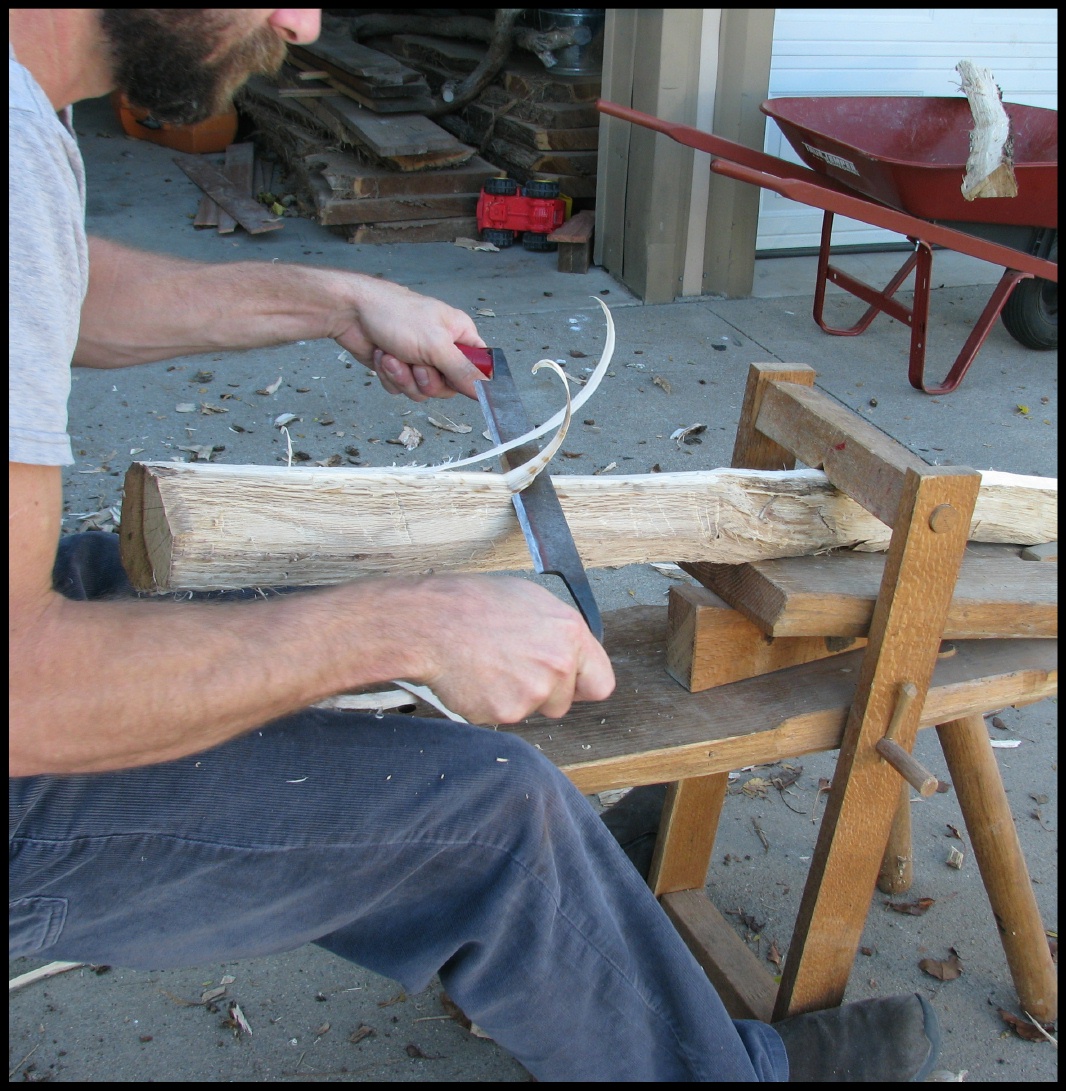

After this rough shaping each piece was place in a form and bent using clamps, the clamps were removed after a few days and were replaced with wire. The legs will remain in the forms until they are dry and I am ready to shape them to final size.


For deep information on working with green wood please see Peter Follansbee’s blog.
Here is the finished hope chest. The primary case, and lid frame are cherry, the drawer case and lid panels are black walnut, the trim is hard maple, the secondary wood for the drawers, till, and interior structural is white oak, the floor of the chest is eastern red cedar, and the drawer pulls are ebonized black walnut. The finish is 4 coats of danish oil.
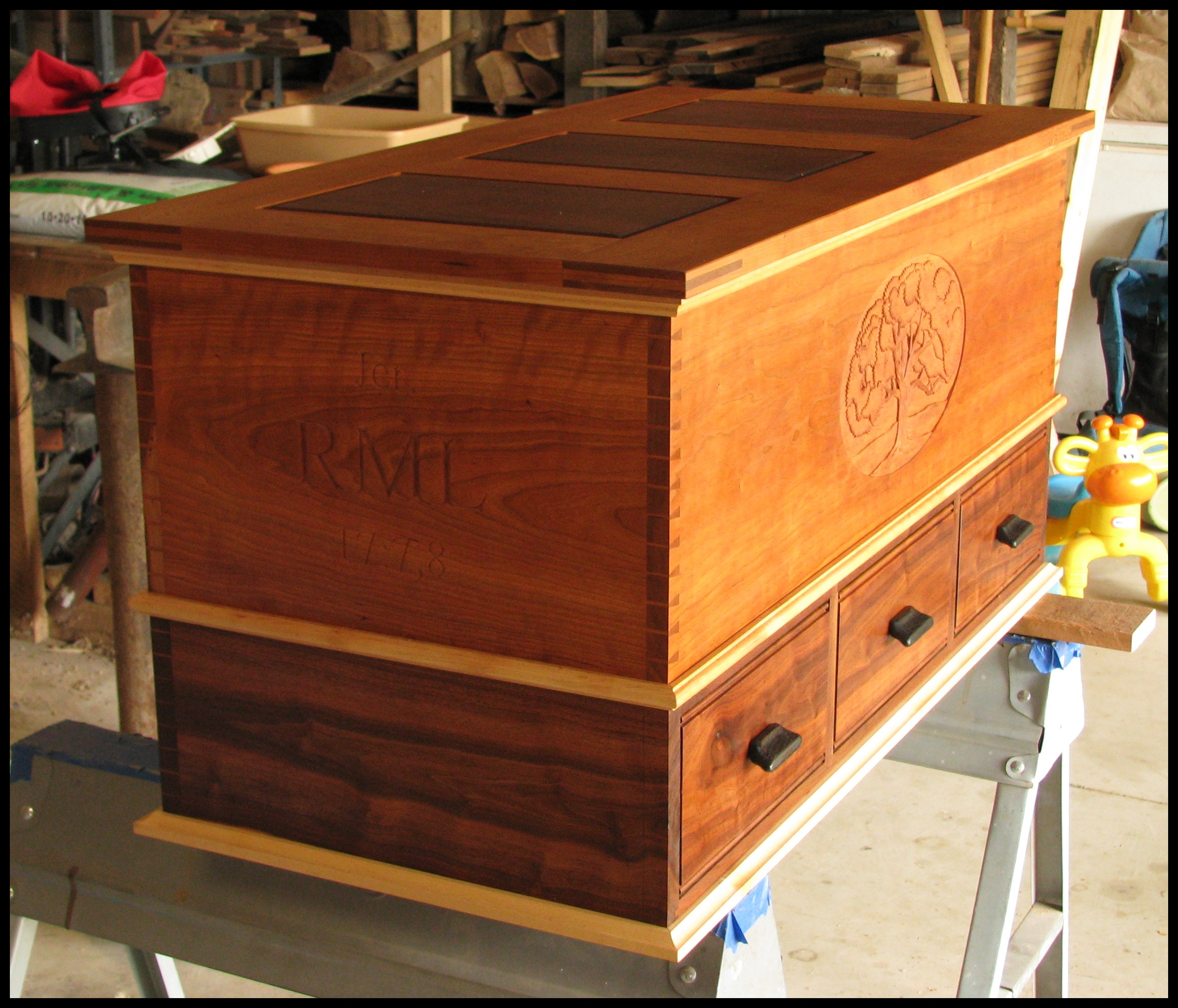

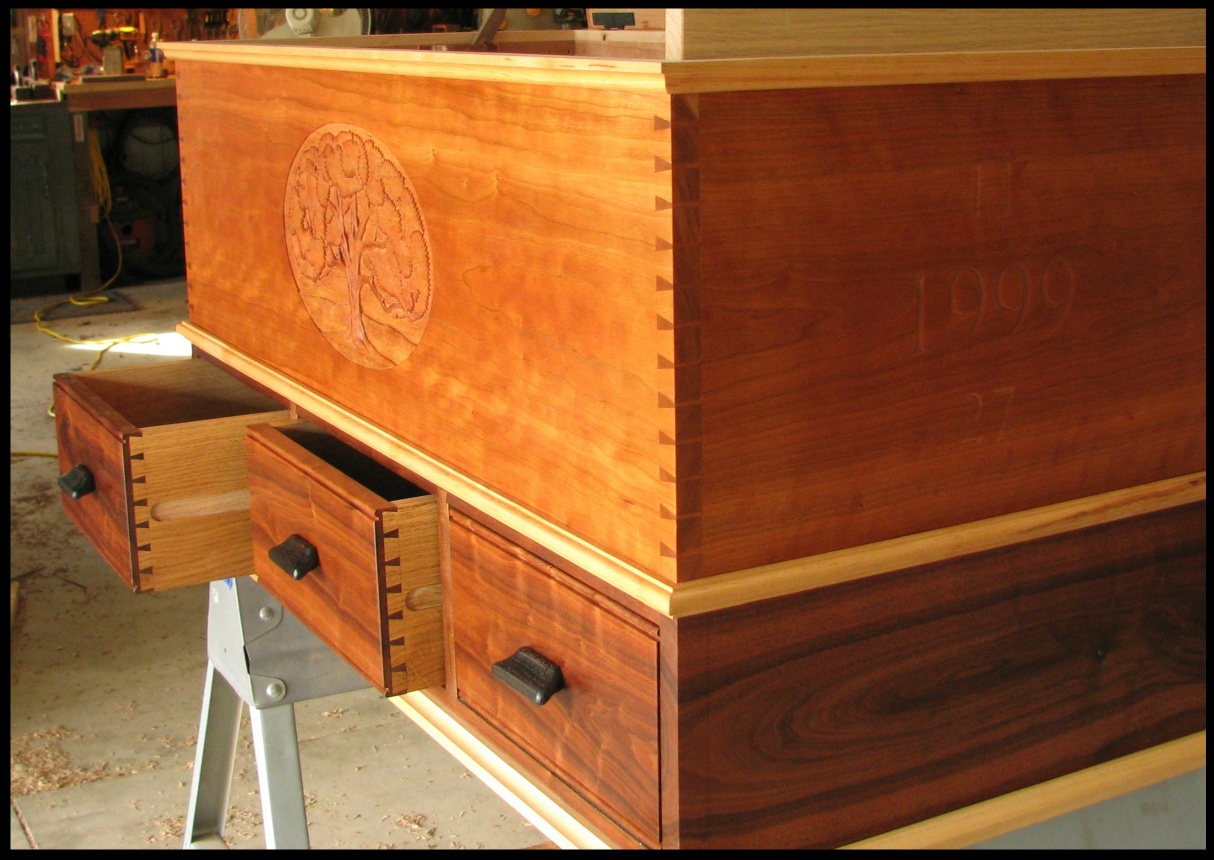

Ebonized black walnut pulls.

The white oak till.
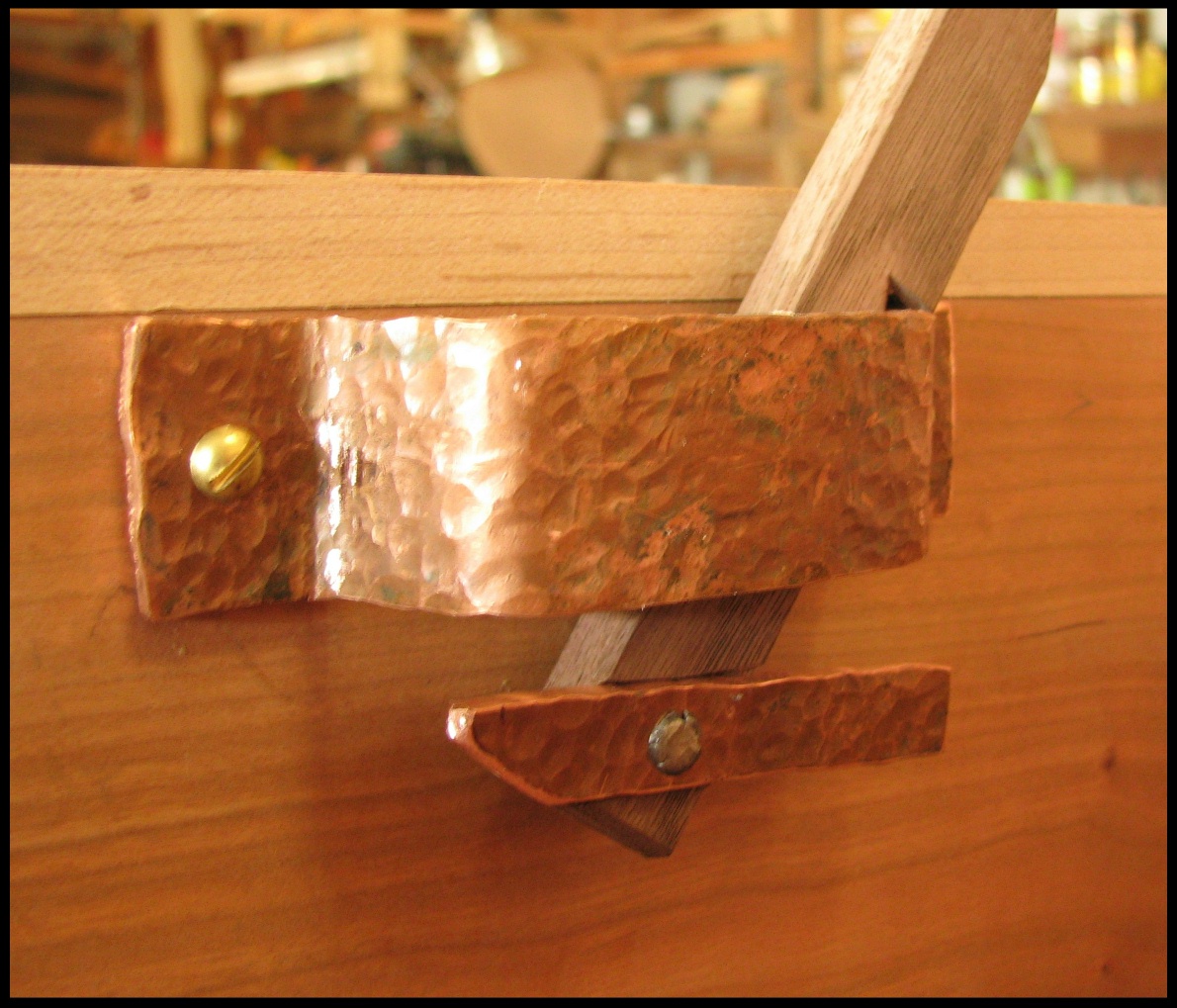
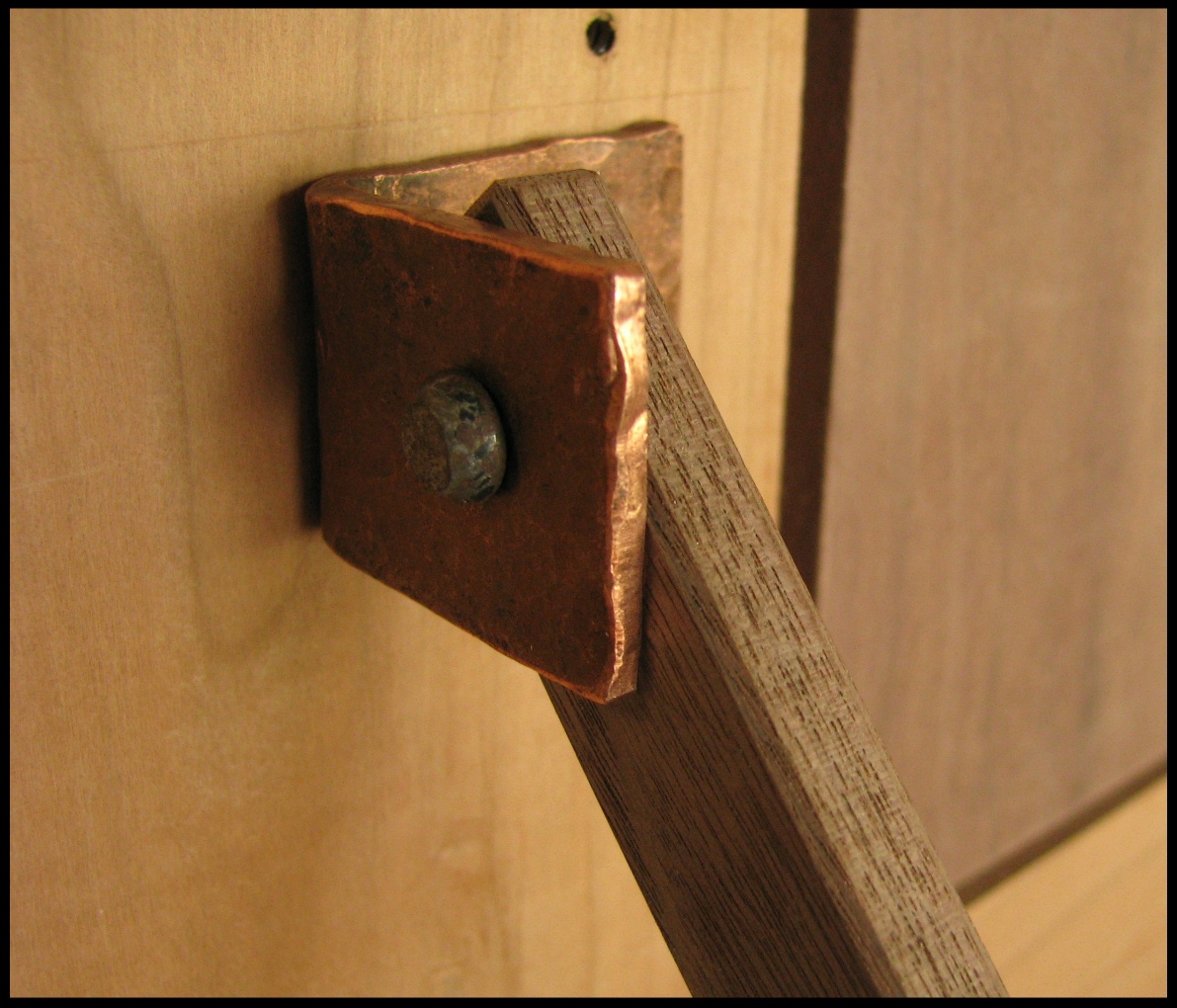
Hammered copper brackets for the lid support.
 The School of the Transfer of Energy