The chest taken apart and being fitted with a floor and a till.

Detail of the till.

The bed to this point, dry fit and testing out some planks for the sides of the legs.

The chest taken apart and being fitted with a floor and a till.
Detail of the till.
The bed to this point, dry fit and testing out some planks for the sides of the legs.
Below are a series of pictures of turning a black walnut bowl on the pole lathe.

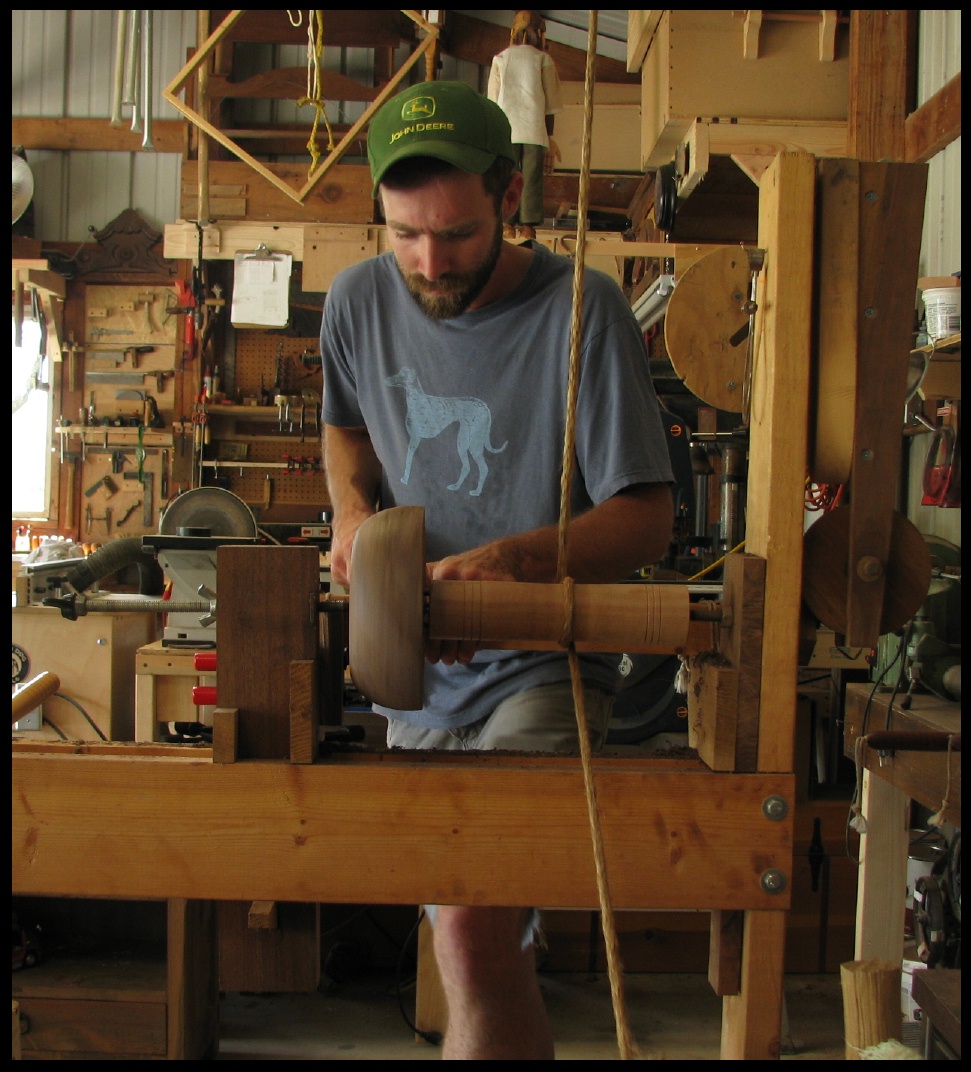
Shaping the sides with a roughing gouge.
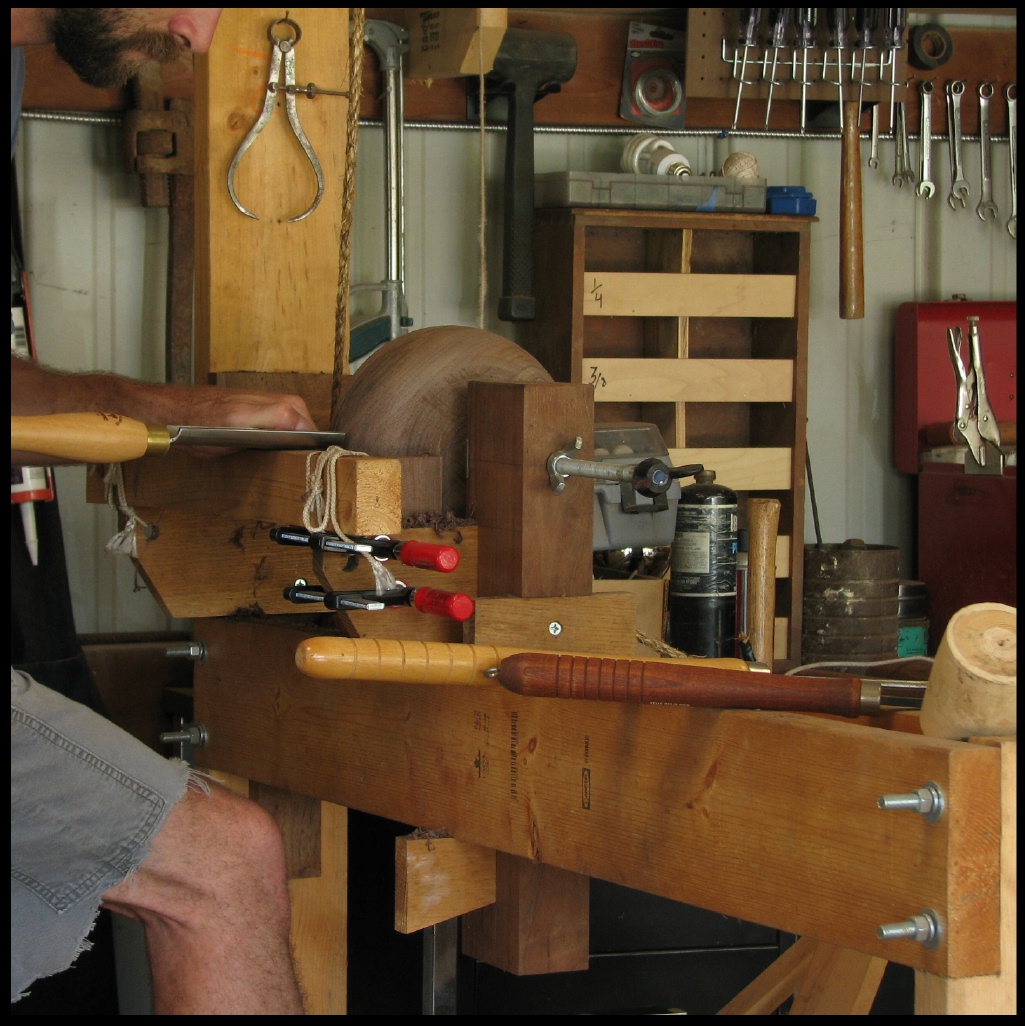
Starting to hollow it out.

The walnut headboard-chest will have a “free-edge” on the top. The lid will be “floating” within the top of the chest. So the top edges need to be balanced out and given a certain quality of surface to fit this application.
Below, I am cutting along the top edges with a medium sized gouge.

Below, a detail of the edge. More adjustments will be needed as the bed progresses.

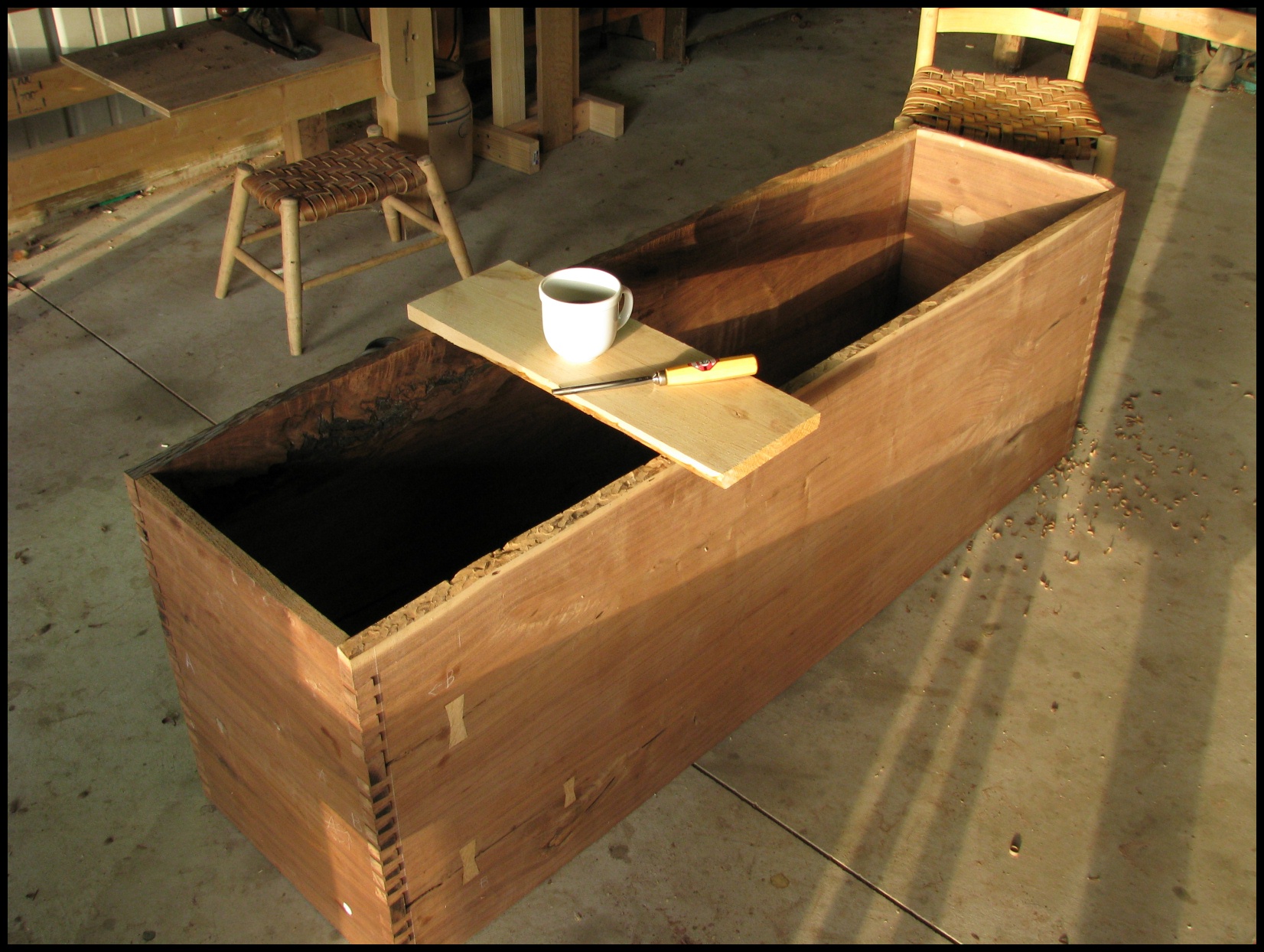
Below are some pictures of the main carcass for the headboard-chest of a black walnut bed underway in the shop right now. It was dry fit for the first time yesterday. It was quite a challenge to get the nearly eighty hand-cut dovetails to mate properly.

The tops of the boards are still rough- they will be shaped a little- softened- but mainly left as is. The lid will “float” inside the top of the chest.

A foreshortened side view. Here one can see all the dovetails- yet to be trimmed- th chest will be taken apart and re-assembled a few times before final assembly, where after the pins and tails will be trimmed flush.
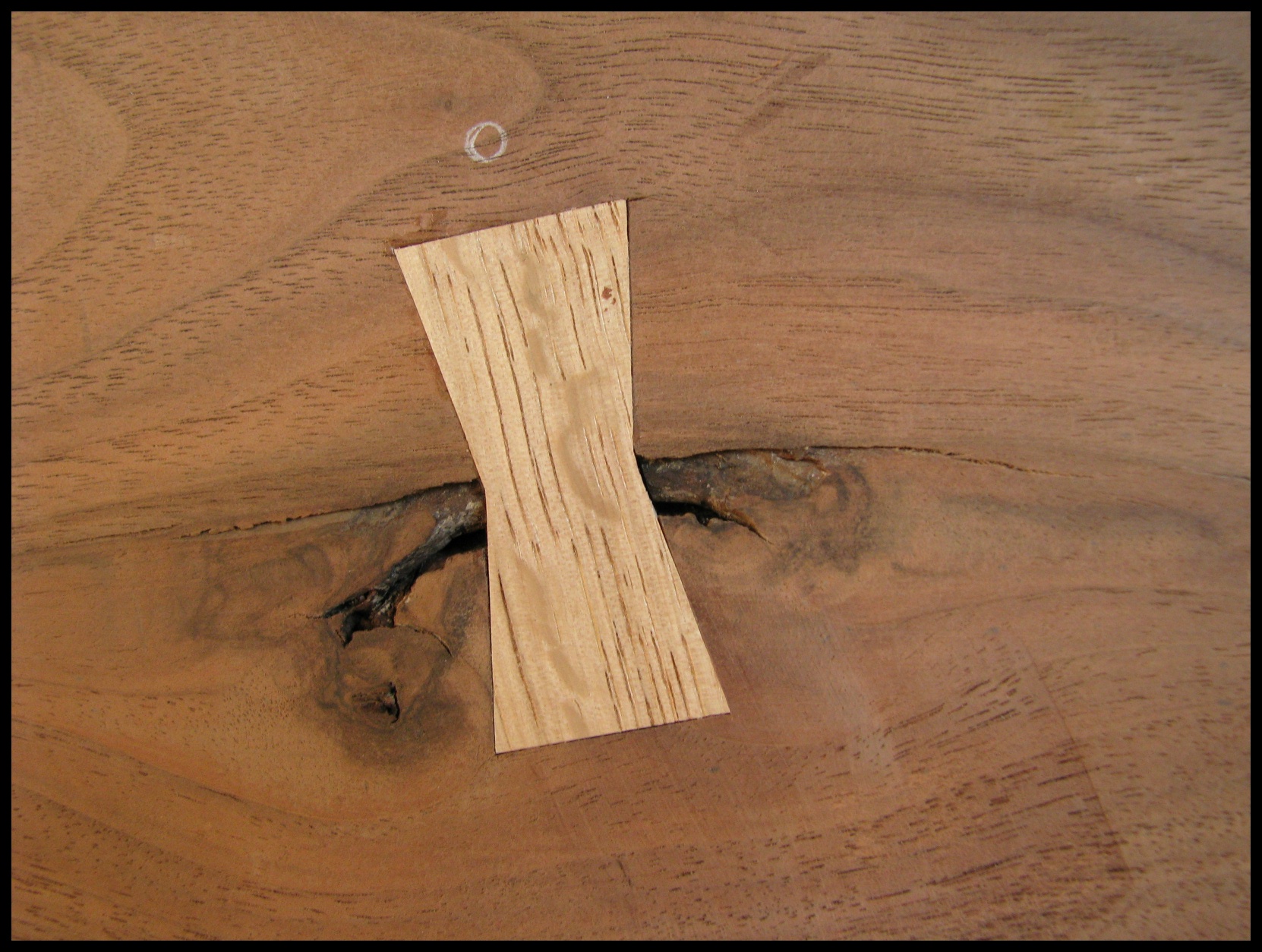
A detail of a Q.S. white oak butterfly- decoratively and hopefully functionally placed in a knot with a small split. There are quite a few butterflies throughout the piece for the task of securing splits and abnormalities- the joys of screwball Kansas walnut.
Bellow are some photographs of some very small amounts of pigments being ground with water, in preparation for being mixed at need with egg yolk to make egg tempera. Having a ready supply of fresh hen’s eggs, it is the logical paint to start making, as well as learning slightly parallel to the western historical progression of the technology of paint-making.
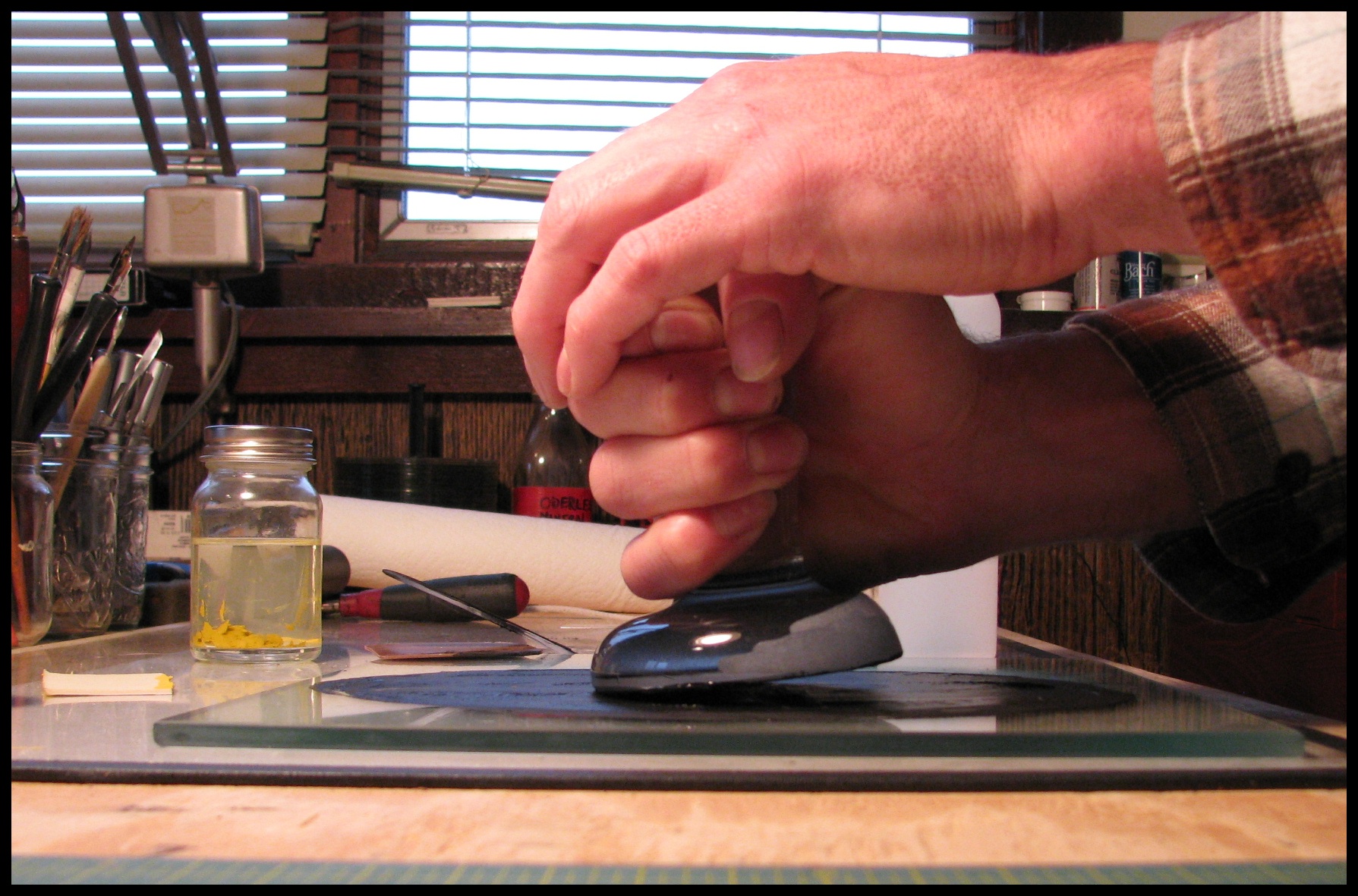
Grinding vine black with water, using a glass muller and “slab”.
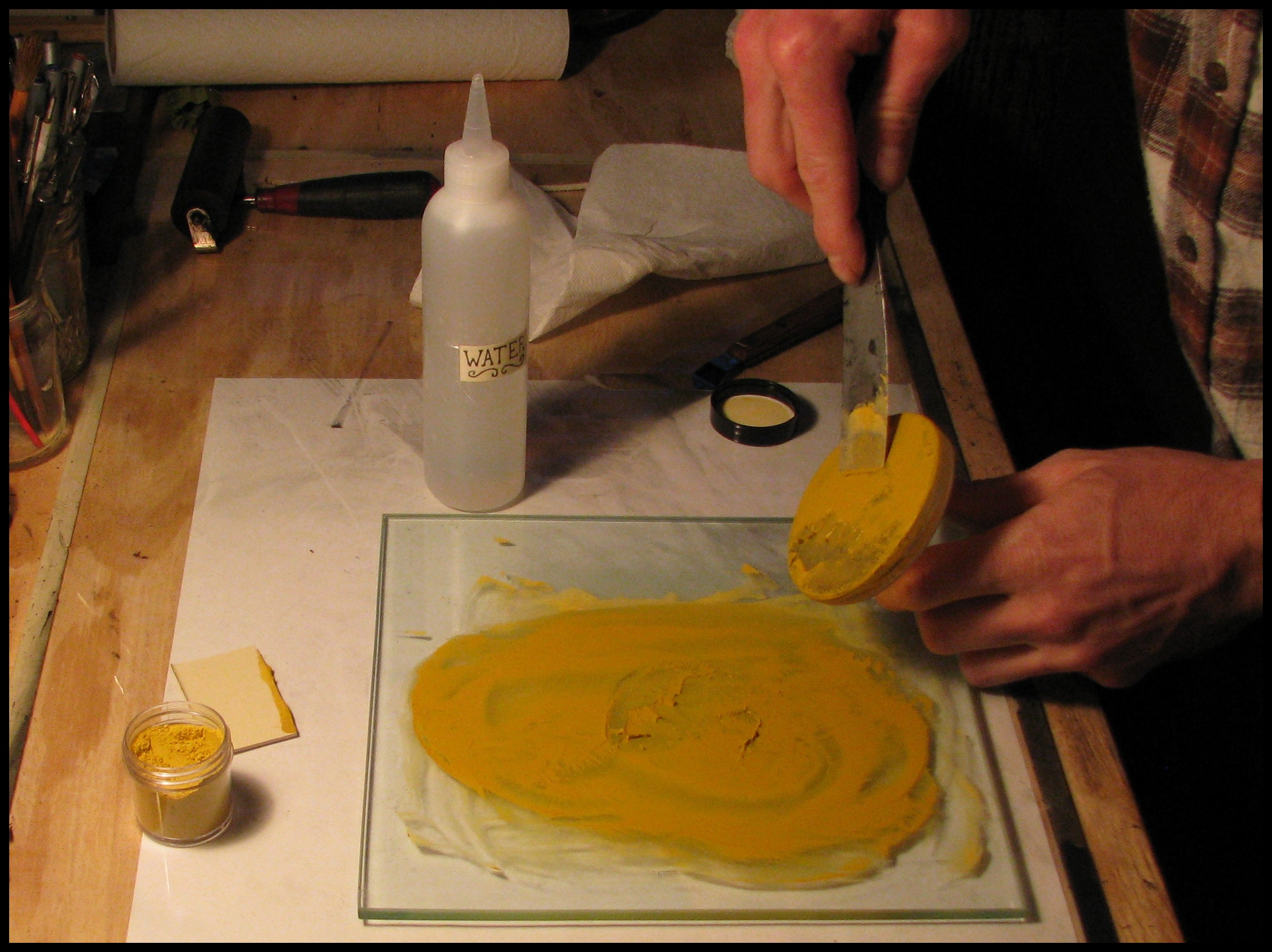
Collecting a small batch of yellow earth from the muller.
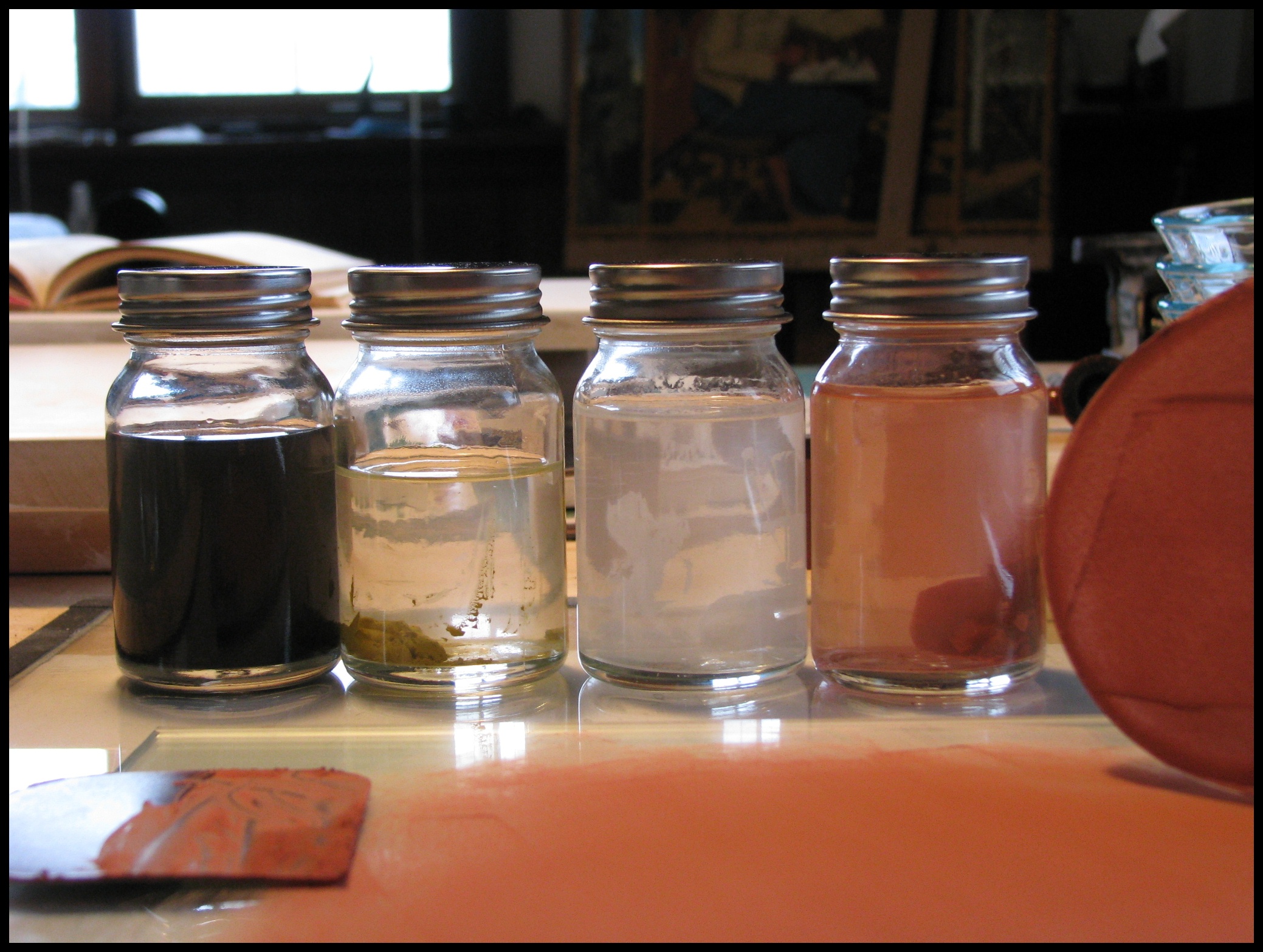
Four jars of pigment, ground with and then submerged in water.

The approach to this painting is a little different than Moses and Aaron. Still developing shapes, forms and colors.

Above is the new stage front for the puppet theater, temporarily set into place. Note the stage-wings (right and left), carved corbels, columns and sulphur inlay panels from earlier posts in their proper context. The new main stage front still lacks the obvious finishing, and the less obvious details. The front will also boast curtains and screens shielding both the wings from the front and leading back to the shadow screen (seen behind the main front). I have a lot of work to do on many aspects of the theater and props leading up to the theater’s performance of The Two Deaths of John Beartrist Laceroot this spring- the first performance in over five years.
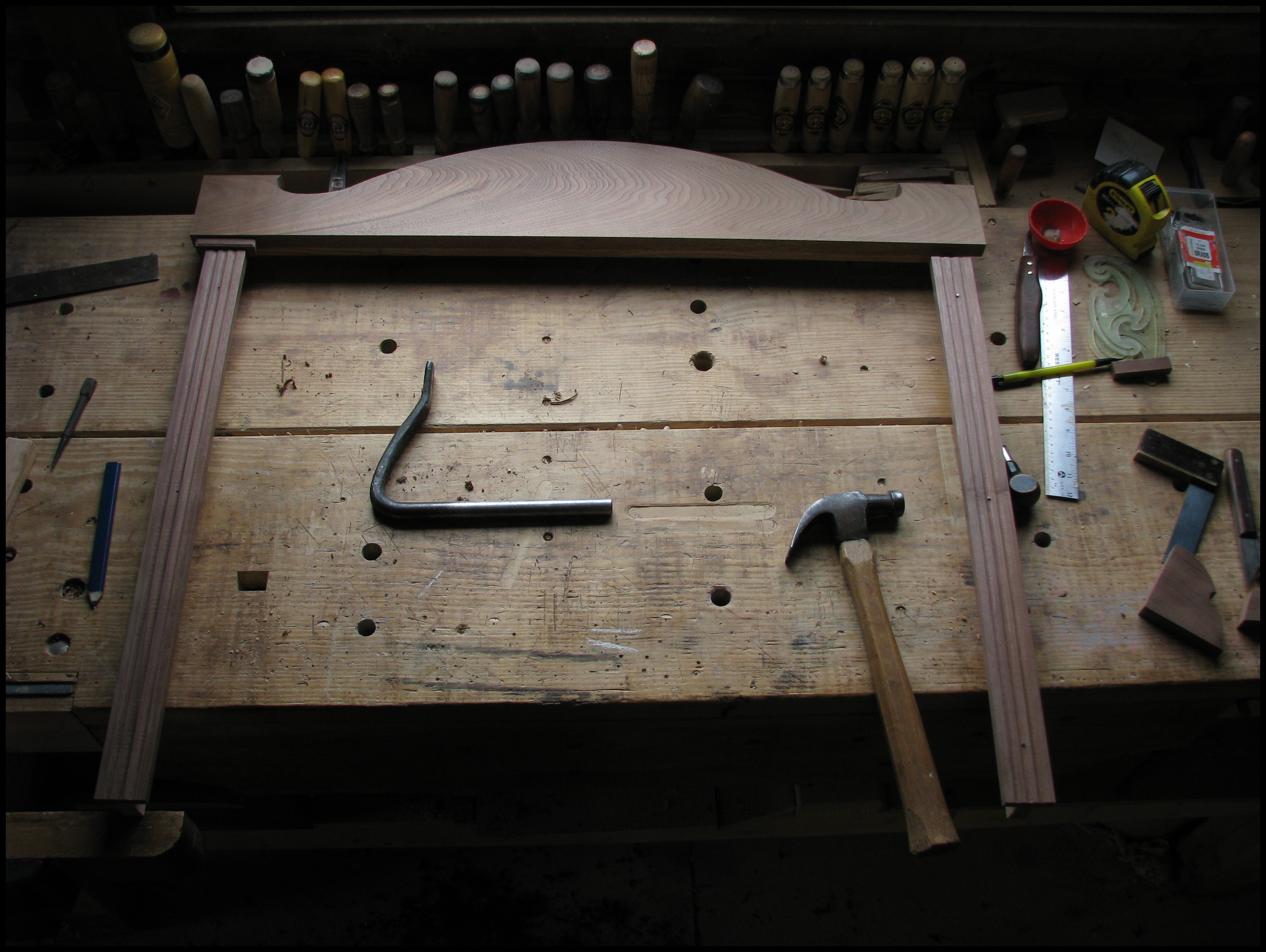
The stage front on the workbench in the shop as the colomns are being affixed. The next post will cover the cuting of the flutes in the columns, and the special tool used to cut them. The proscenium panel is cut from an ancient piece of reclaimed walnut. The tree must have been quite big and old judging from the many close-set rings in this one piece alone.

Building color into the painting. You can see earlier stages of this painting a few posts back.
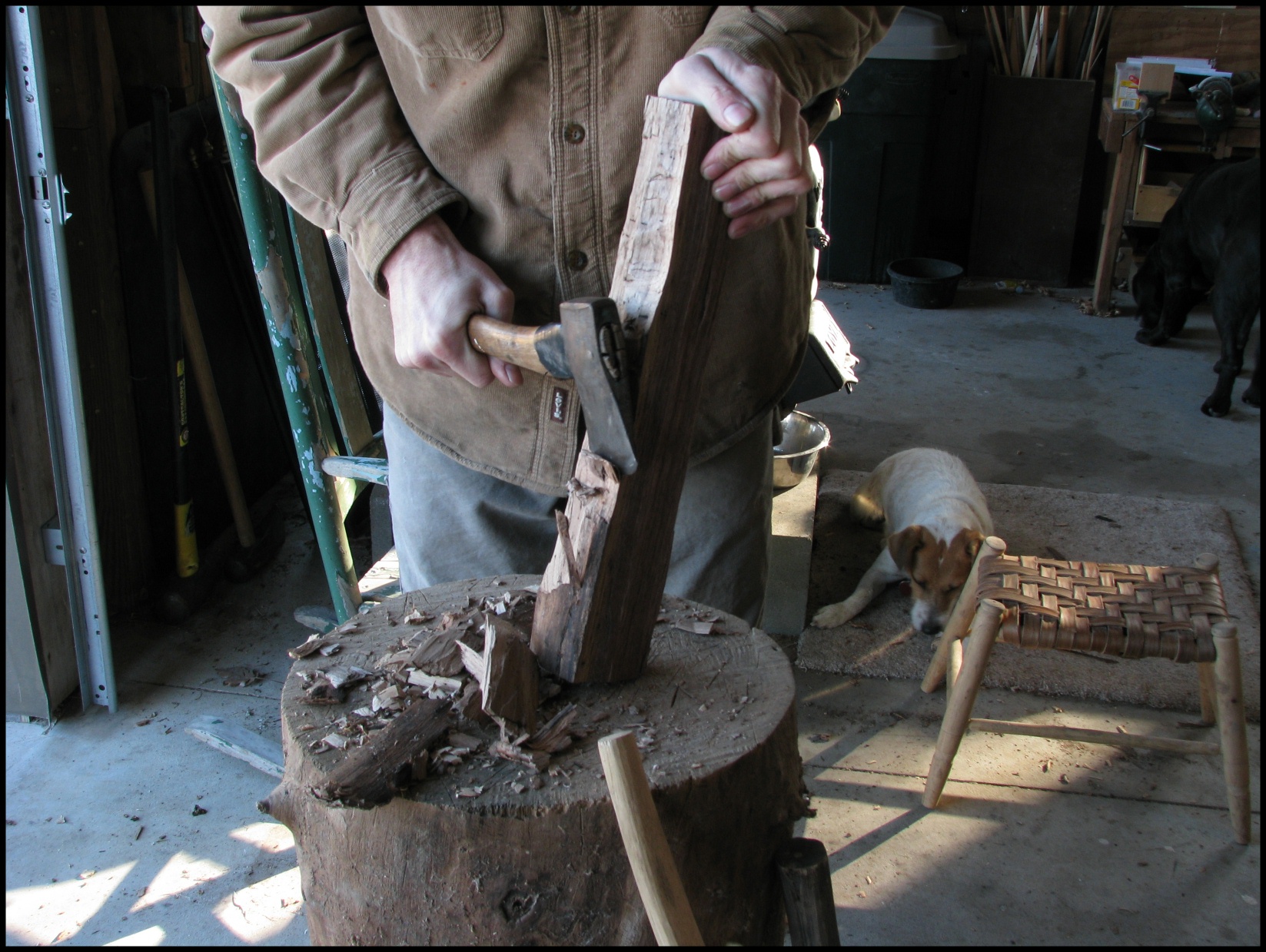
Using a hatchet to chop away the sap wood on a billet of walnut.
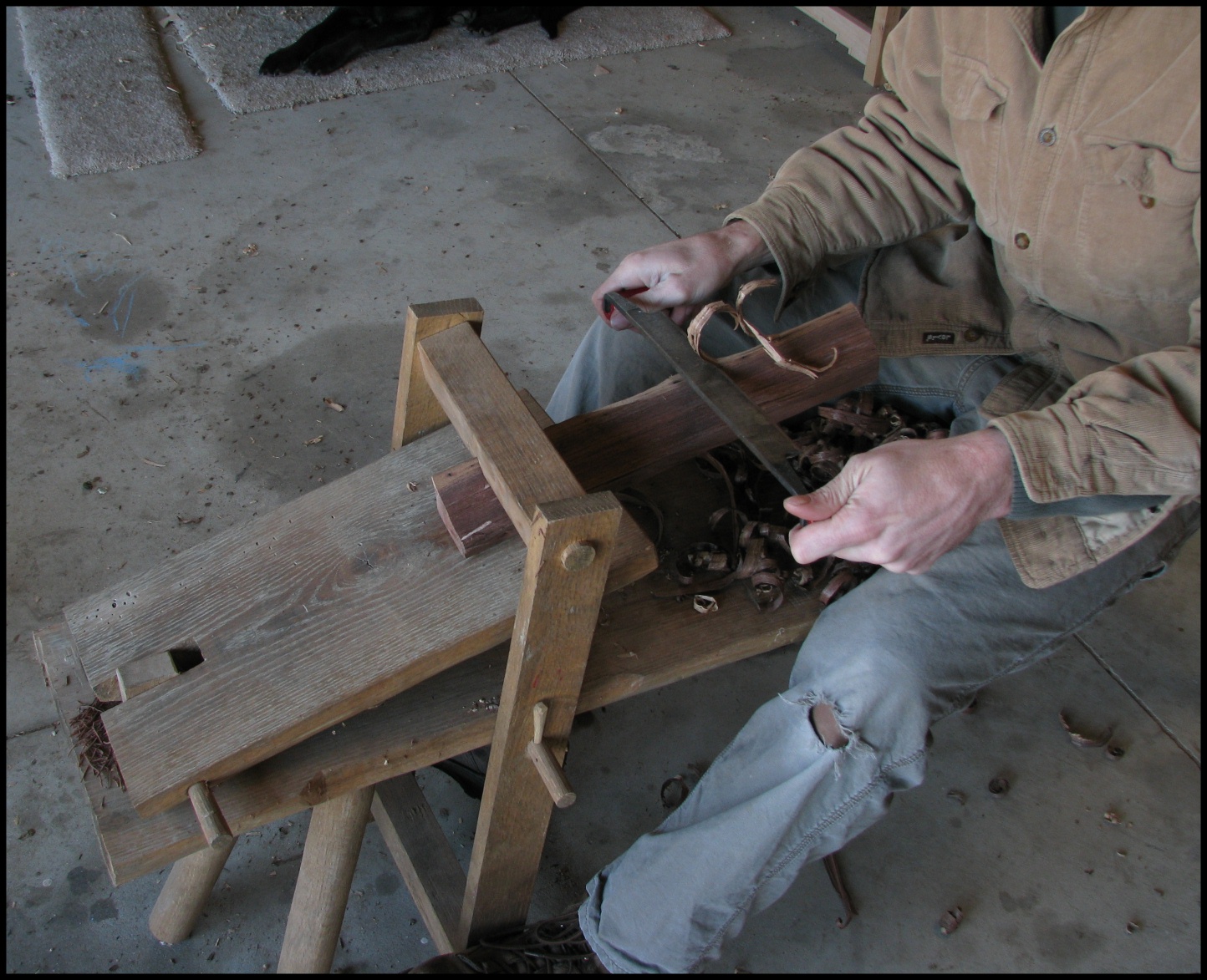
Shaping the billet on the shaving horse with drawknife to make it ready for the lathe.

Using the roughing gouge to shape the cylinder. This will become one leg on a little stool.


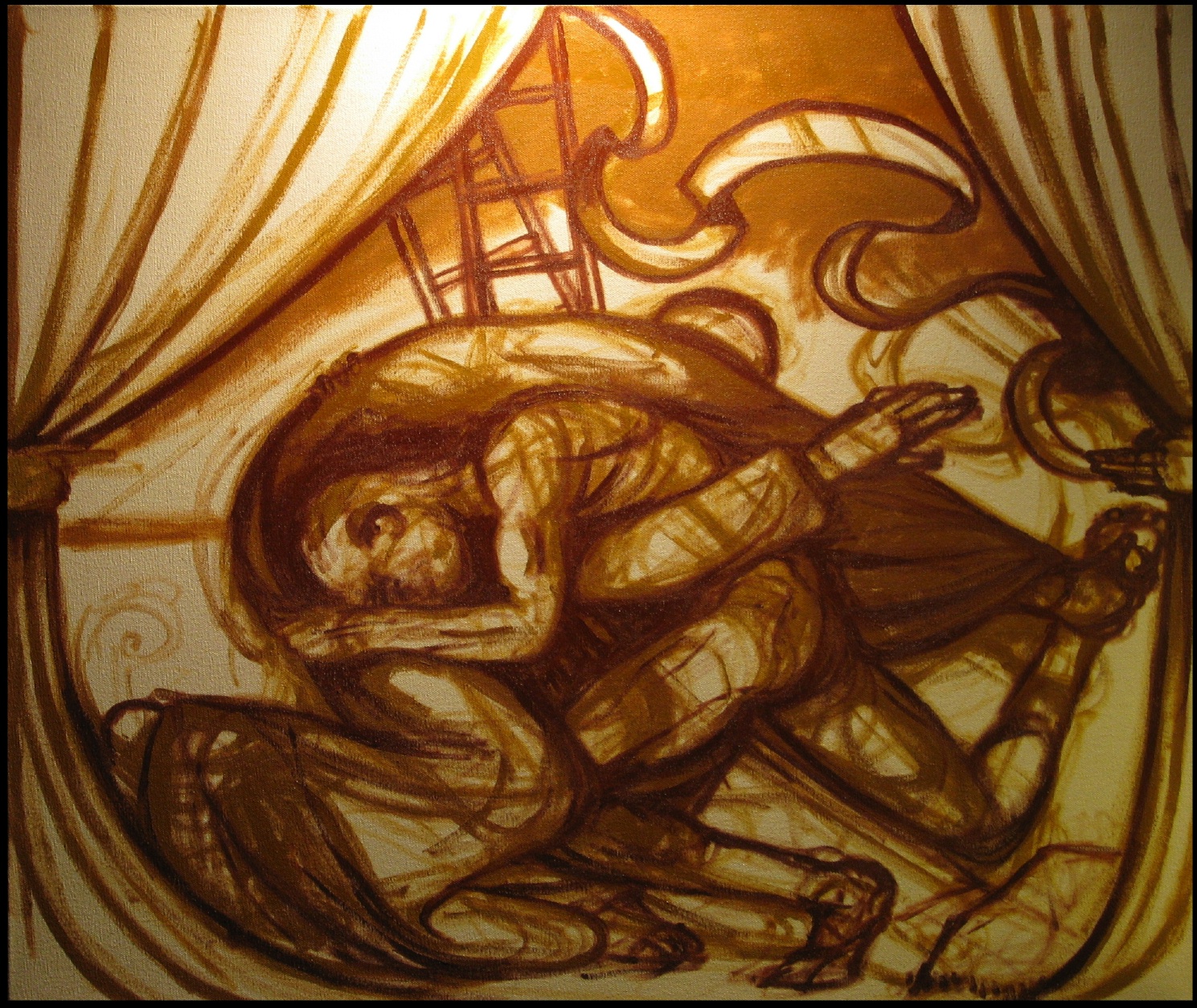
 The School of the Transfer of Energy
