
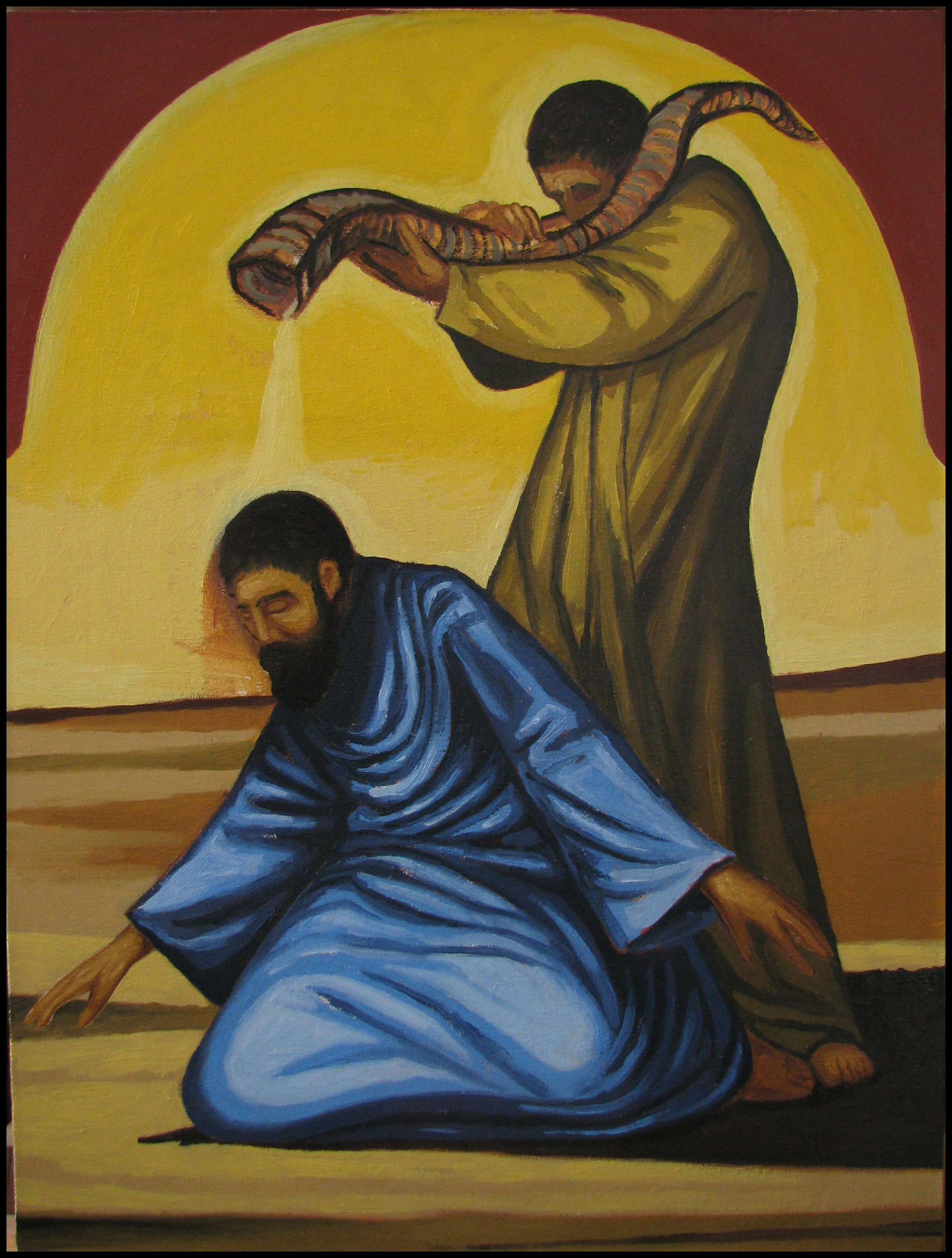
The approach to this painting is a little different than Moses and Aaron. Still developing shapes, forms and colors.
The approach to this painting is a little different than Moses and Aaron. Still developing shapes, forms and colors.
Still in the underpainting stages, and slowly developing the forms.
In order to cut the flutes in the columns on my puppet stage, I made up what I recently learned is called a “Scratch Stock” (see Peter Follansbee’s blog ) from some maple and a piece of an old saw blade, in the form of a marking guage- with an adjustable fence. On a side note, Peter Follansbee’s blog is quite interesting and unique- captivating even- for people who appreciate those who are exceedingly well aquianted with the specific history and dedicated to the authentic quality of their work. One can also visit his website to see some of his extraordinary work in 17th century joined furniture.
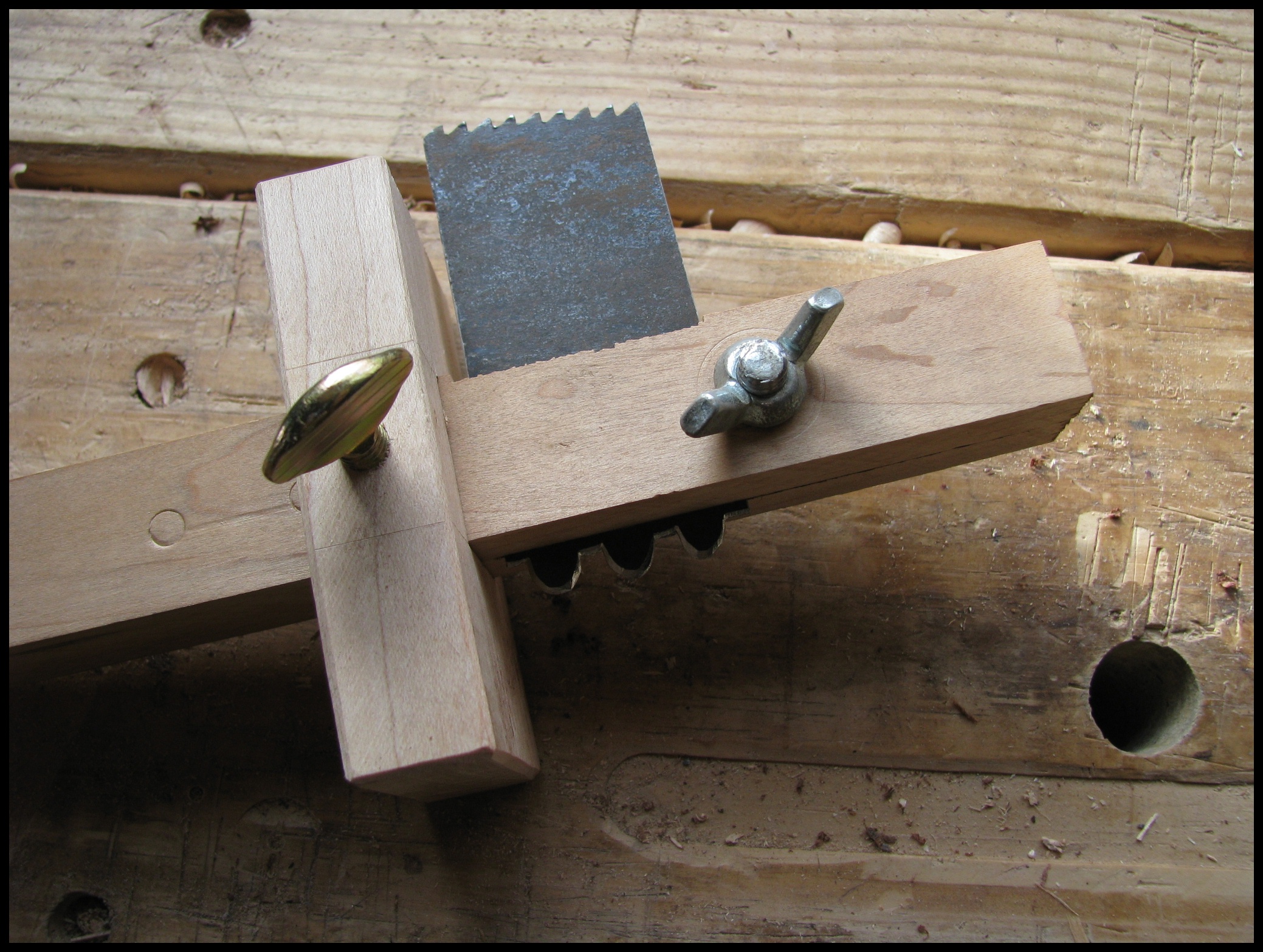
You can see the saw teeth on the top and the cutters I cut on the bottom.
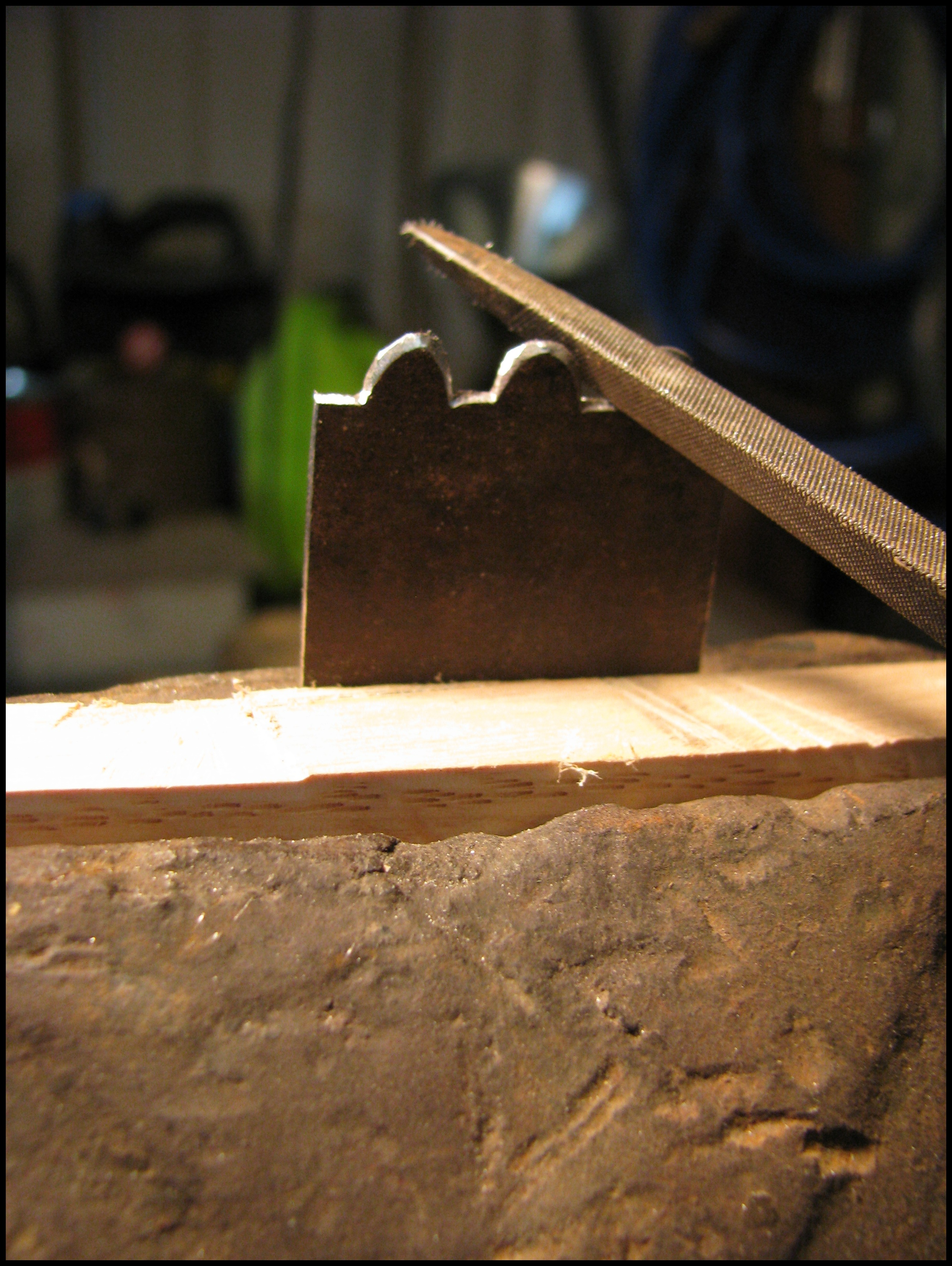
Shaping the cutters with a saw tooth file.
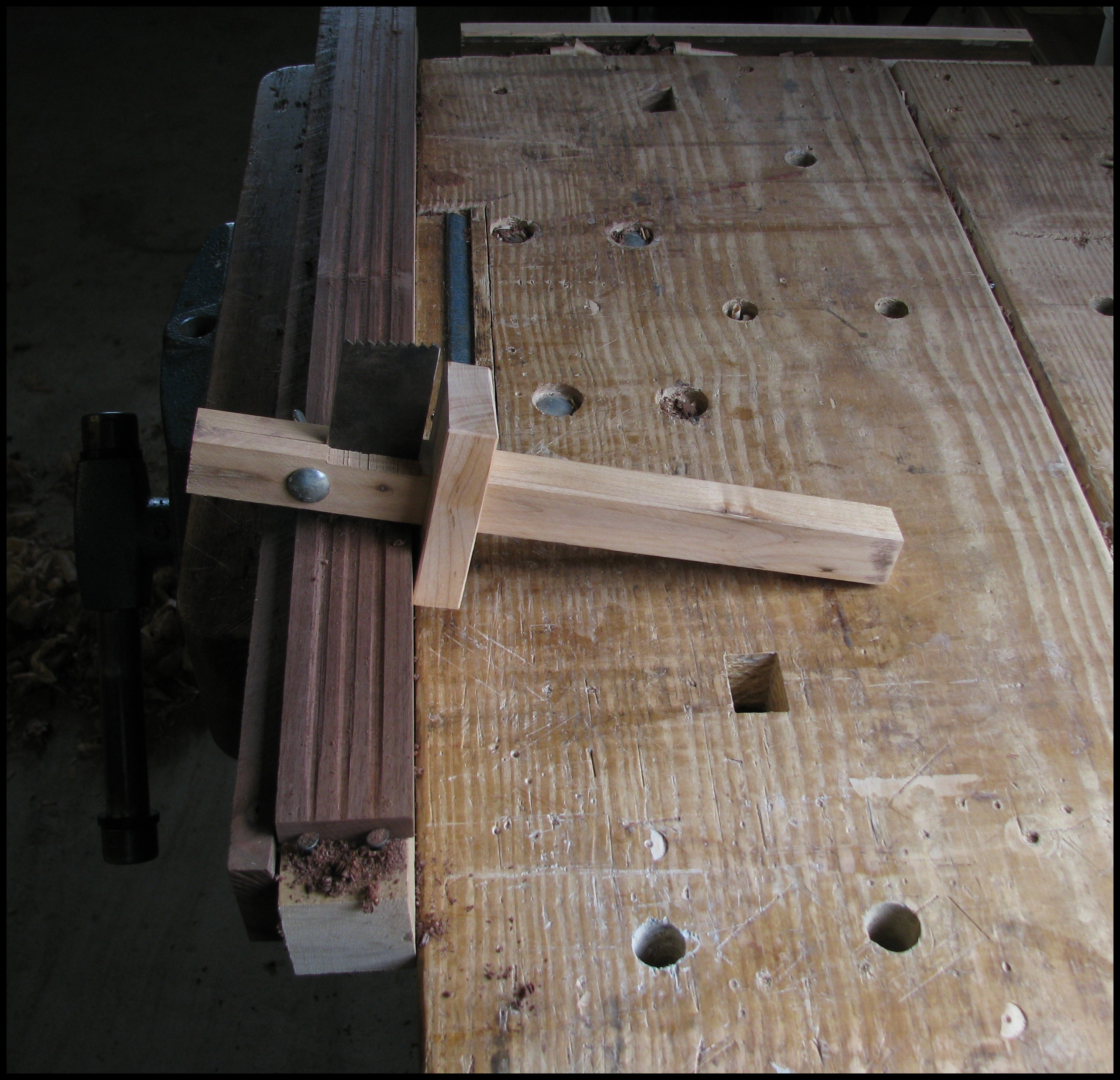
Scratching the flutes into the black walnut held in a little jig made with a couple of nails in one board and another to one side to act as a fence. It takes many slow passes across the hard walnut, and the ends are cleaned up with a small gouge.

Another view before the jig. I have a lot to learn but I am getting there.

Above is the new stage front for the puppet theater, temporarily set into place. Note the stage-wings (right and left), carved corbels, columns and sulphur inlay panels from earlier posts in their proper context. The new main stage front still lacks the obvious finishing, and the less obvious details. The front will also boast curtains and screens shielding both the wings from the front and leading back to the shadow screen (seen behind the main front). I have a lot of work to do on many aspects of the theater and props leading up to the theater’s performance of The Two Deaths of John Beartrist Laceroot this spring- the first performance in over five years.
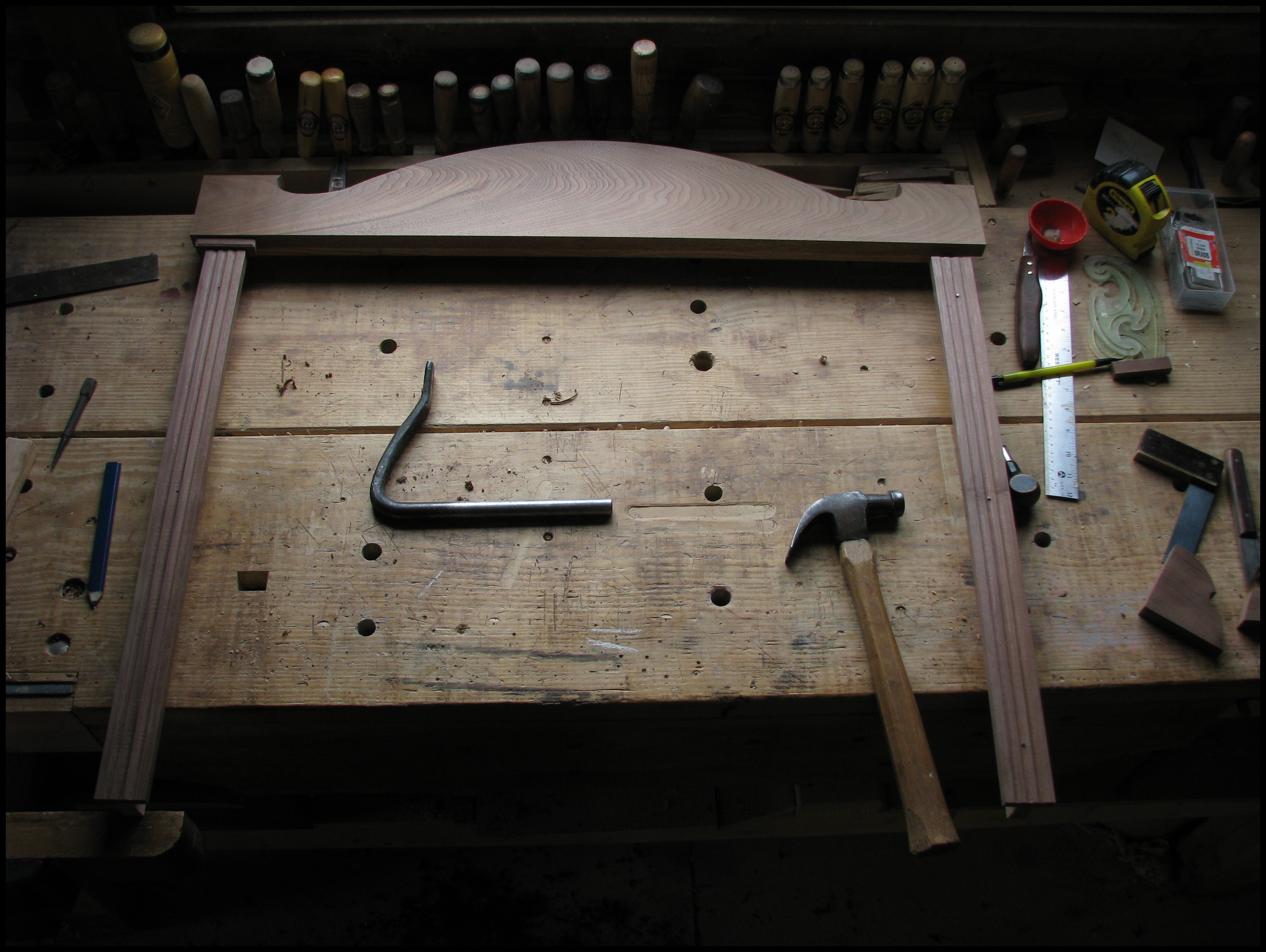
The stage front on the workbench in the shop as the colomns are being affixed. The next post will cover the cuting of the flutes in the columns, and the special tool used to cut them. The proscenium panel is cut from an ancient piece of reclaimed walnut. The tree must have been quite big and old judging from the many close-set rings in this one piece alone.

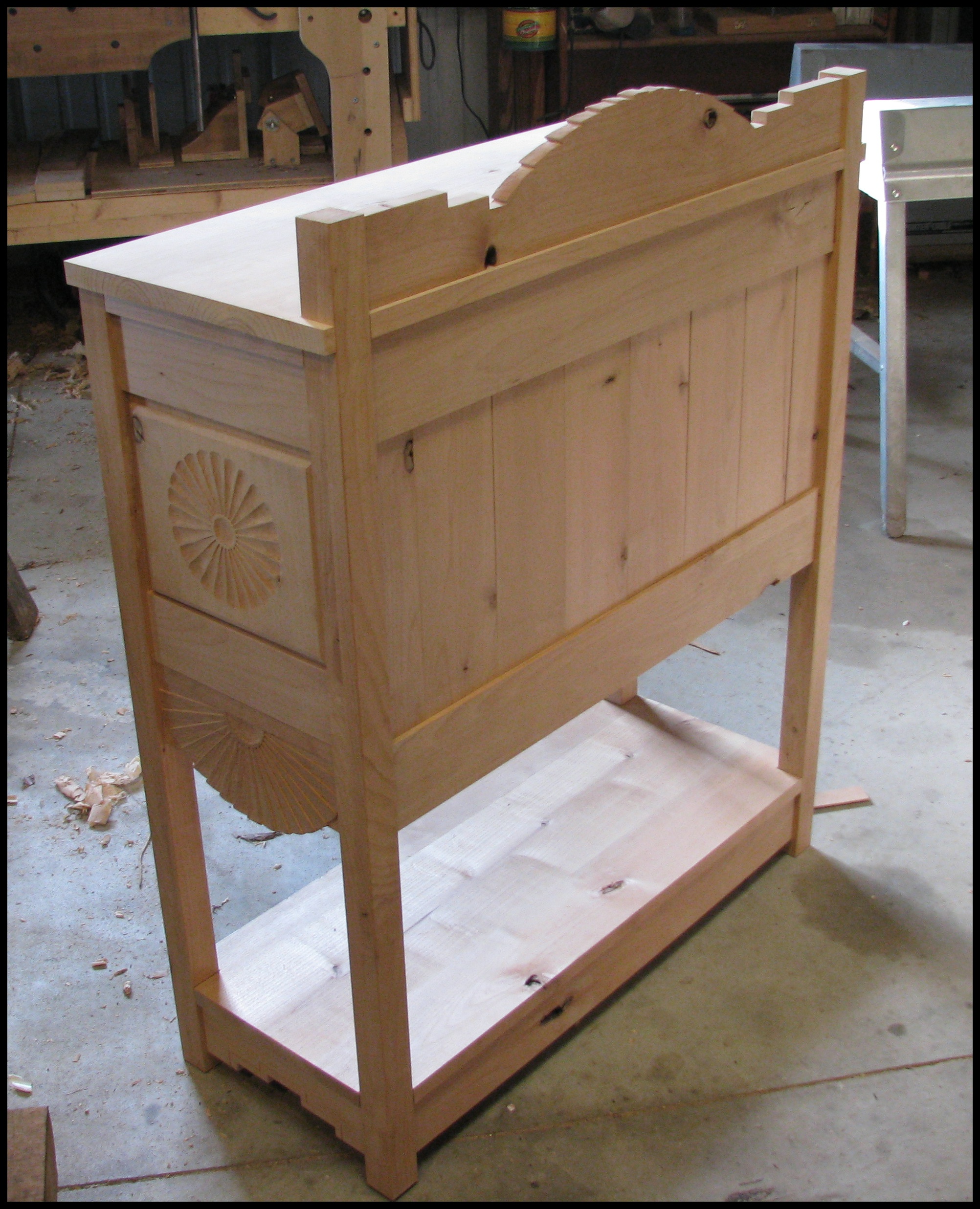
Above are the front and back view of the alder wood console which after the final assembly. Below are some detail shots of the carved elements. There are some minor details to complete, such as to turned globes for the tops of the back posts, hardware, and finishing. The construction is mortise and tenon, frame and panel and a few dovetails at the top of the carcass. I use a combination of traditional work methods using hand tools and traditional-leaning work using power tools.
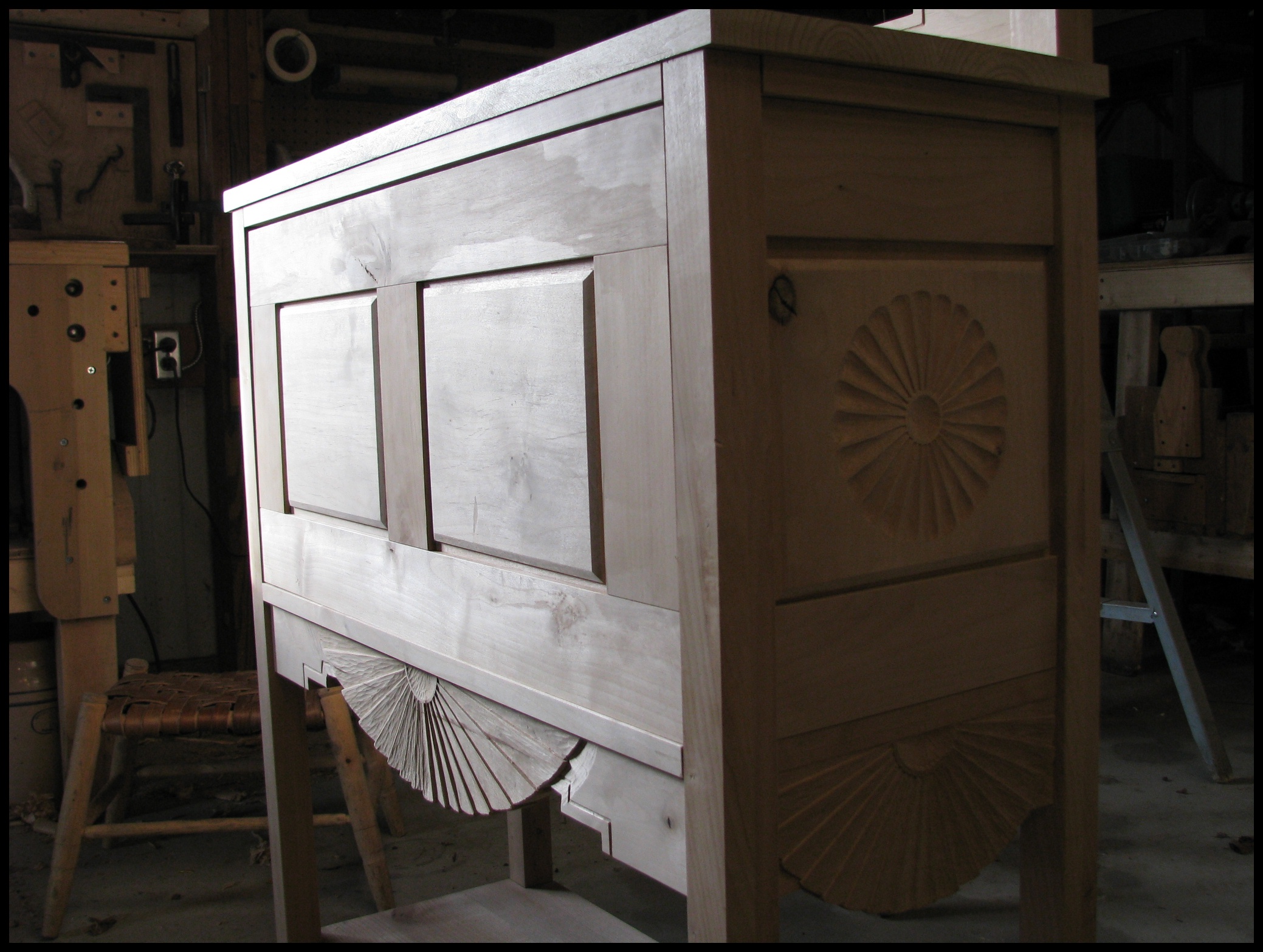

Details of the rosettes and fans (or sunburst).
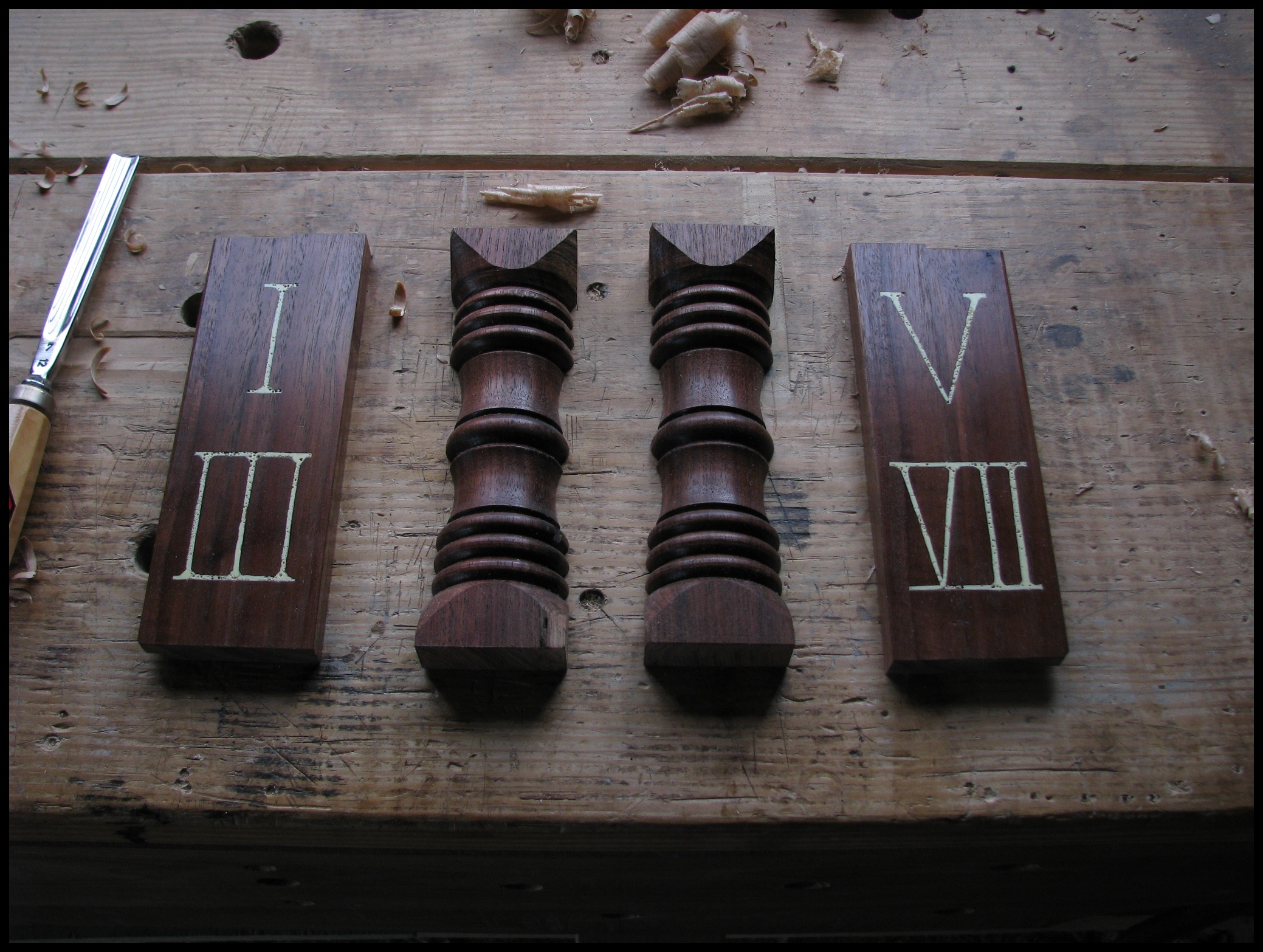
These are two small turned black walnut columns and flat black walnut panels with sacred numerology inlayed with sulphur to be attached to the under-story of the puppet theater.

Building color into the painting. You can see earlier stages of this painting a few posts back.
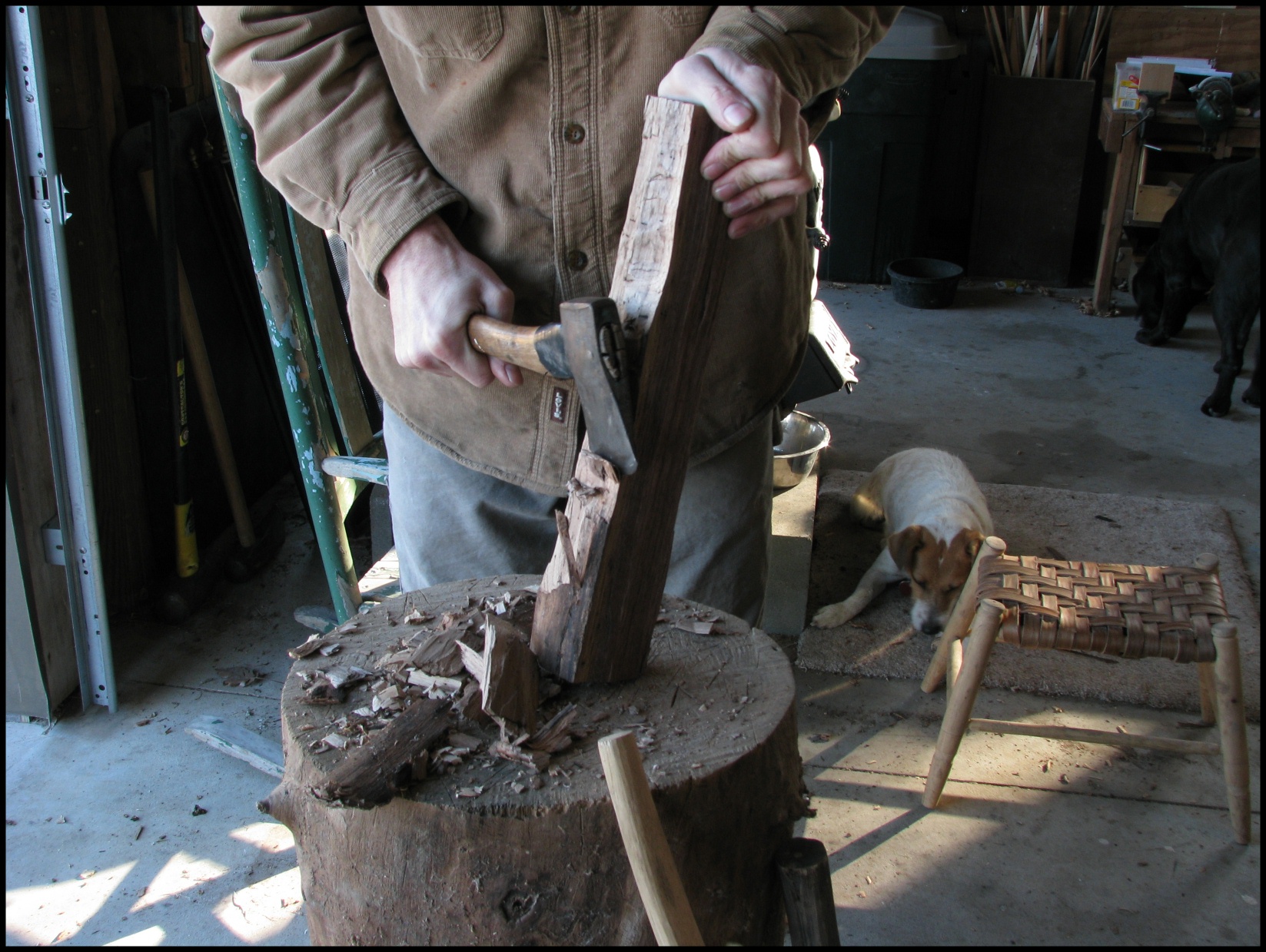
Using a hatchet to chop away the sap wood on a billet of walnut.
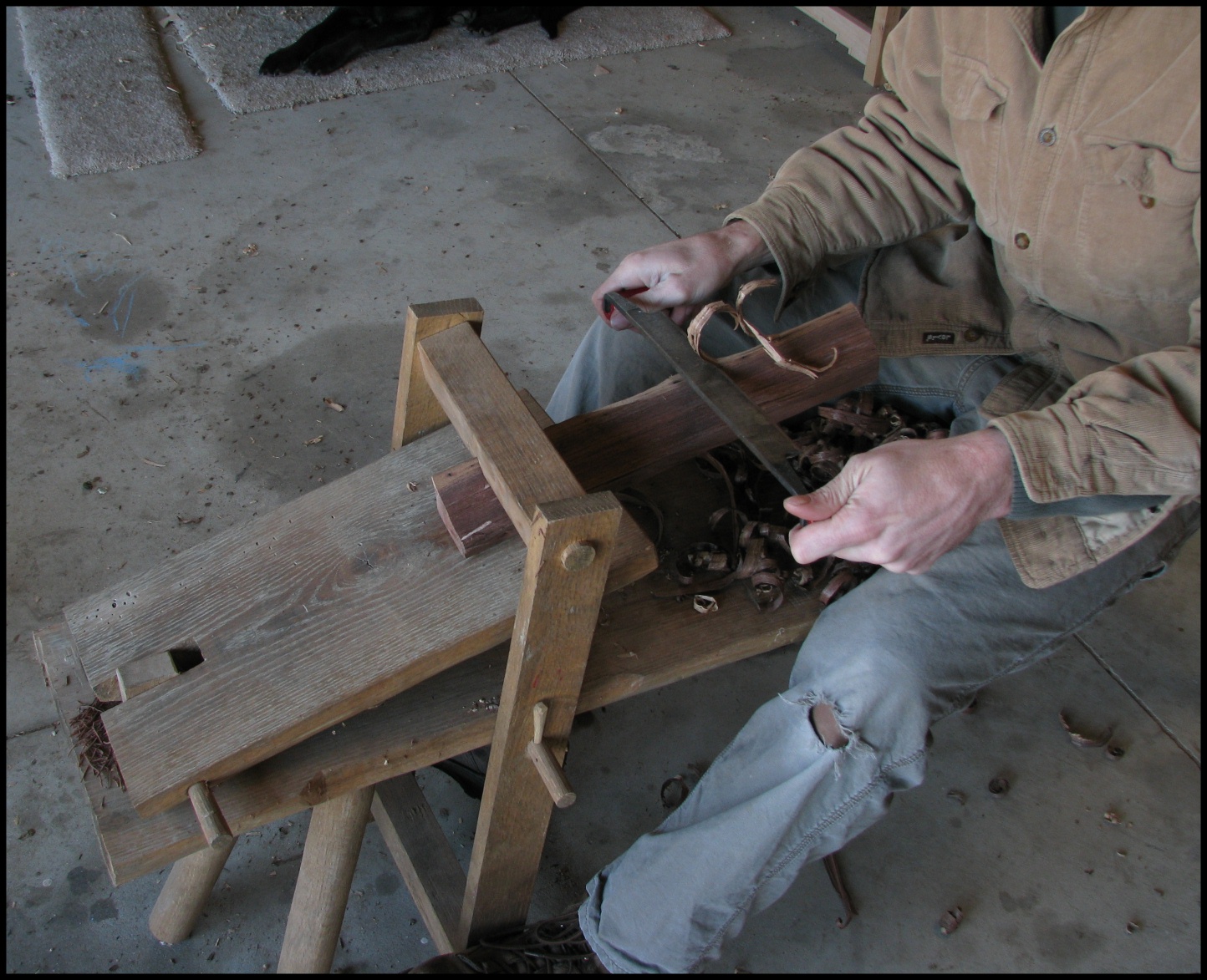
Shaping the billet on the shaving horse with drawknife to make it ready for the lathe.

Using the roughing gouge to shape the cylinder. This will become one leg on a little stool.


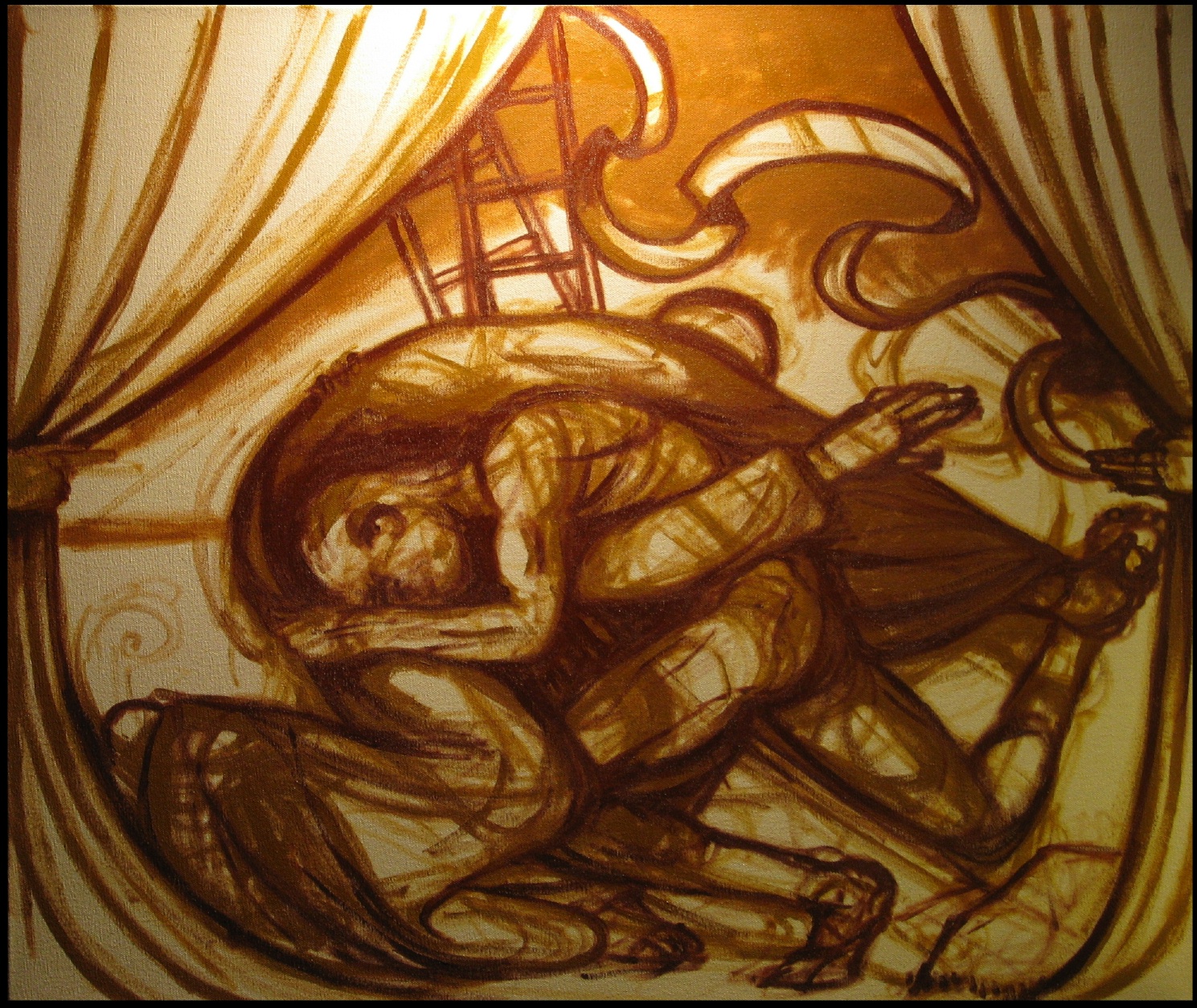
 The School of the Transfer of Energy


