Two Puppet Stages

Here is the main stage for the School of the Transfer of Energy Puppet Theater with some interesting shadows in the morning sun.

img_3835

img_3856

A slightly more complete picture of the same stage.  Here you can see the main curtains, and the side screens.  The shadow screen can be seen behind the trees of the scene in the stage.  The scene, which is under construction,  is John Beartrist Laceroot entering a grove of cedar trees.

Below is a peak at the mechanics of one of the rod puppets under the main stage floor.

img_3845

img_38531

This is the stage for the marionette narrator of the play which takes place on the stage in the preceding photos.  The wooden container, which is actually used to transport part of the main stage, serves double duty as the platform for the narrator’s stage.  There will be a curtain concealing the legs of the operator.

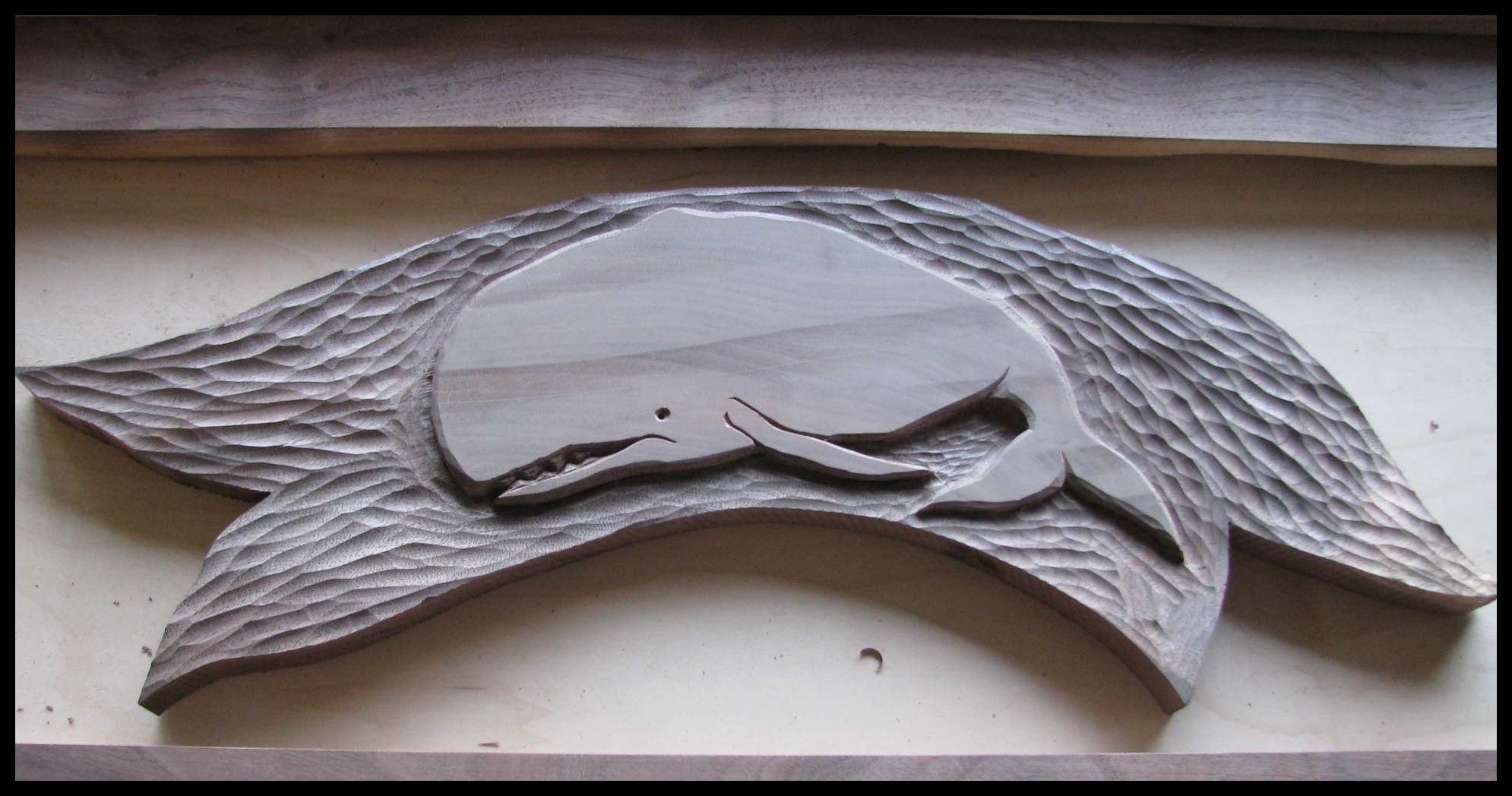
Here is a detail at the foot of the stage.  The whale is the symbol for Jonah, who the narrator, Jonas, is named for.

img_3851

Milling A Walnut Stump

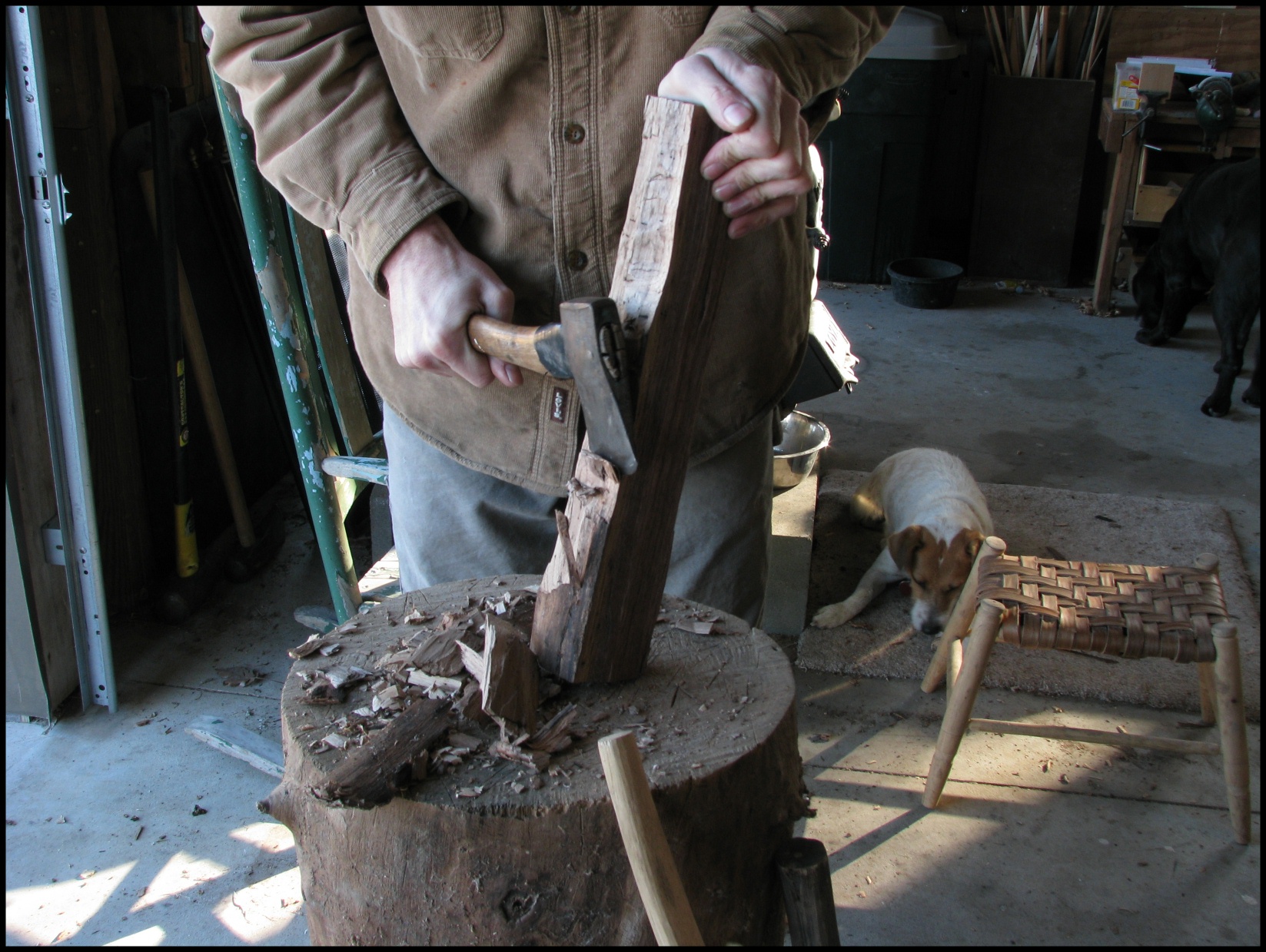
Here are a few photographs as I cut up a walnut stump.  The stump was all that was left of a city tree.

img_3705

A black walnut stump, cut in half and then one of the halves cut into quarters.

img_3726

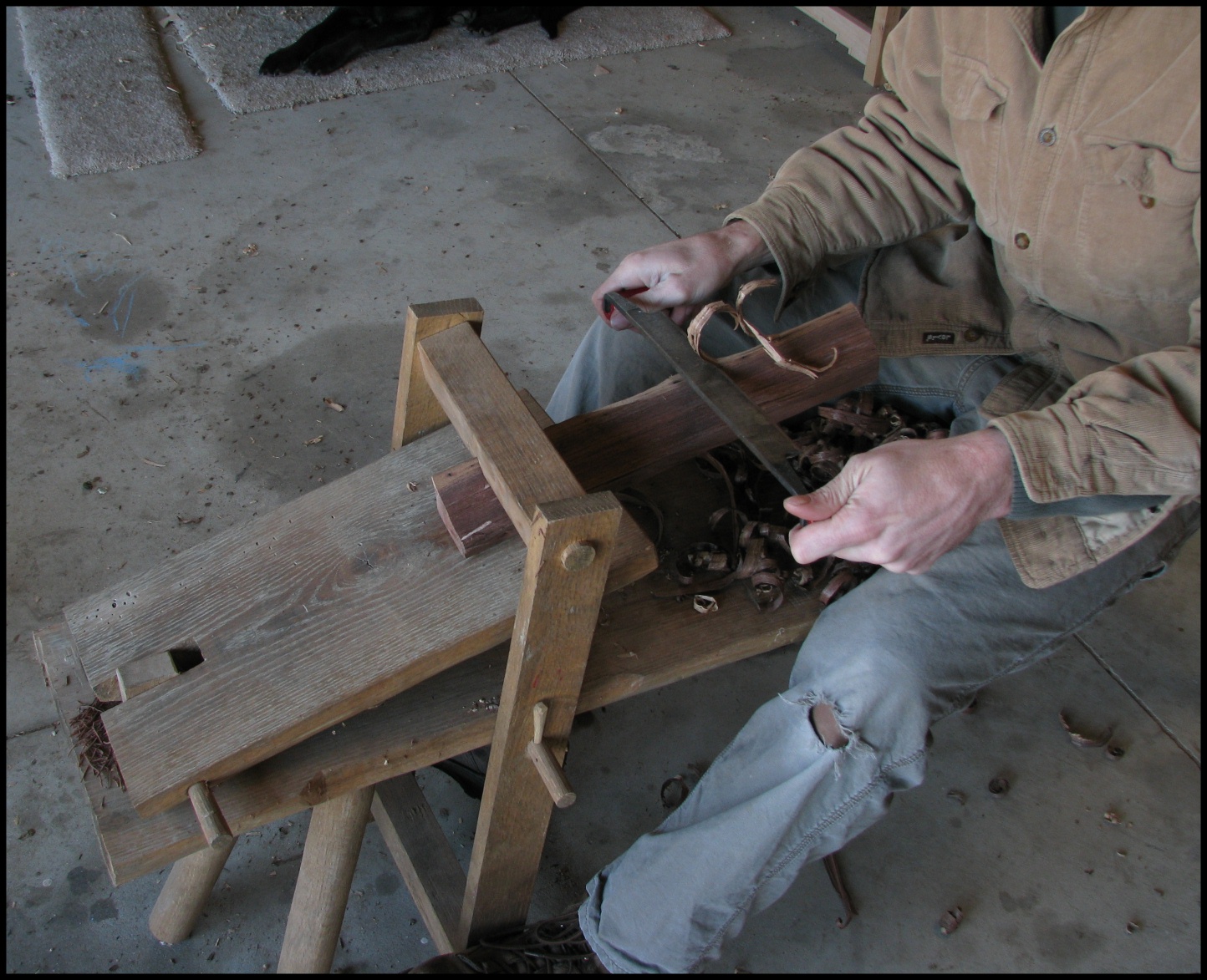
Sawing 5/4″ boards from one of the quarters.

img_3732

A good stack of boards- ranging from 4″ thick to 4/4″ thick.  A few spots of rot, but much usable wood.

img_3719

Rowdy spectators.

The Scratch Stock

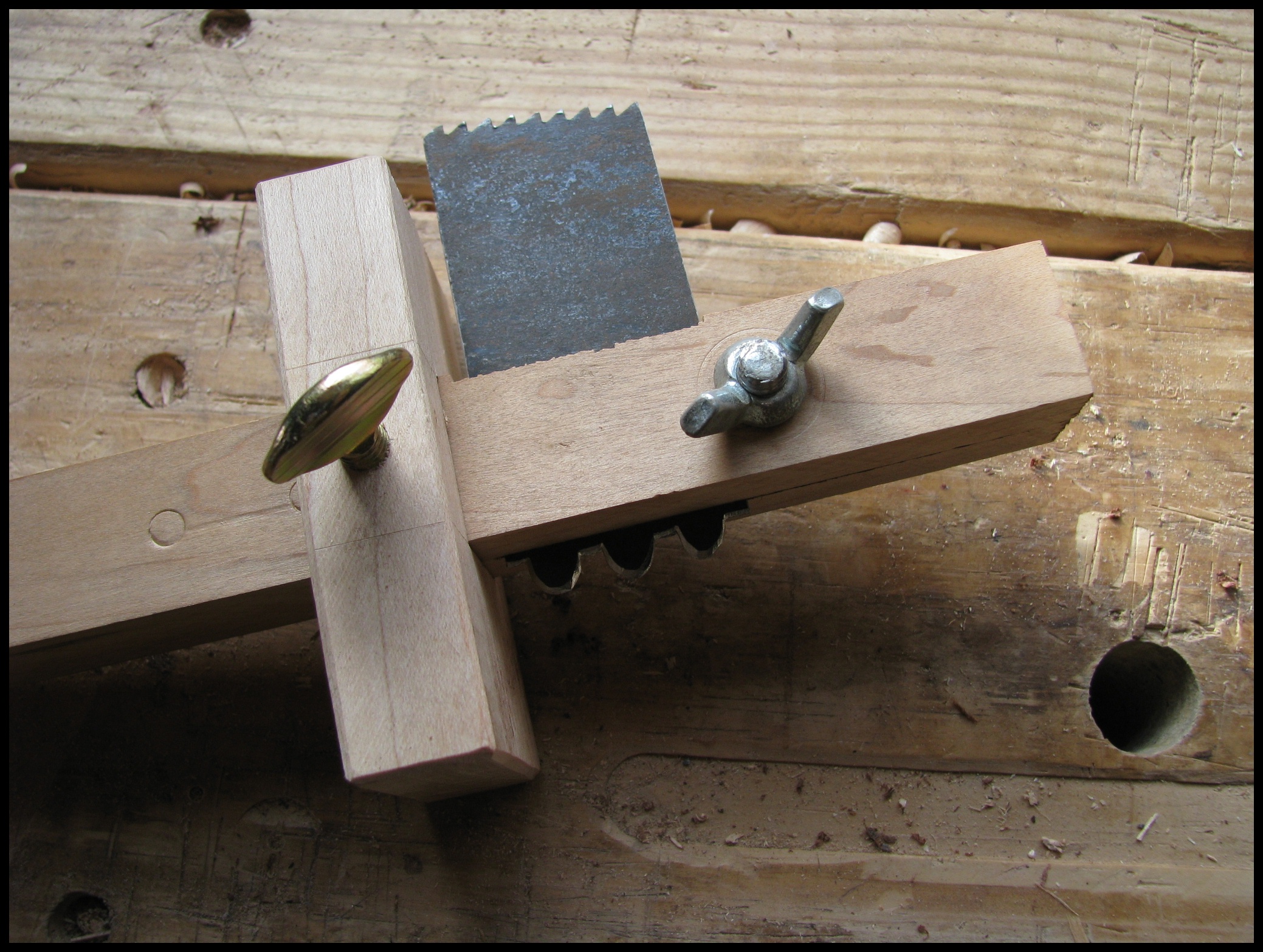
In order to cut the flutes in the columns on my puppet stage, I made up what I recently learned is called a “Scratch Stock”  (see Peter Follansbee’s blog )  from some maple and a piece of an old saw blade, in the form of a marking guage- with an adjustable fence.  On a side note, Peter Follansbee’s blog is quite interesting and unique- captivating even- for people who appreciate those who are exceedingly well aquianted with the specific history and dedicated to the authentic quality of their work.   One can also visit his website to see some of his extraordinary work in 17th century joined furniture.

img_3489

You can see the saw teeth on the top and the cutters I cut on the bottom.

img_3533

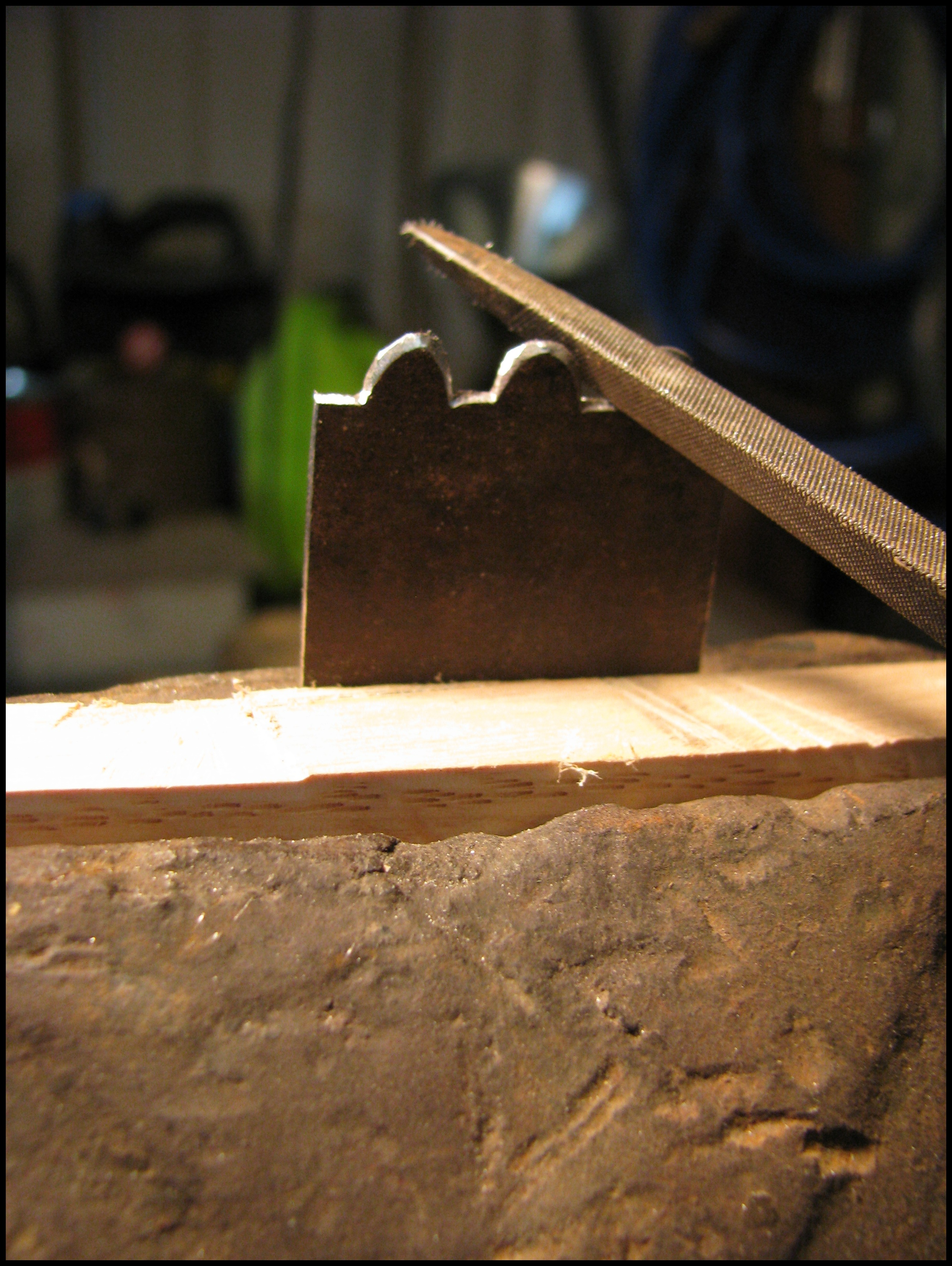
Shaping the cutters with a saw tooth file.

img_3537

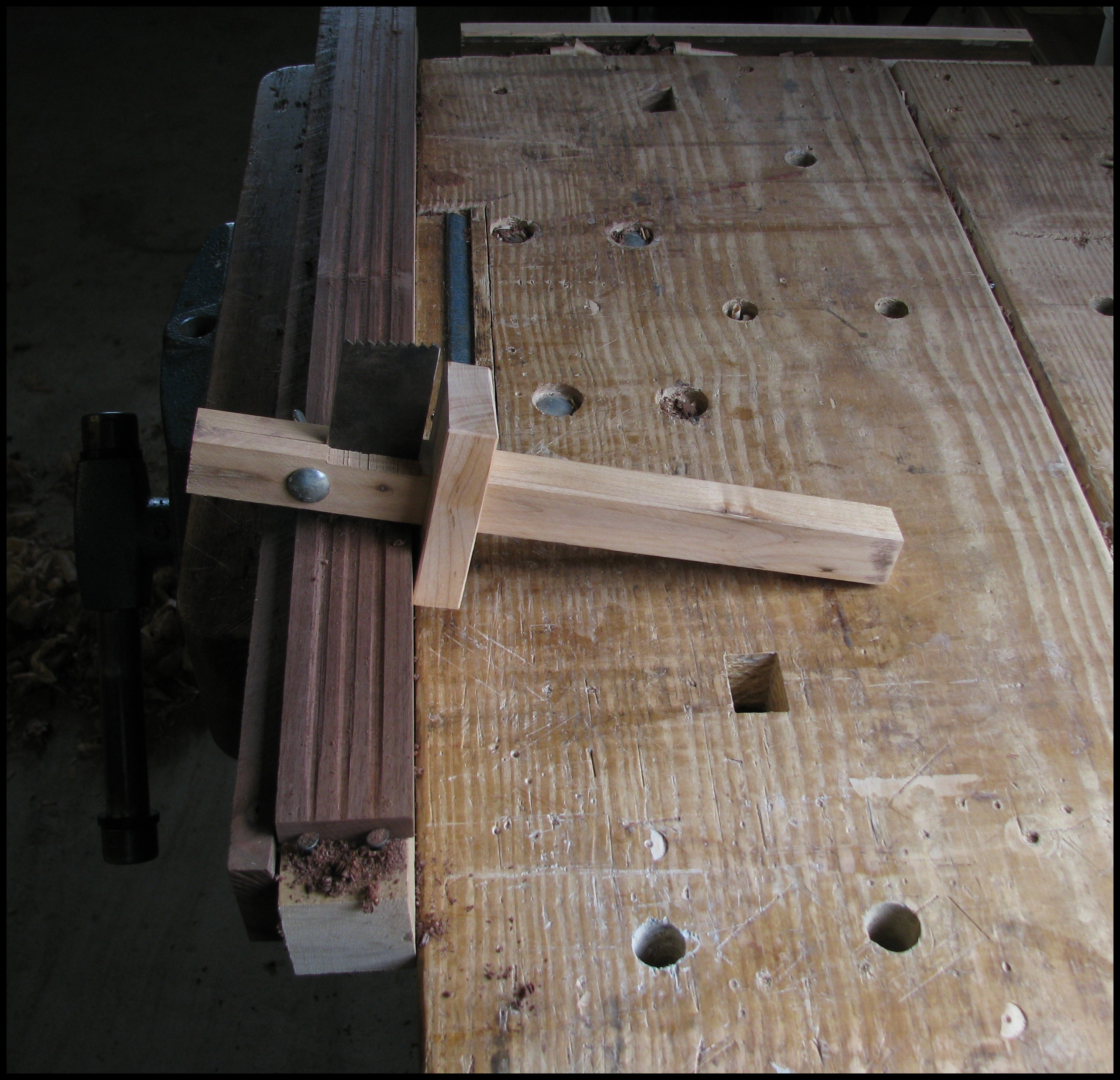
Scratching the flutes into the black walnut held in a little jig made with a couple of nails in one board and another to one side to act as a fence.  It takes many slow passes across the hard walnut, and the ends are cleaned up with a small gouge.

img_3495

Another view before the jig.  I have a lot to learn but I am getting there.


New Puppet Theater Stage Front

img_3552

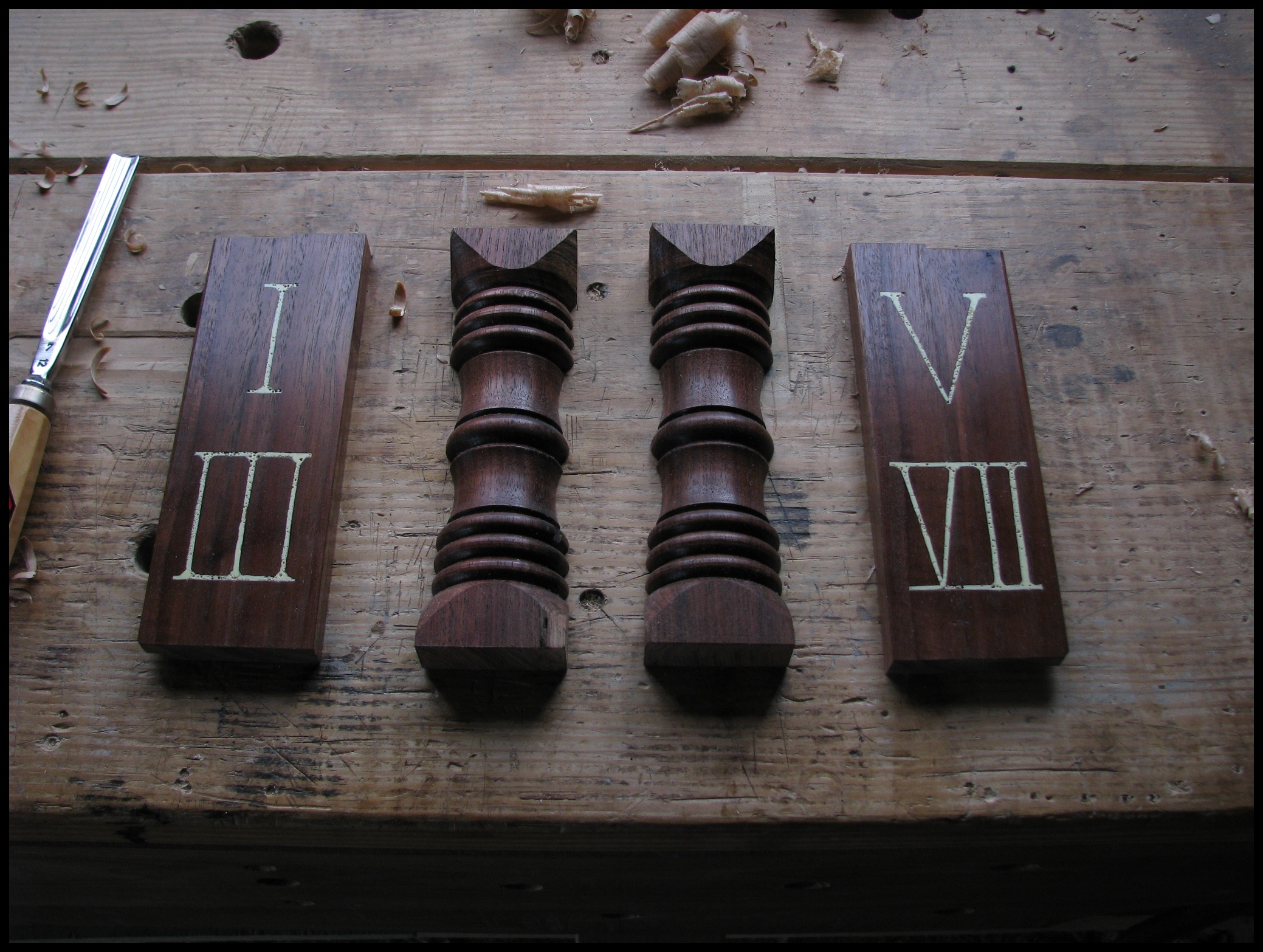
Above is the new stage front for the puppet theater, temporarily set into place.  Note the stage-wings (right and left), carved corbels, columns and sulphur inlay panels from earlier posts in their proper context.  The new main stage front still lacks the obvious finishing, and the less obvious details.  The front will also boast curtains and screens shielding both the wings from the front and leading back to the shadow screen (seen behind the main front).  I have a lot of work to do on many aspects of the theater and props leading up to the theater’s performance of The Two Deaths of John Beartrist Laceroot this spring- the first performance in over five years.

img_3545

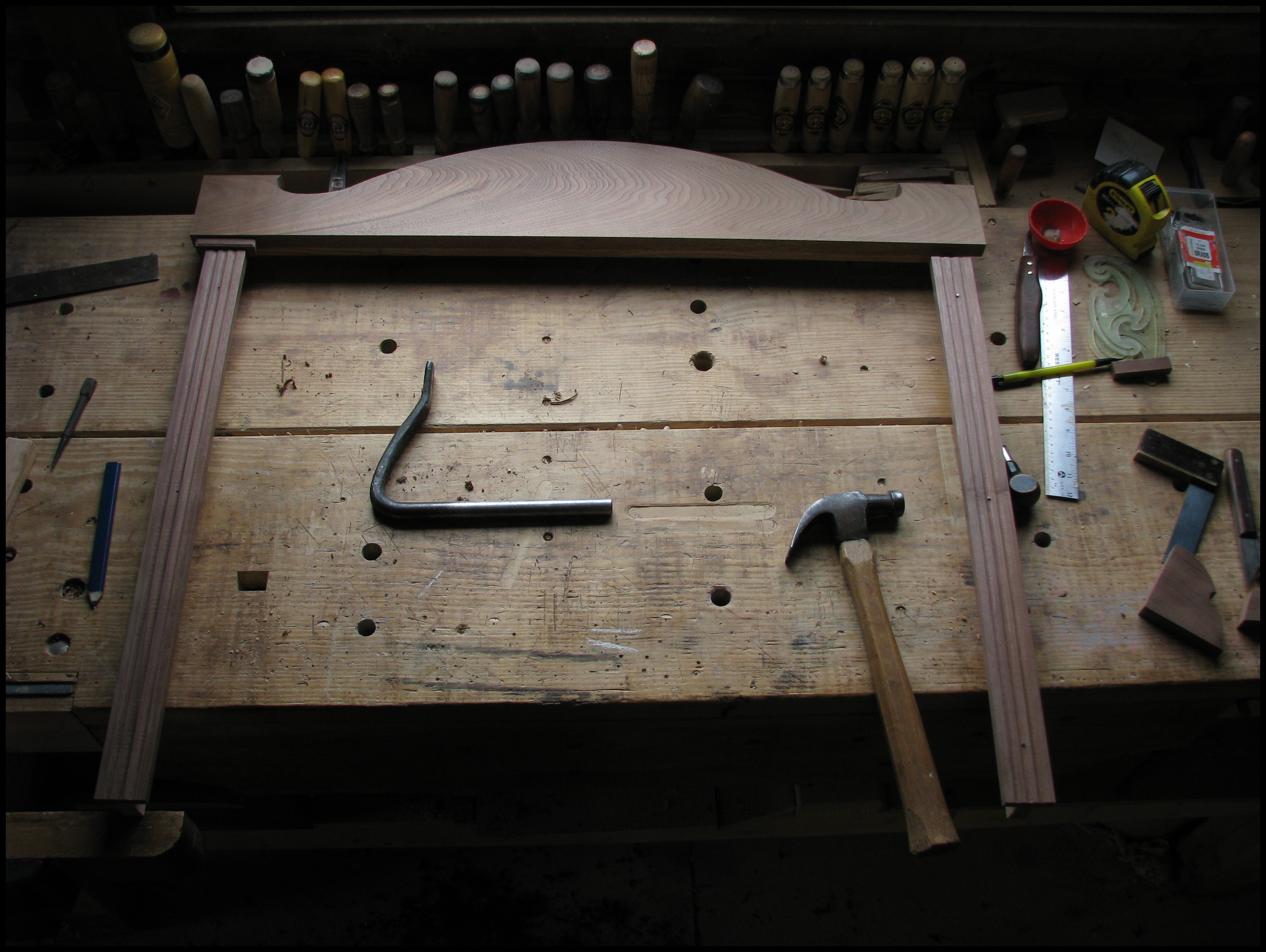
The stage front on the workbench in the shop as the colomns are being affixed.  The next post will cover the cuting of the flutes in the columns, and the special tool used to cut them.  The proscenium panel is cut from an ancient piece of reclaimed walnut.  The tree must have been quite big and old judging from the many close-set rings in this one piece alone.