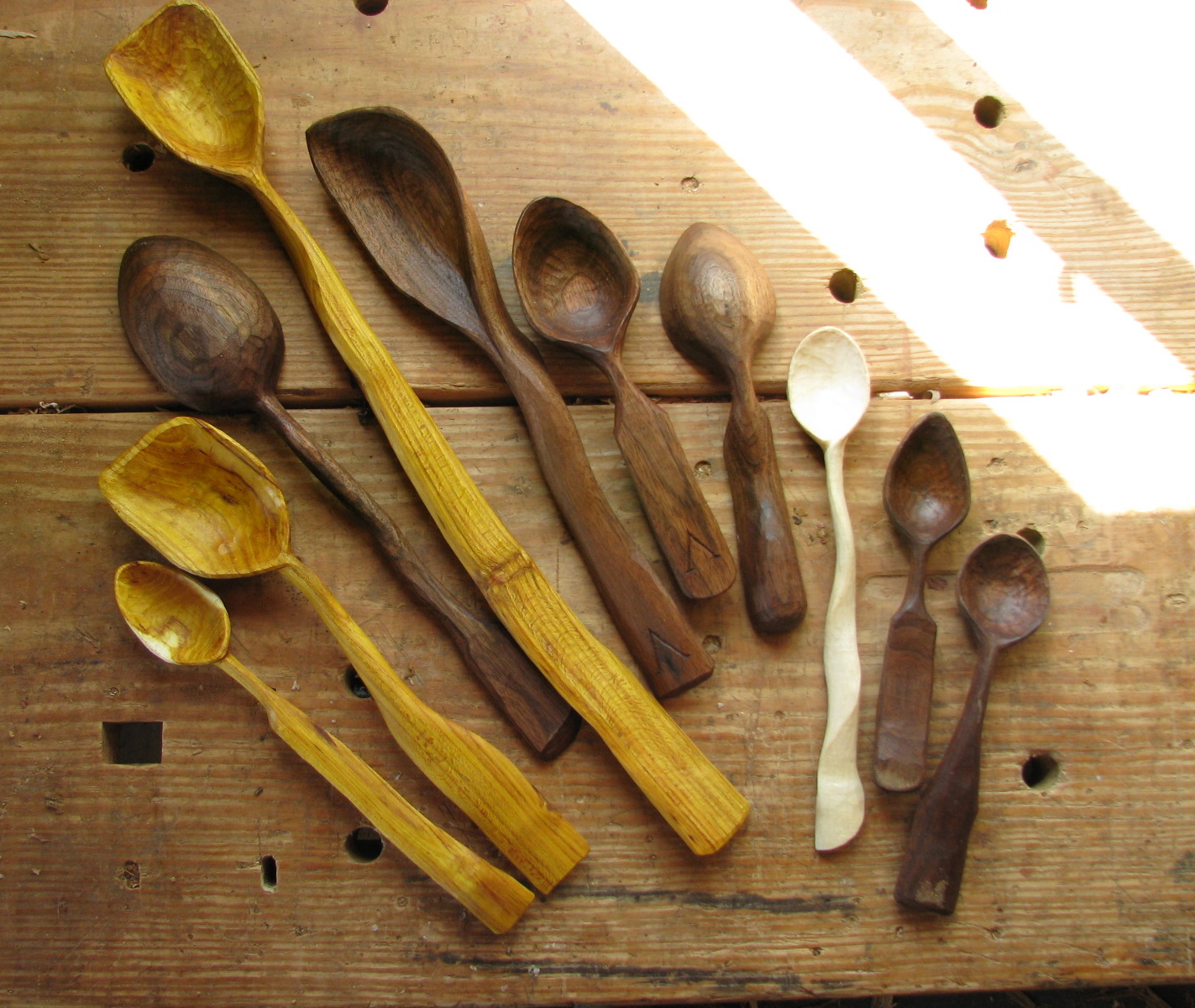
Ten spoons in black walnut, osage orange and soft maple. Carved in the past month under a mulberry tree with axe and knife.
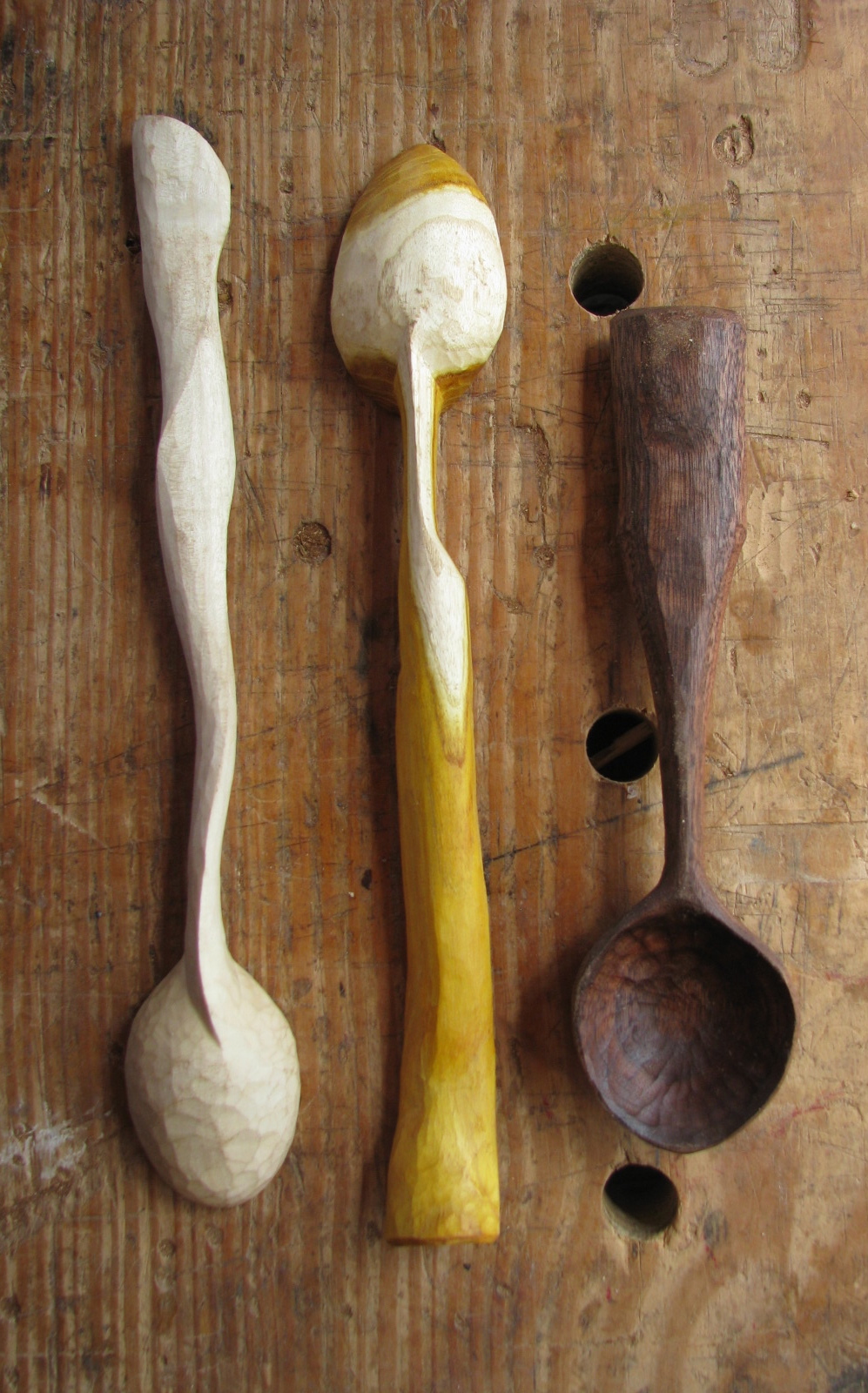
Soft maple, osage orange, and walnut.

Osage orange.
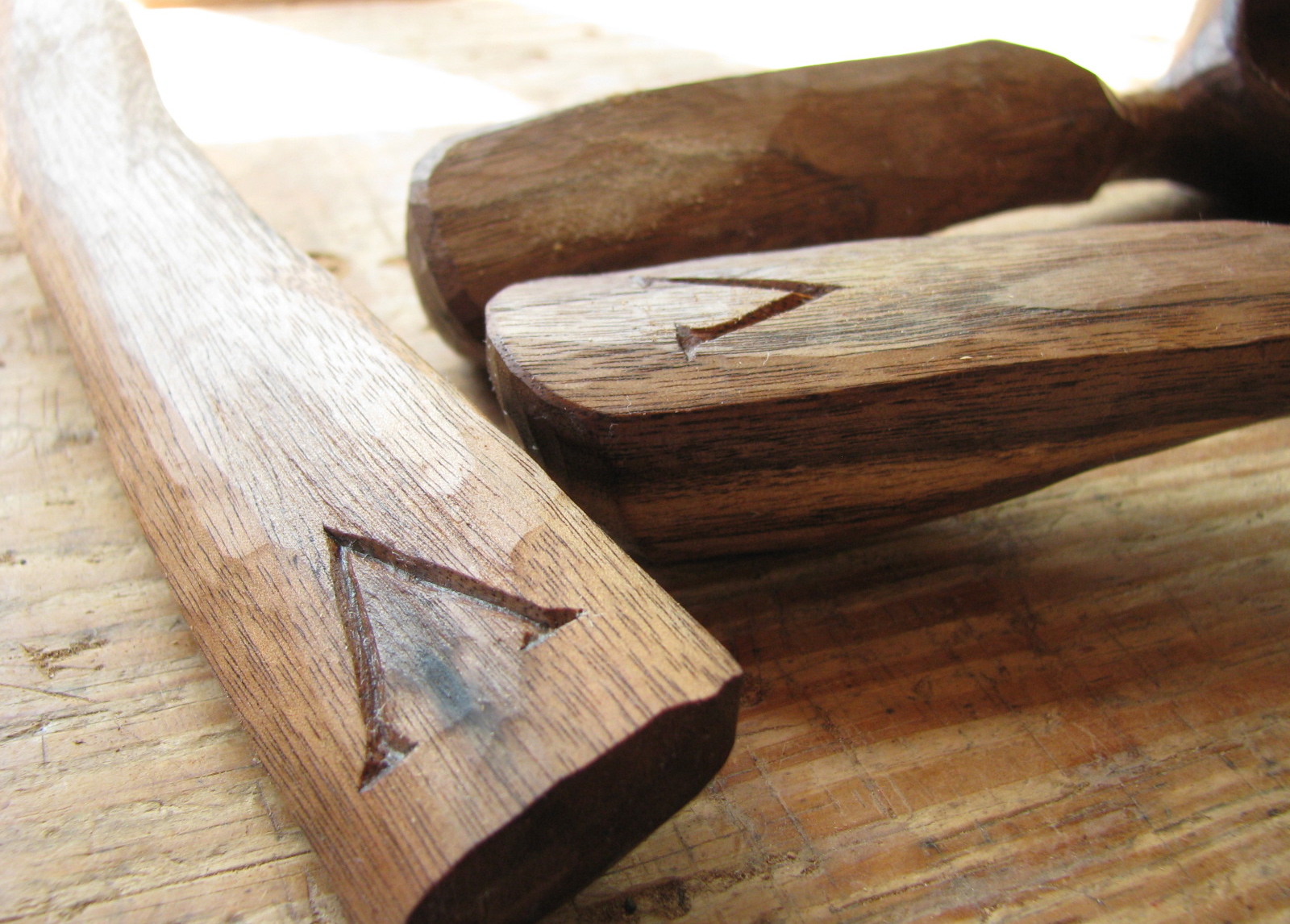
Roman “V” signograph.
Ten spoons in black walnut, osage orange and soft maple. Carved in the past month under a mulberry tree with axe and knife.
Soft maple, osage orange, and walnut.
Osage orange.
Roman “V” signograph.
Working out the first of a series of headboards in ash and walnut.
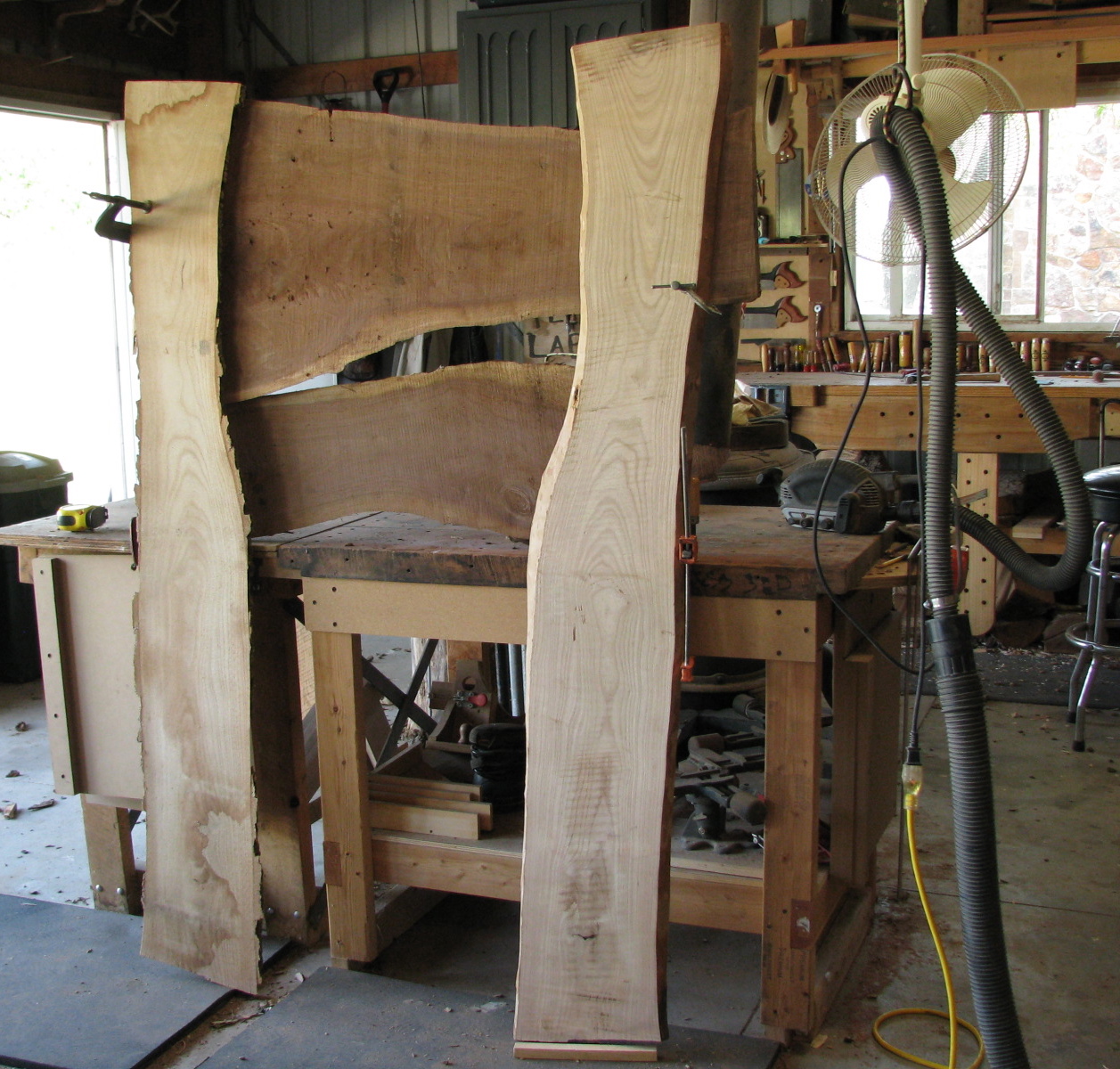
What relationships work?
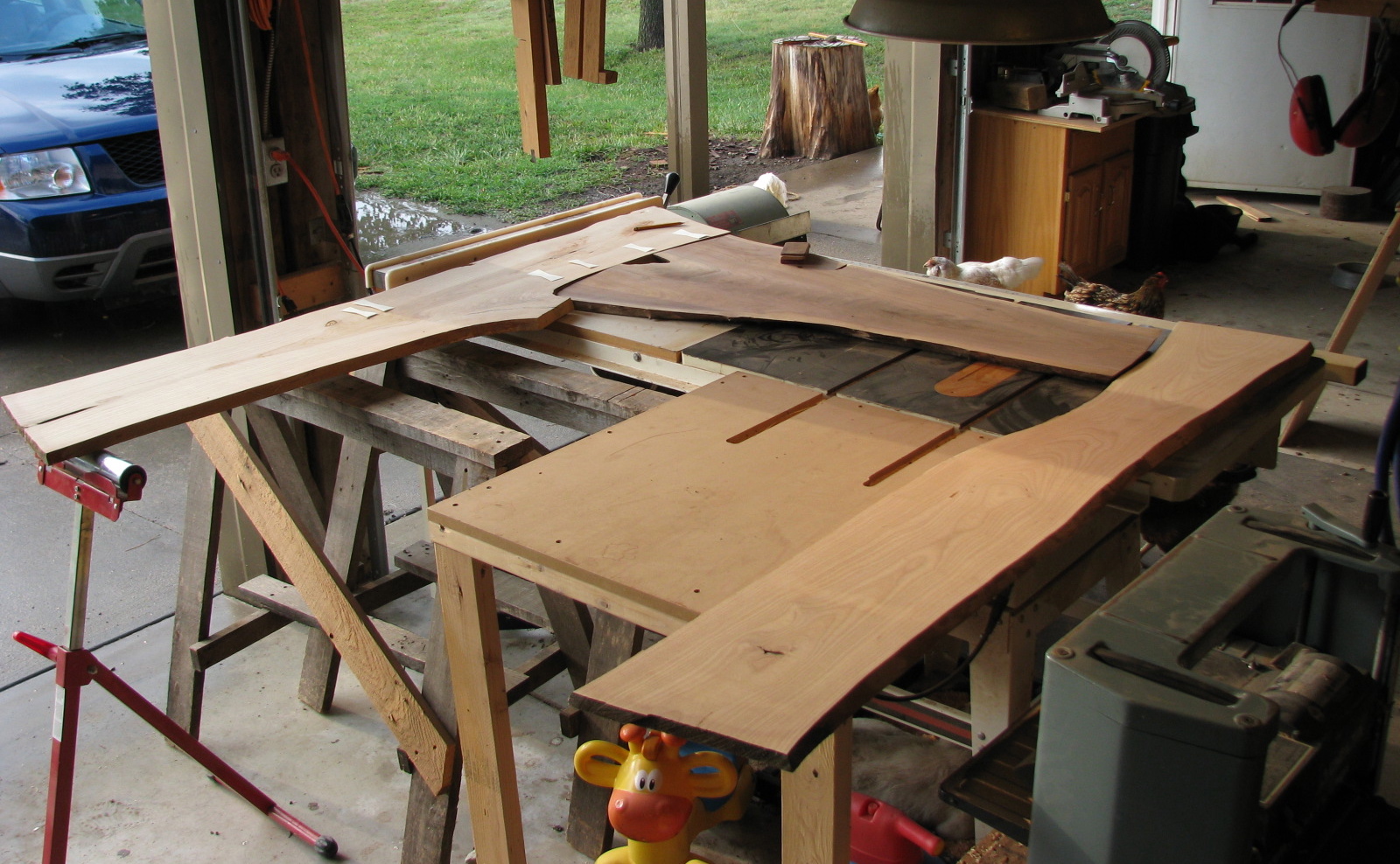
Fitting the scribed pieces.
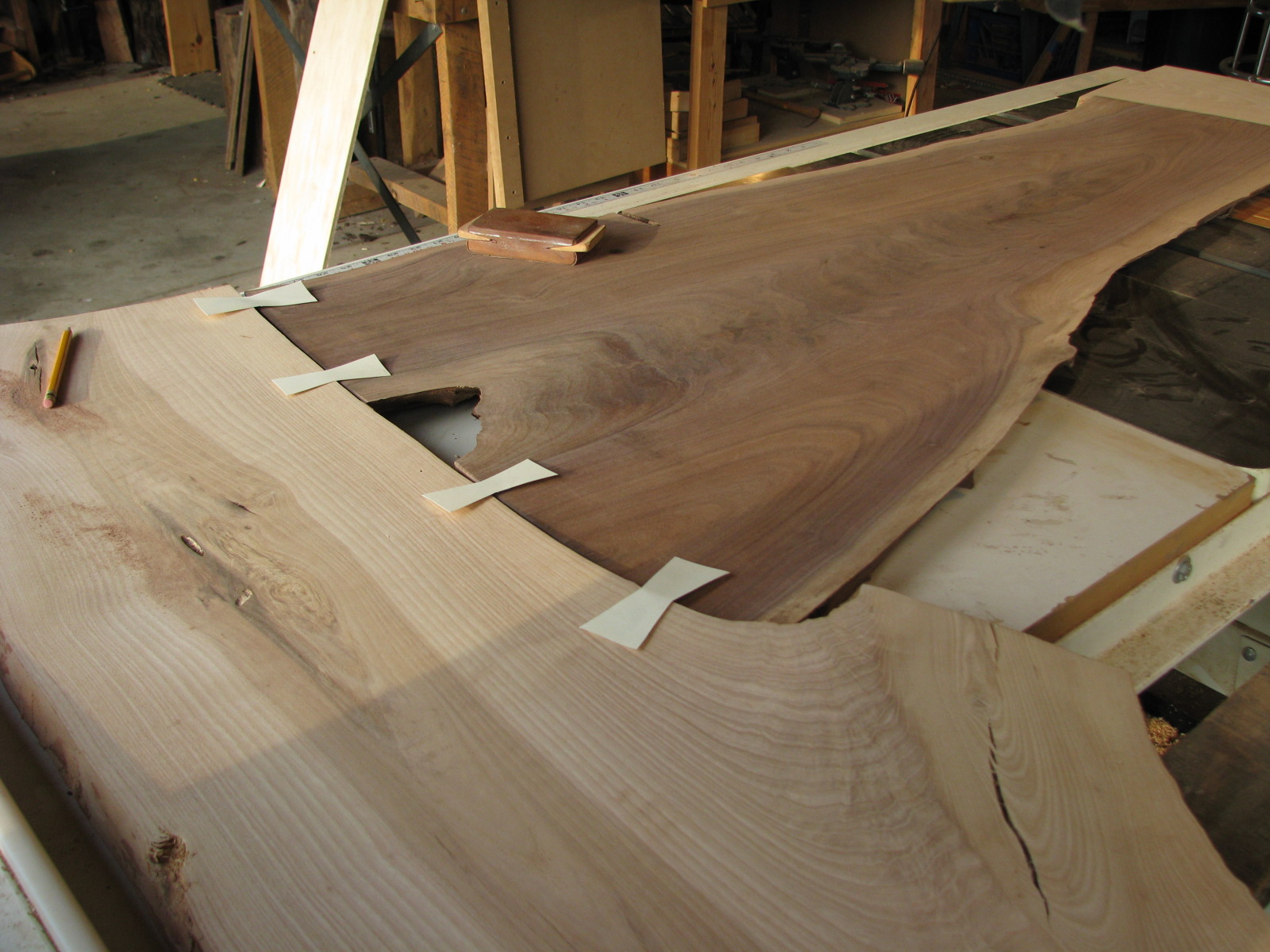
Possible locations for butterflies.
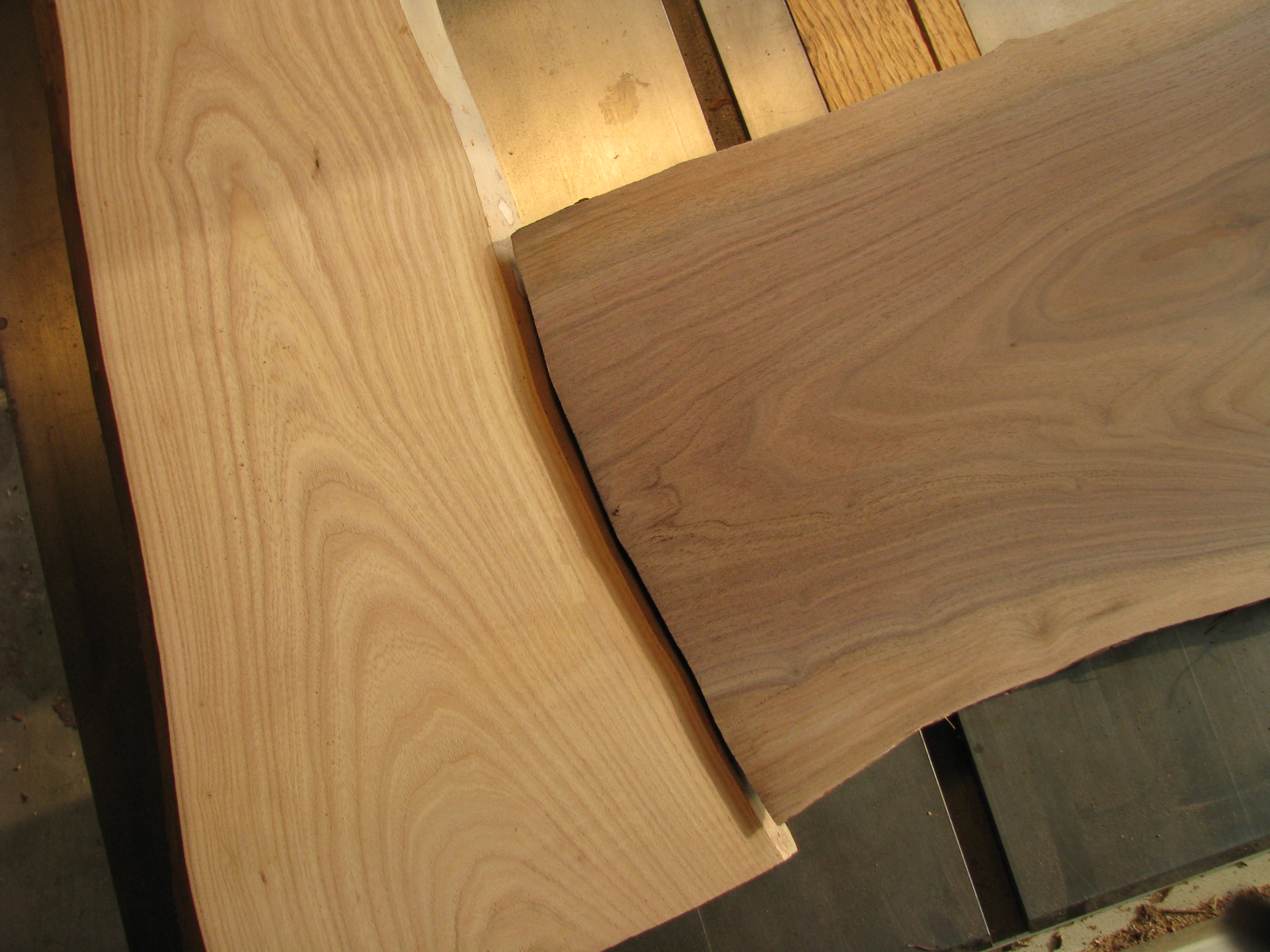
Detail of scribed “joint”.
The following are a series of photos of the construction of what I have chosen to call a “walnut long table”, featuring a large center cut black walnut slab about 2″ thick from Fall River, KS. The legs are also black walnut from Boaz, KS.
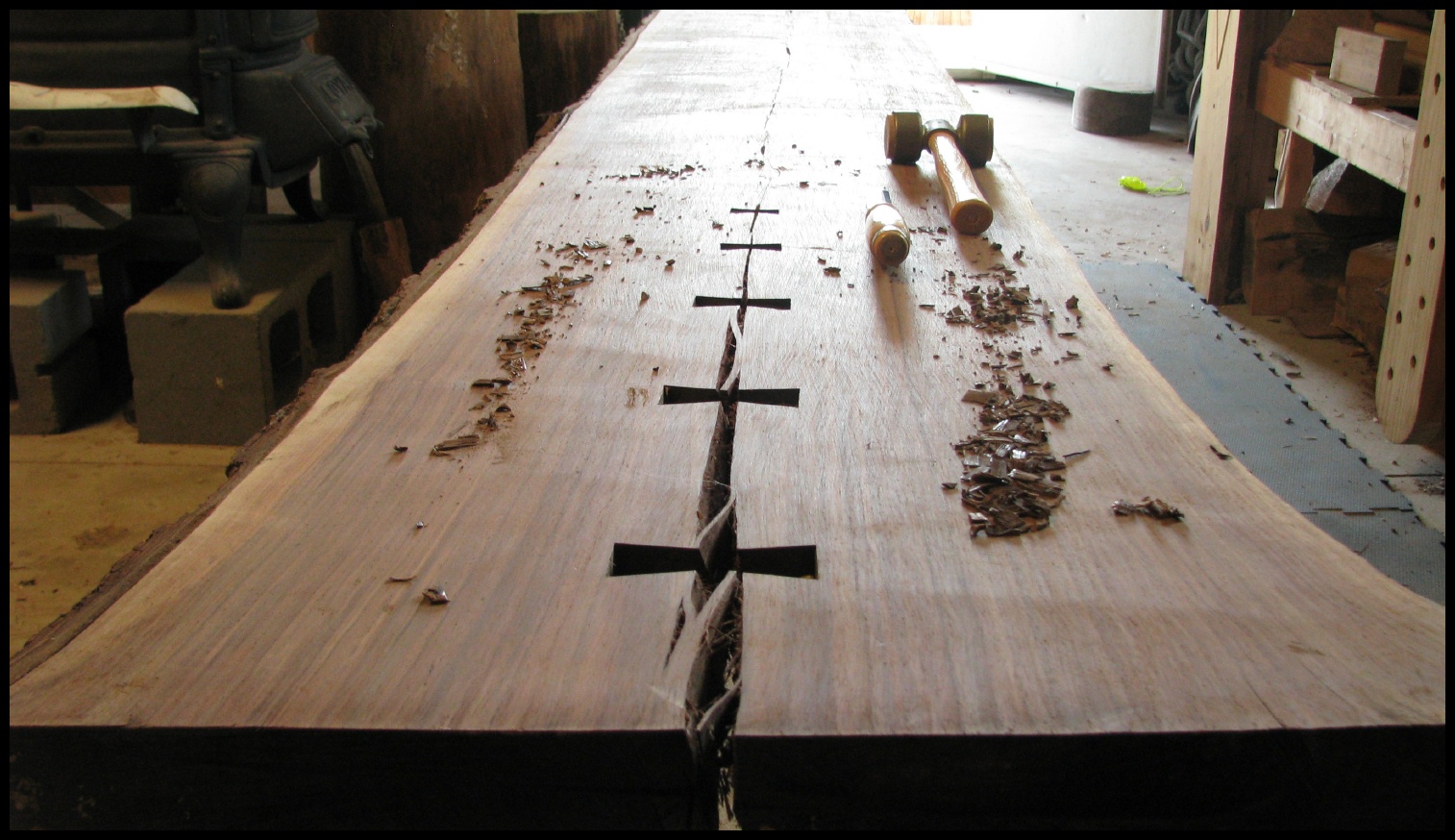
Butterfly sockets along the seasoning check.
Removing material for a large sliding dovetail and dado for the cross brace.
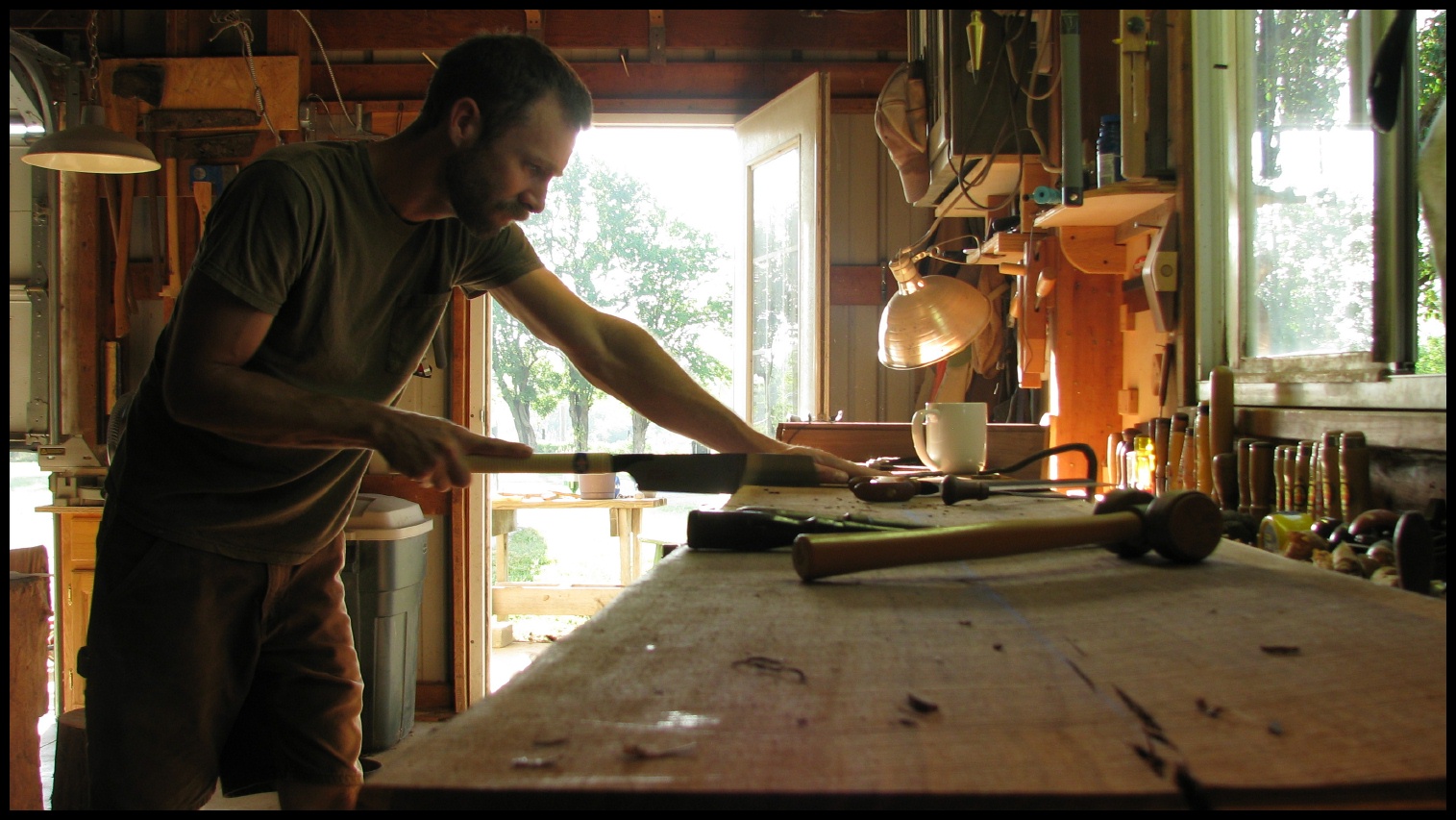
Sawing the slope inside of the dovetail-dado (dovetail bit in router not deep enough).
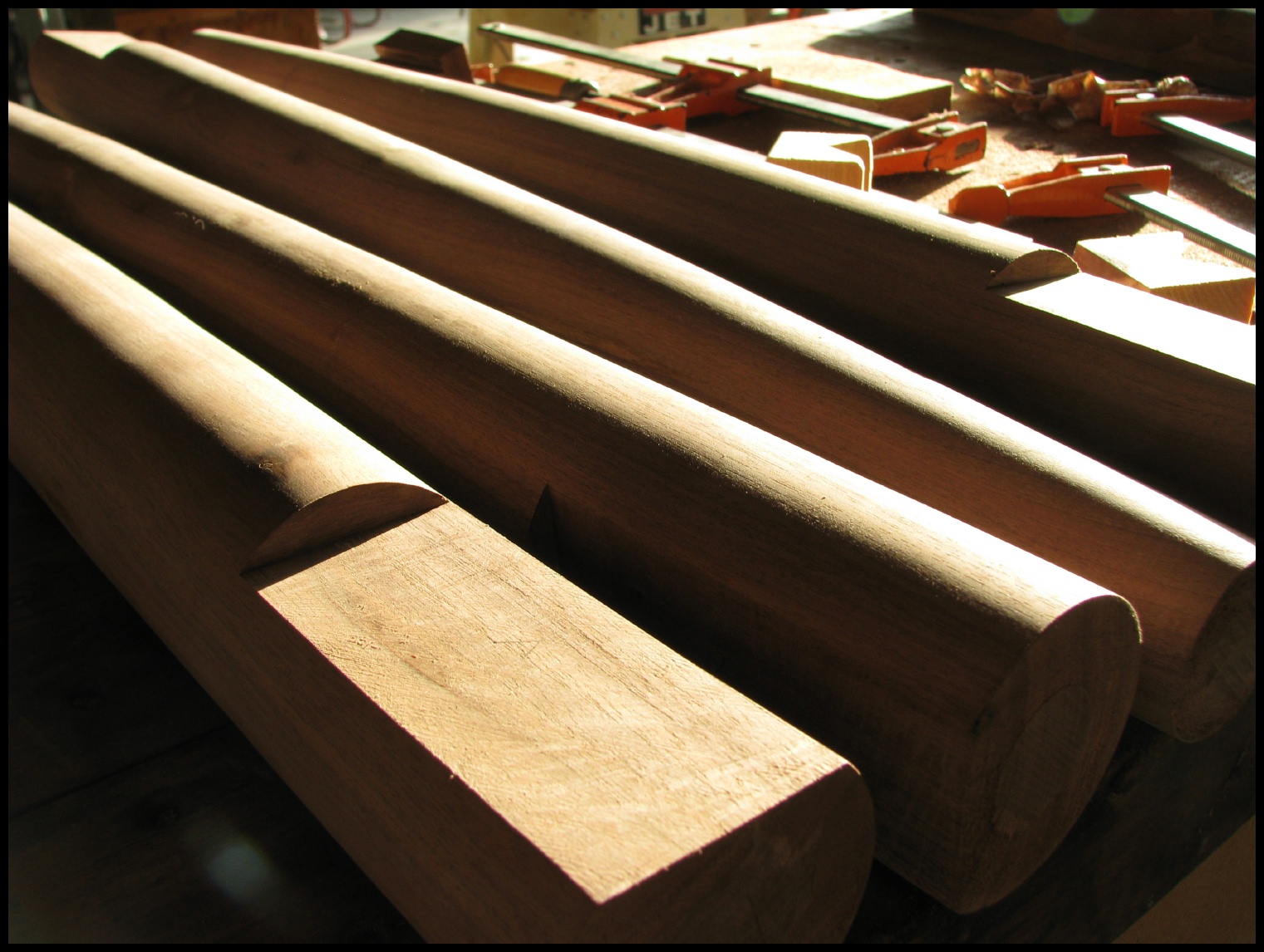
Legs.
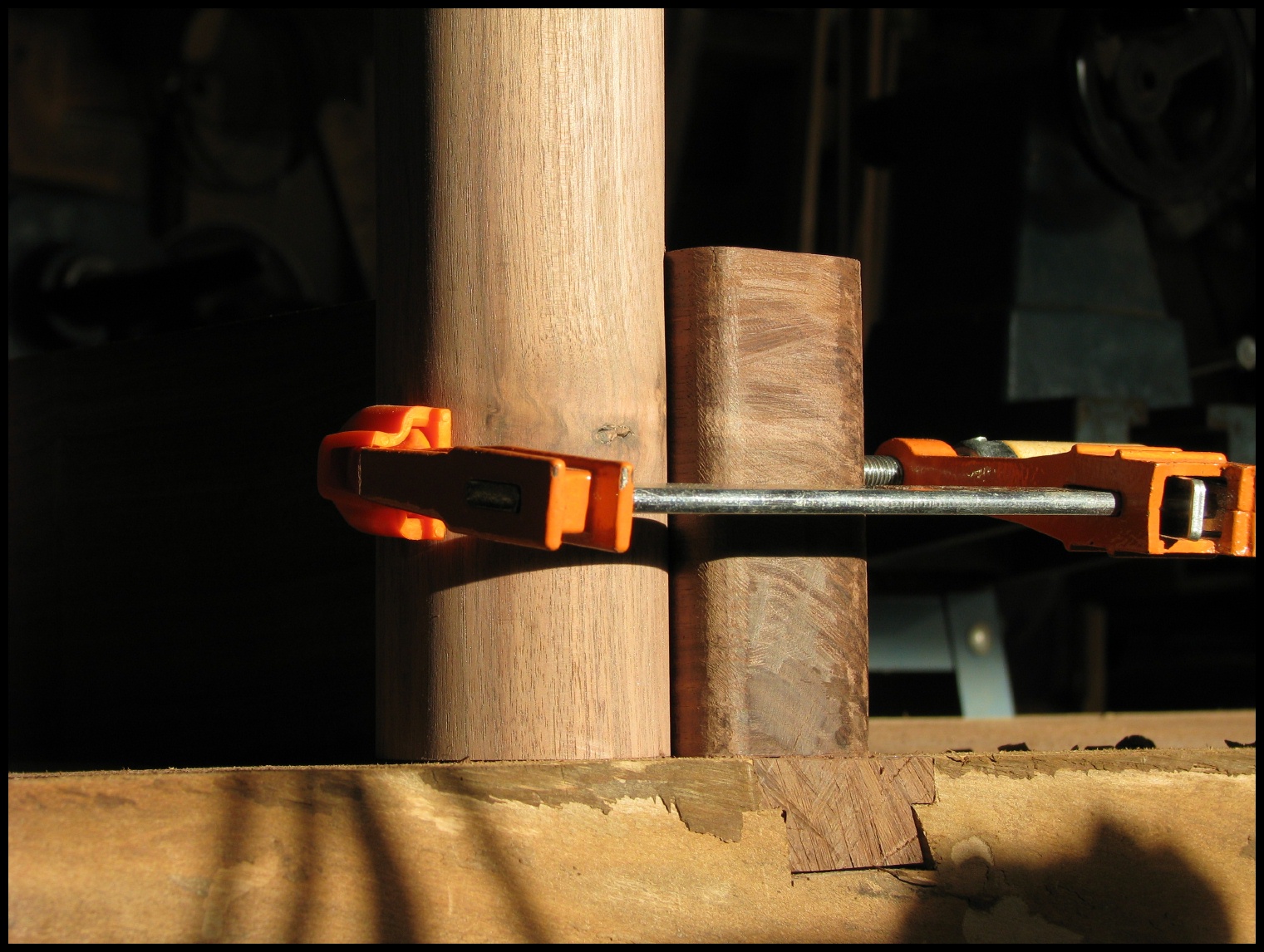
Fitting the legs. Lower right is a view of the end of the sliding-dovetail on the brace.
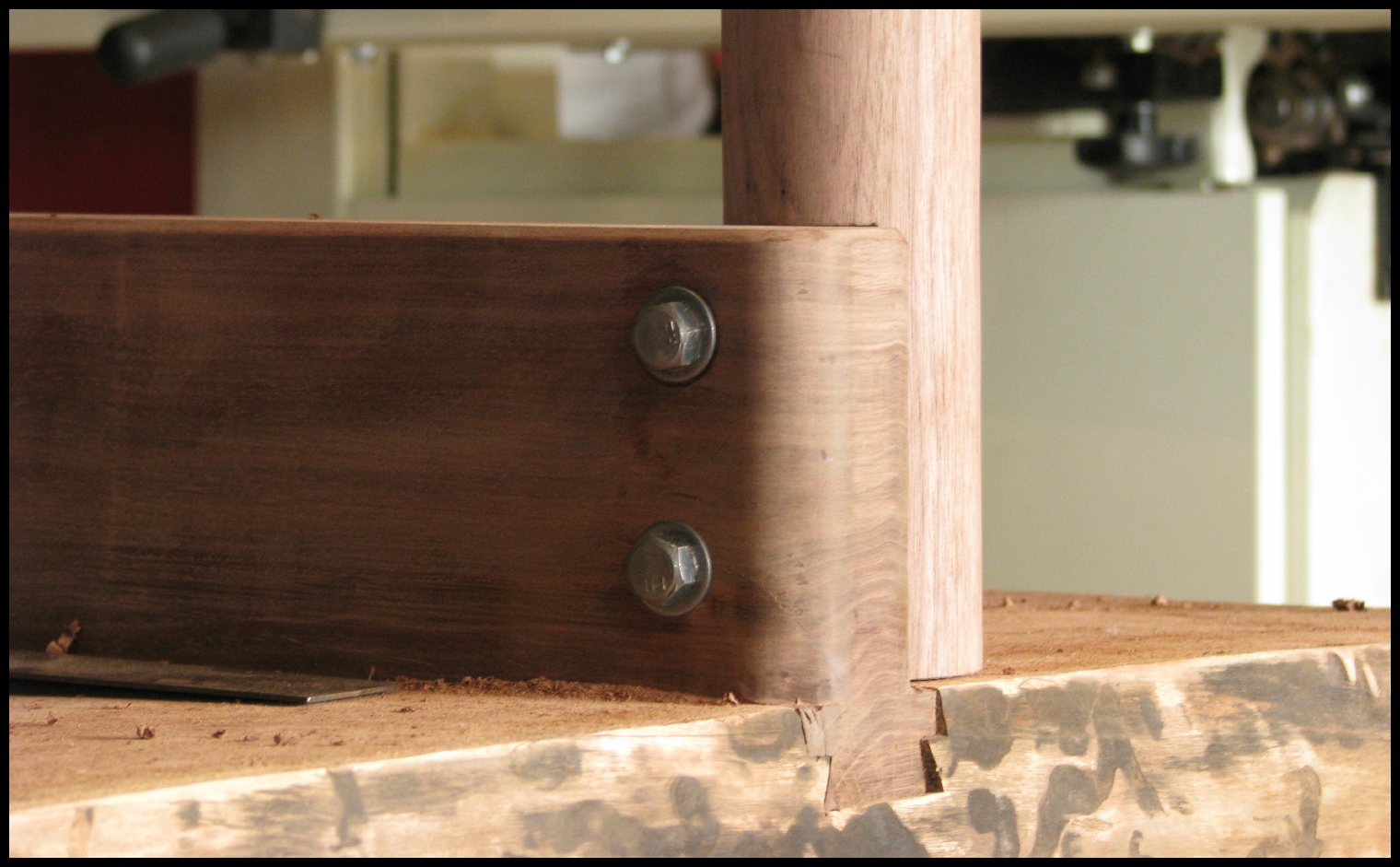
Settled on steel bolts over mating the legs to the brace with another sliding dovetail.
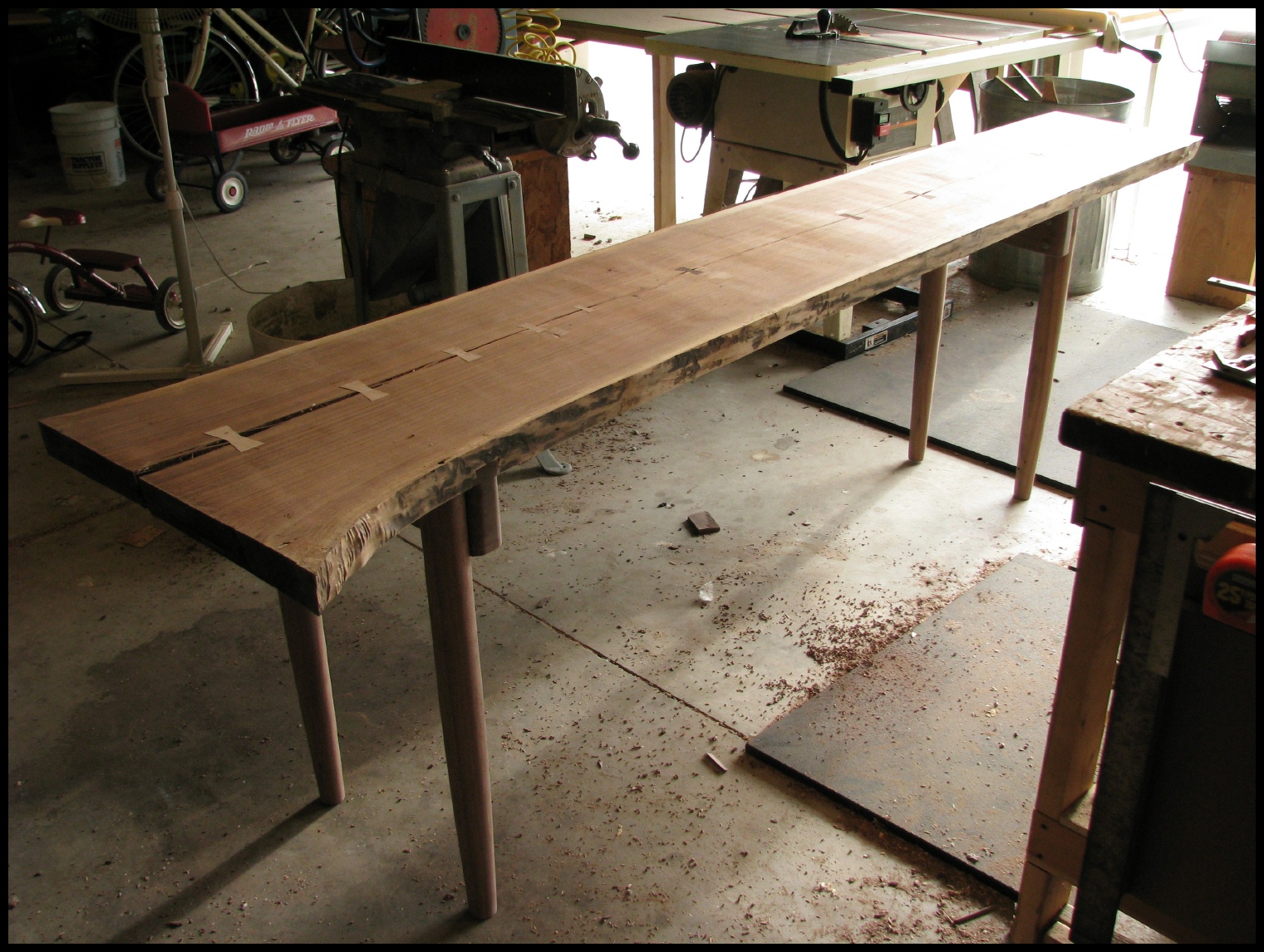
View from the “South” end of the table.
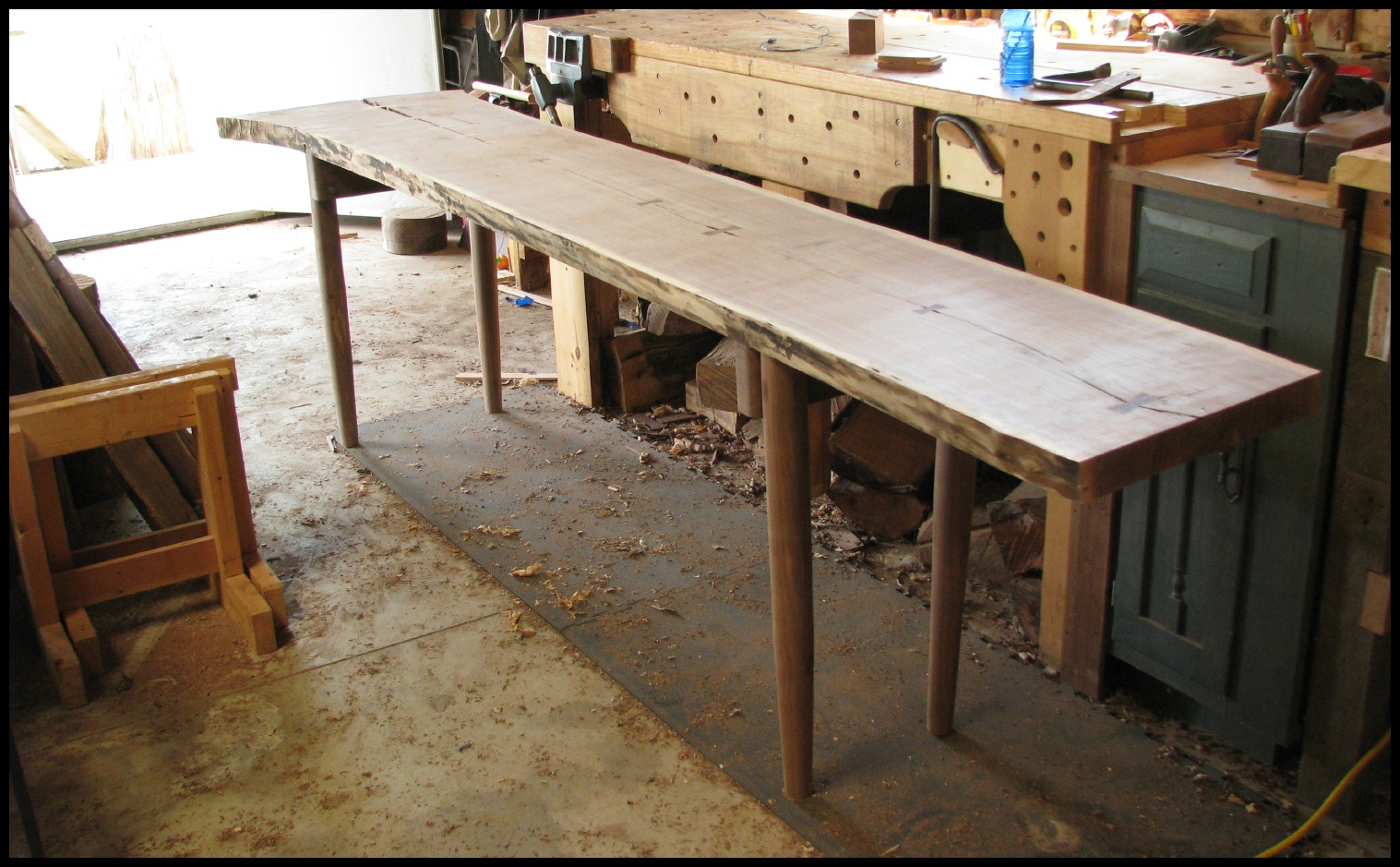
From the “North”.
Below is a series of photos of a new counterbalanced studio easel in quarter-sawn red oak, white oak and black walnut. The two cooperative disciplines of painting and woodworking meet in a special way.

The easel consists of a base, a frame which tilts forward and back, and a counter-balanced carriage which holds the painting and slides up and down on the frame.

Some of the carvings on various parts of the easel.

The base and frame in the shop. Primary joinery is mortise and tenon for all of the components.

The carriage frame.

Haunched tenon of the carriage frame.

Chamfering the tilt-slides with a spokeshave.
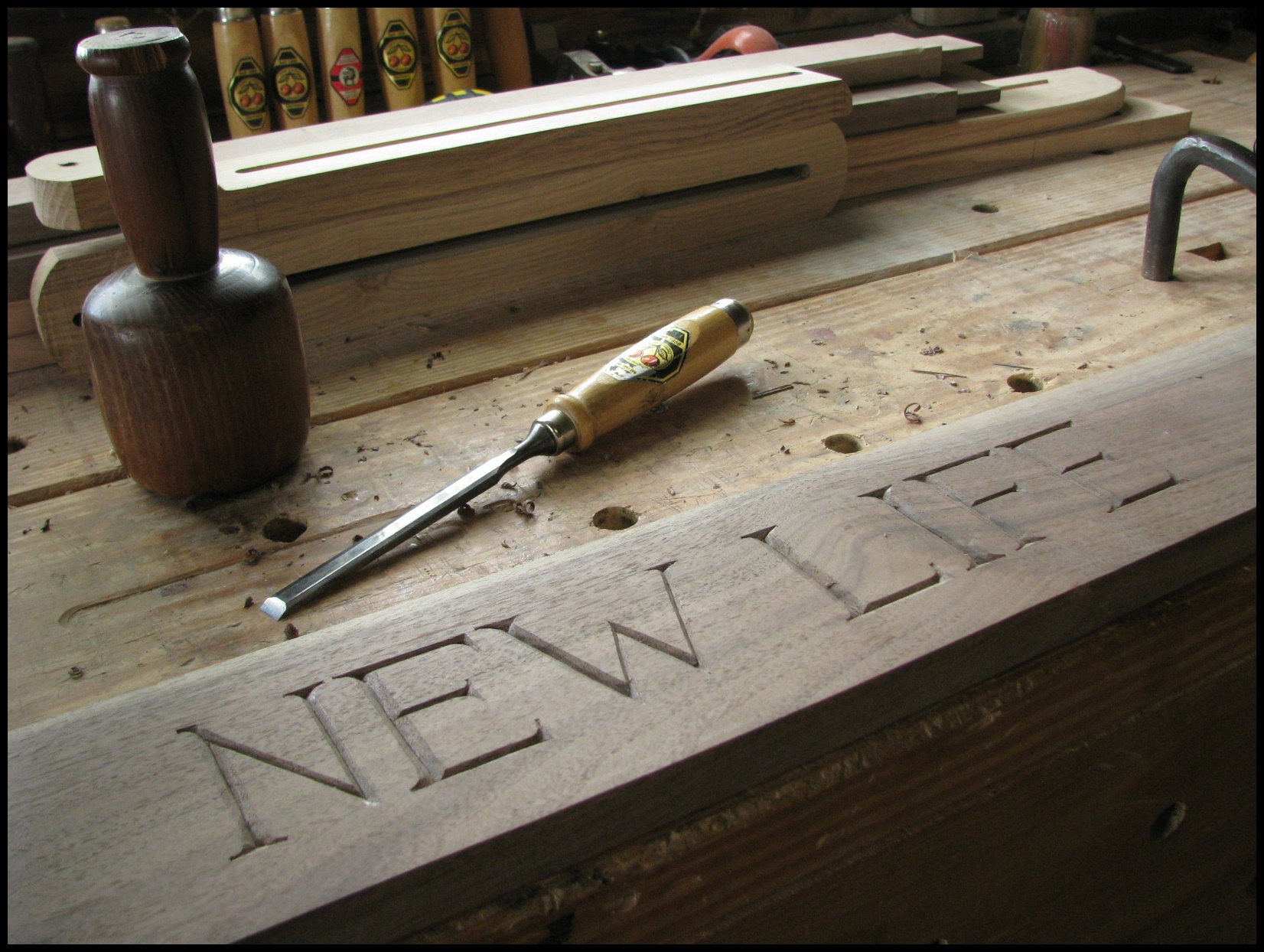
“NEW LIFE” carving on the top rail of the frame.

Roman “V” carving on the central stile of the carriage frame.

Counter-balanced using pulleys, rope and 50 pounds of weights, allows the painting to be easily moved up and down without using any type of stops or knobs to hold the carriage in place..

Holding the Thomas panel.
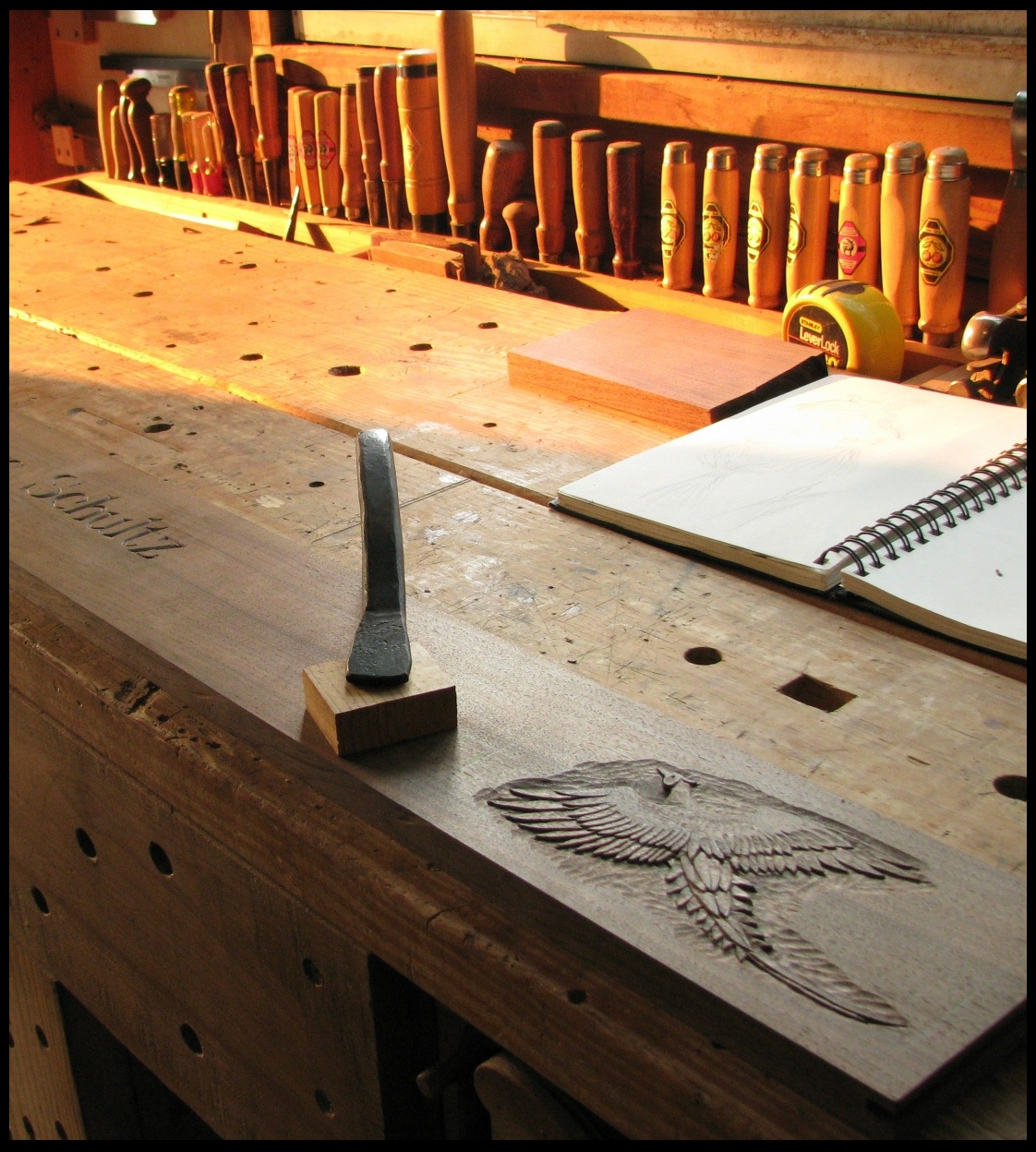
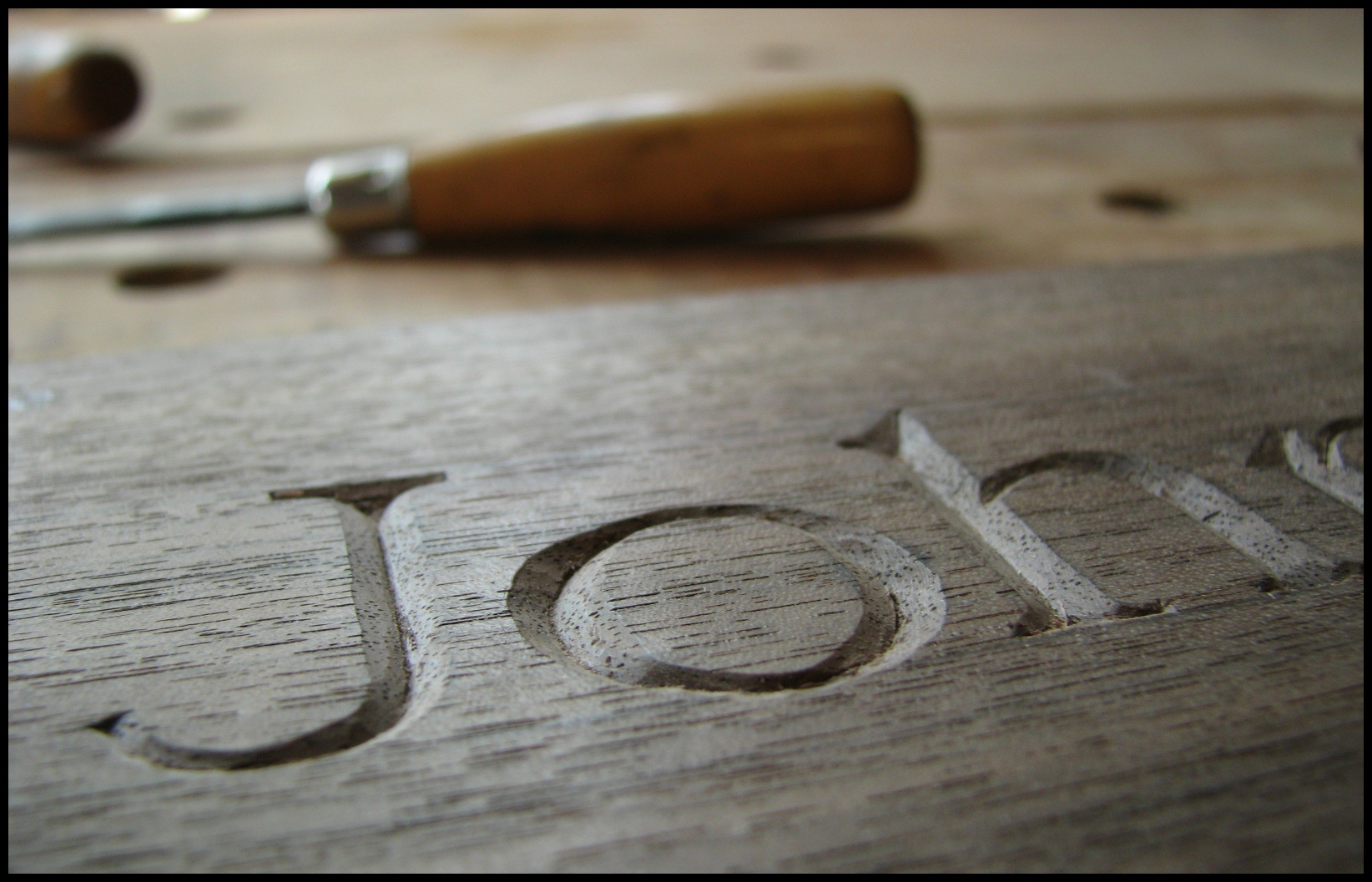
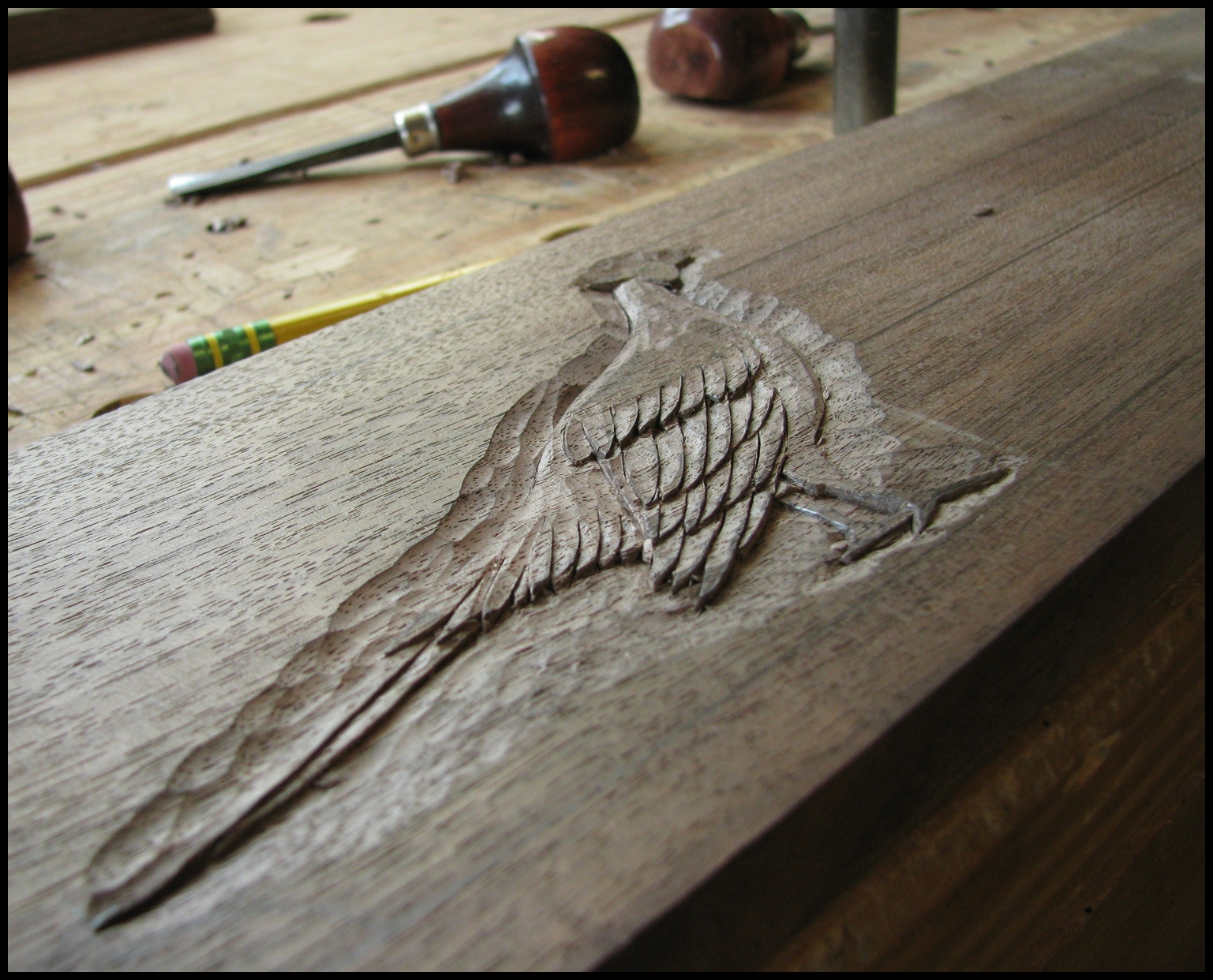
Below are some pictures of the carved bottom rail of frame for an oil painting. The carving, in process, features two ring necked pheasants, as well as the subject’s name, and a few other decorative elements yet to be executed.

Below are some pictures of the second three legged stool of post oak. They are a pair but with differences. The rungs on this newest stool are in a “T” rather than forming a triangle connecting leg to leg as in the first. Also, the legs in this stool are a bit more cantankerous.

The legs dry fit with rungs.
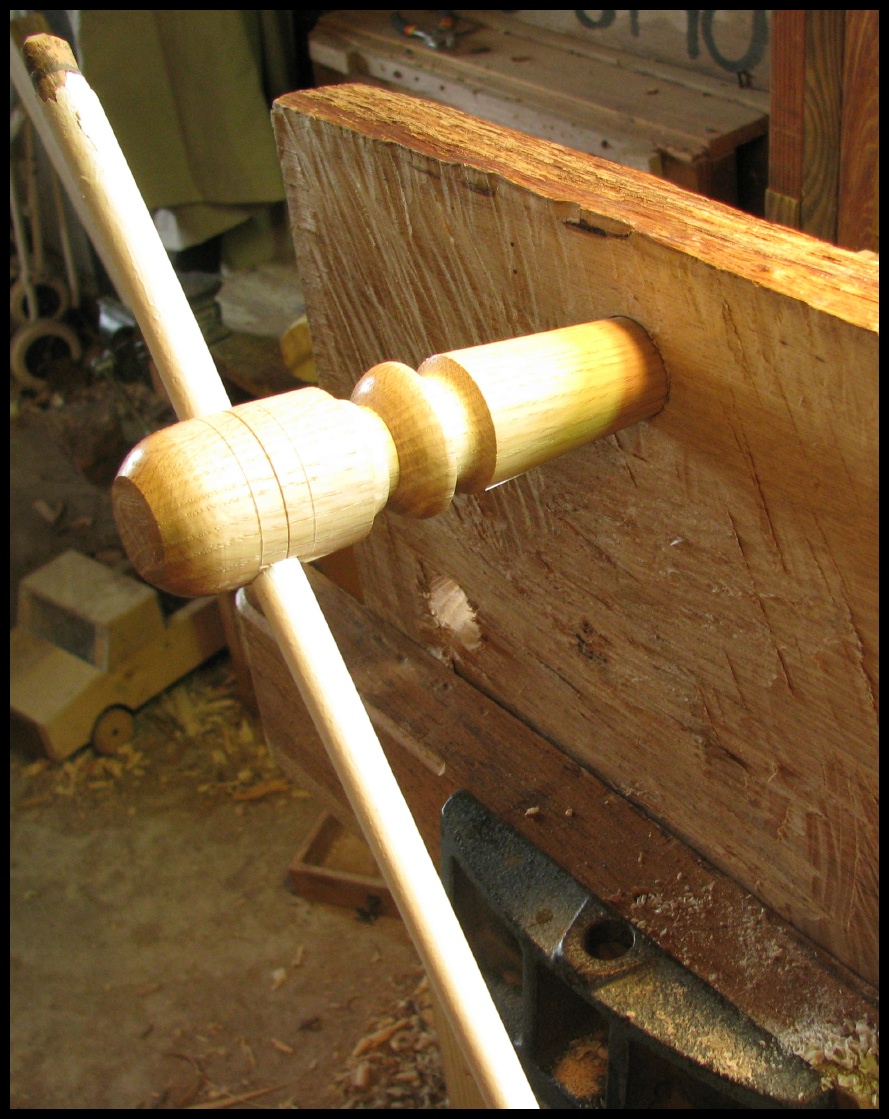
Reaming for the legs.

The seat. I counted over 100 annual rings in this seat.
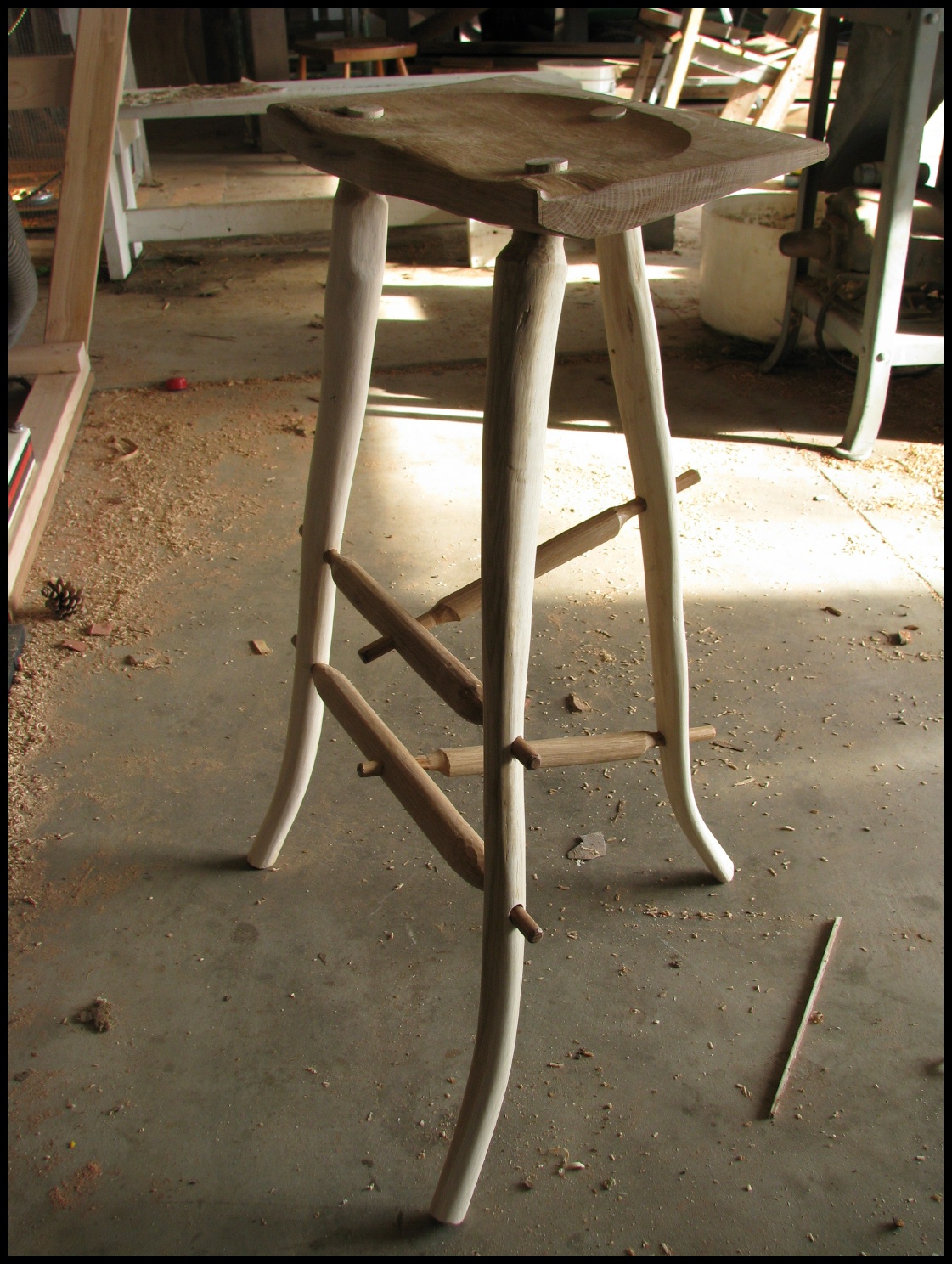
Fully assembled, and awaiting finishing touches.

Both stools together. Here you can see the difference in the rung layout, the “T” on one and the triangle on the other.
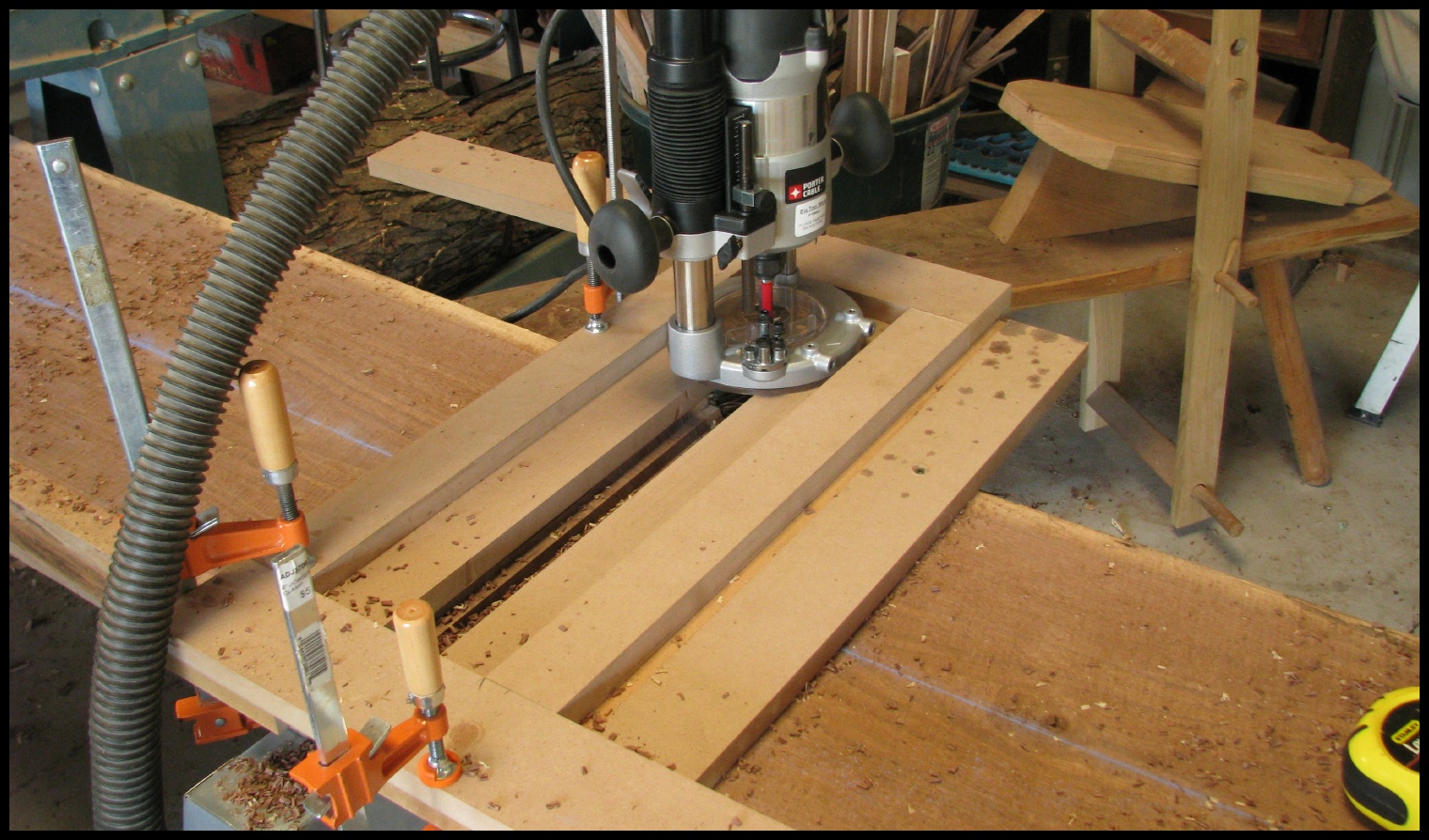
I read about this method for flattening large slabs in a publication (Woodwork I think) a year or two ago. Unfortunately, I couldn’t find the article in order to reference it. As I work with irregular slabs, too large for my machines, I expect it to be a reasonable and effective method for flattening large slabs, in this case, eastern red cedar.
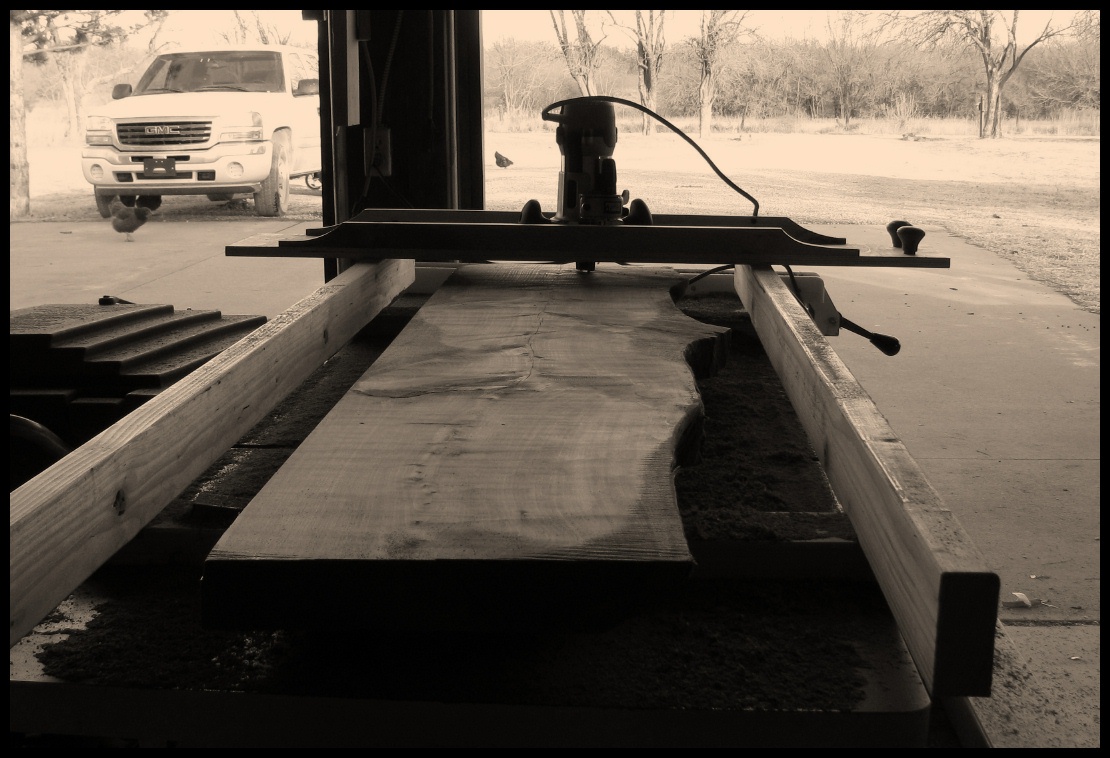
The router is mounted to a 4′ sled which rides across two parallel fences (jointed 2×4’s smoothed and waxed). The router has an 1-1/4″ straight cut bit, and mounted on the sled can cover the entire face of the slab, removing about 1/32″ of material per pass.

a couple of turned walnut handles help to steer

the whole endeavor sits on my table saw
Below are a few pictures of the frame and panel lid for the cherry and walnut hope chest.
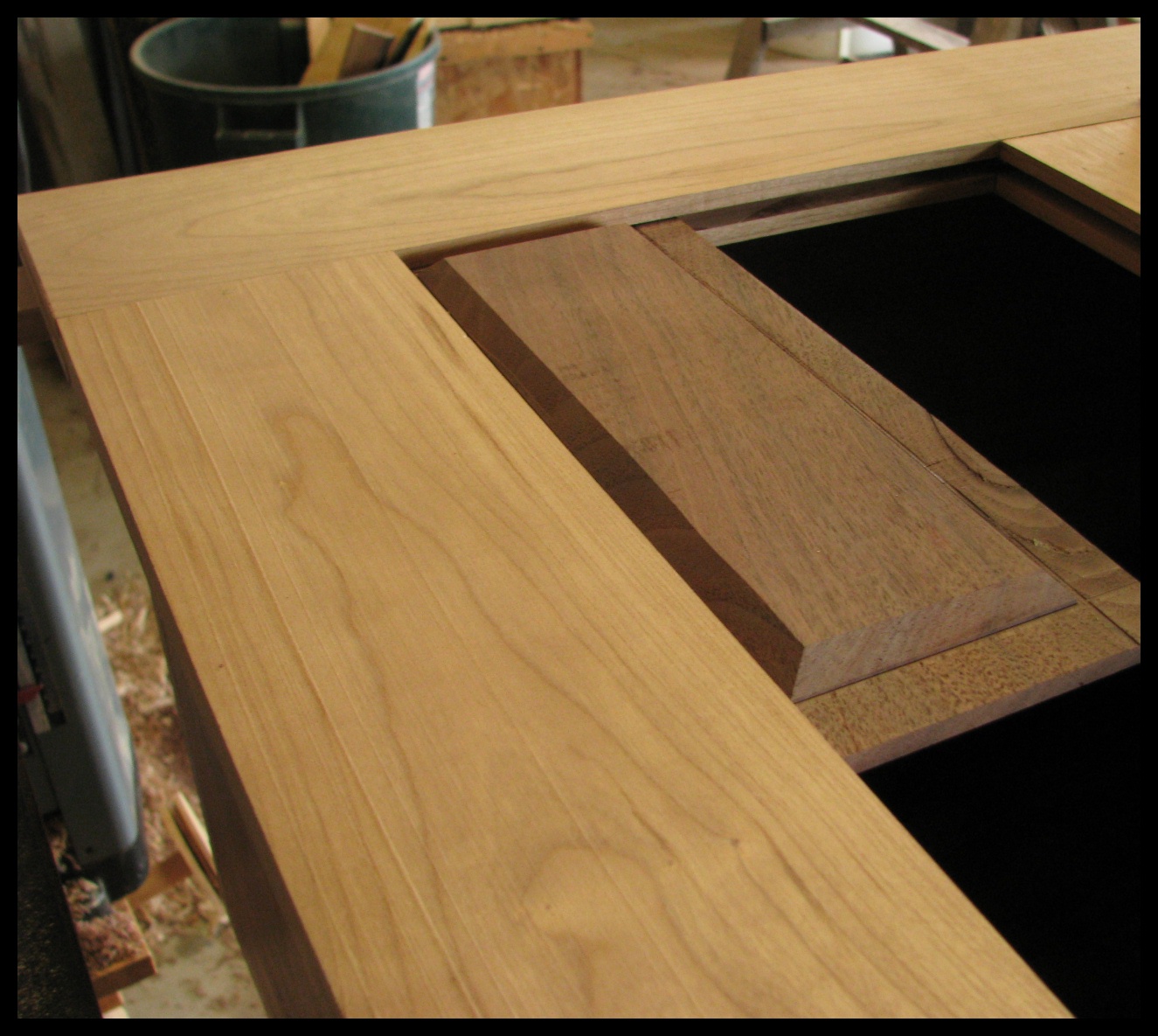
A section of the cherry frame with a piece of walnut as a test panel.

The lid, dry fit with the panels installed.
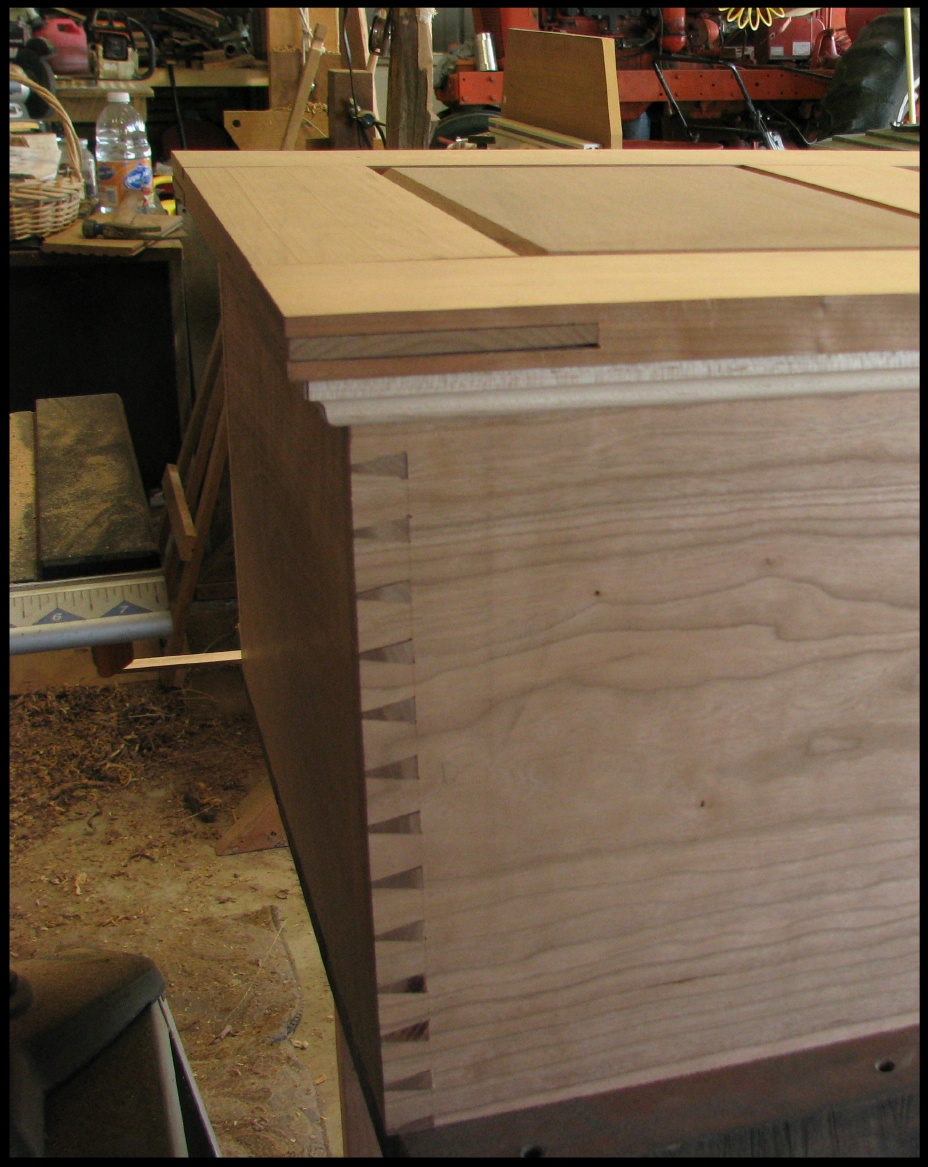
A detail showing the hard maple ogee molding – all dry fit and held with gravity and friction at this stage.
We have been making a lot of bowls lately, here are some of them.

A row of bowls on the mantle. Some are turned on a foot powered pole-type lathe and some on an electric lathe.

One in green ash, and one in cottonwood.
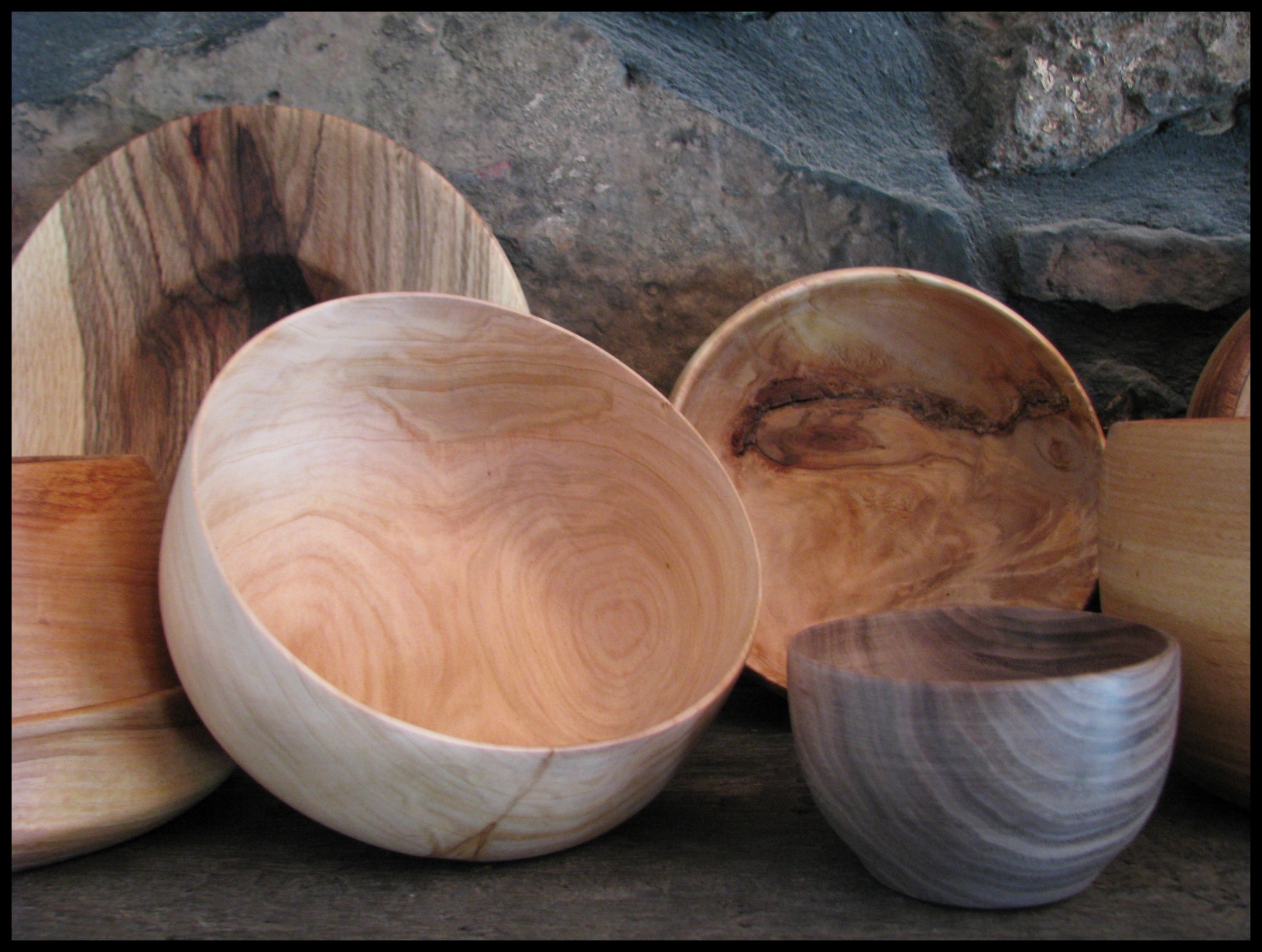
One in bald cypress and one in walnut.
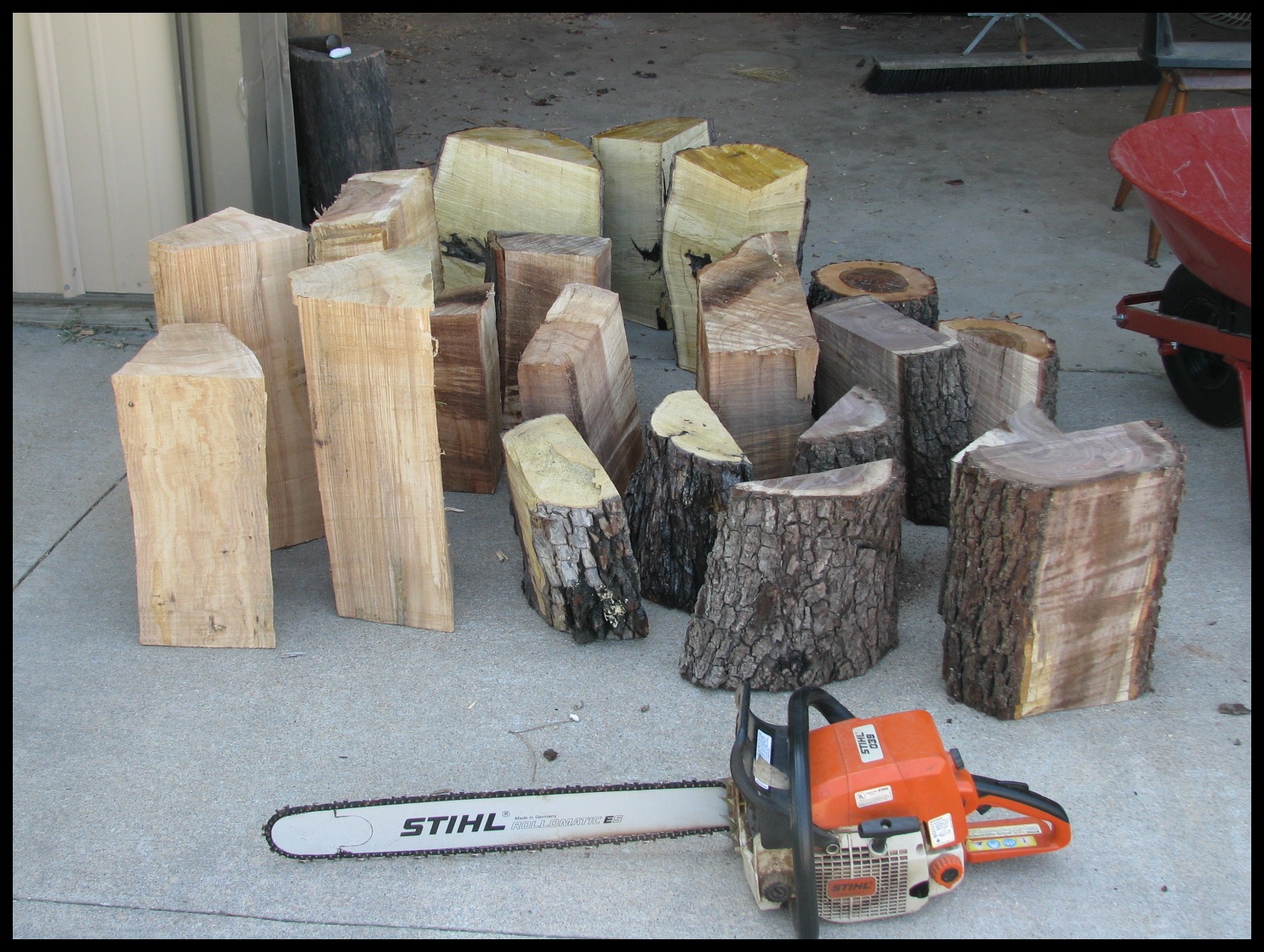
Bowl blanks just cut and ready to have the ends coated with paraffin. Species here are, persimon, green ash, post oak, black walnut, and bald cypress.
Here are a few photographs as I cut up a walnut stump. The stump was all that was left of a city tree.

A black walnut stump, cut in half and then one of the halves cut into quarters.

Sawing 5/4″ boards from one of the quarters.

A good stack of boards- ranging from 4″ thick to 4/4″ thick. A few spots of rot, but much usable wood.

Rowdy spectators.
 The School of the Transfer of Energy