The Legend of Walking Man, Part 1

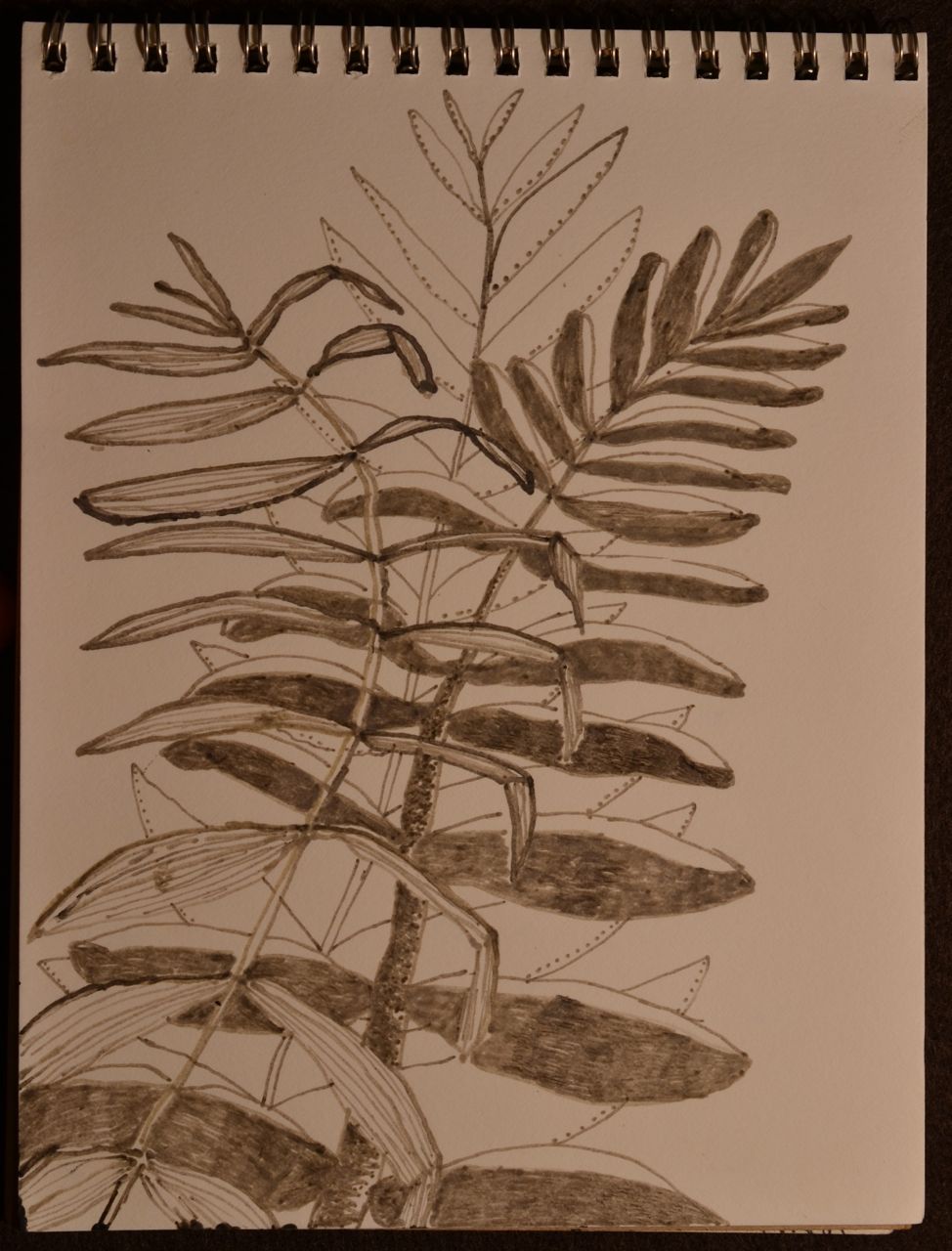
DSC_0080

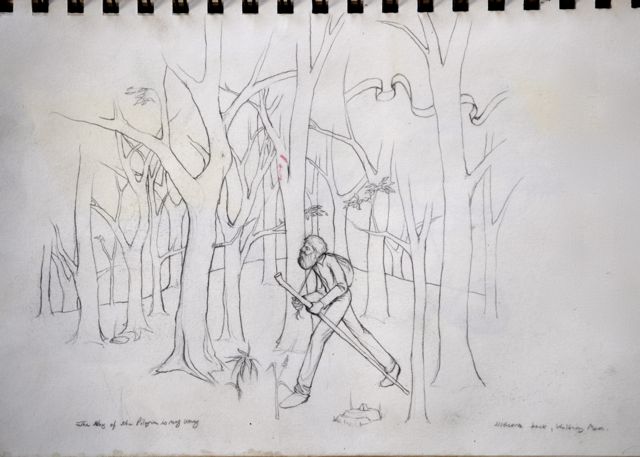
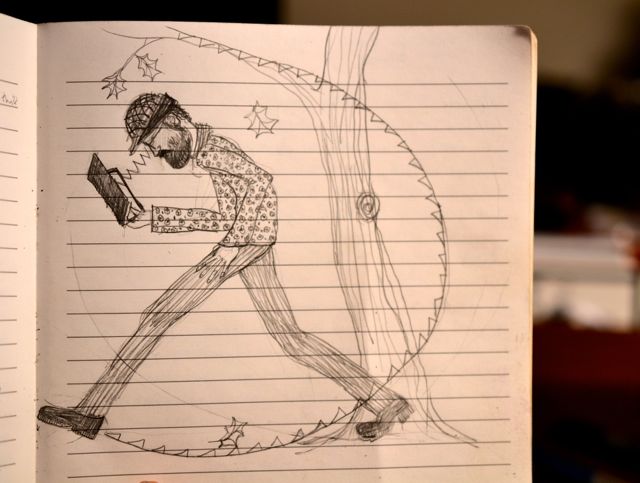
The first documentation of Walking Man from 1998

walkingmenscan

Country and City Walking Men, 2005

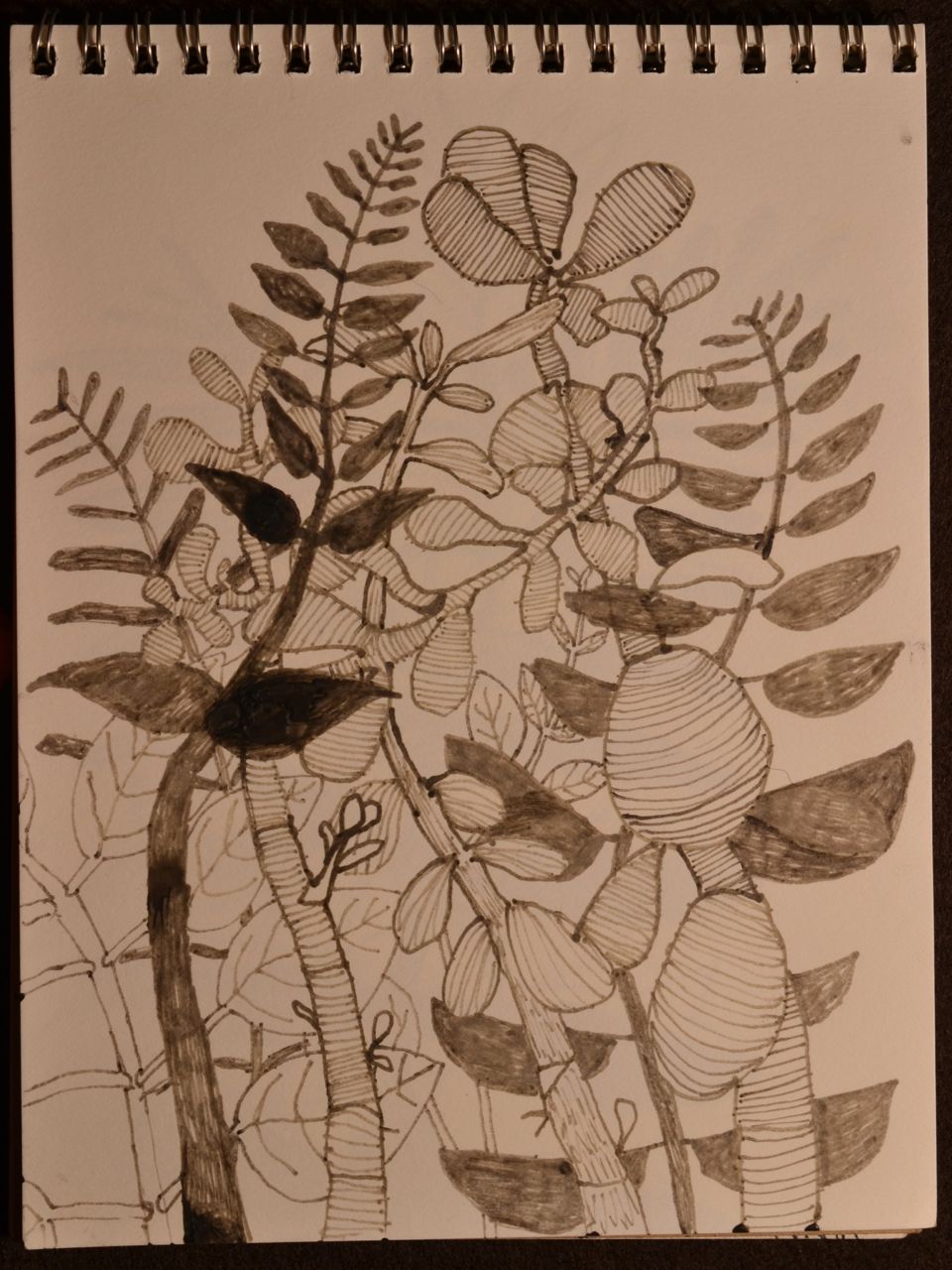
DSC_0075

Another early drawing of Walking Man from 1999
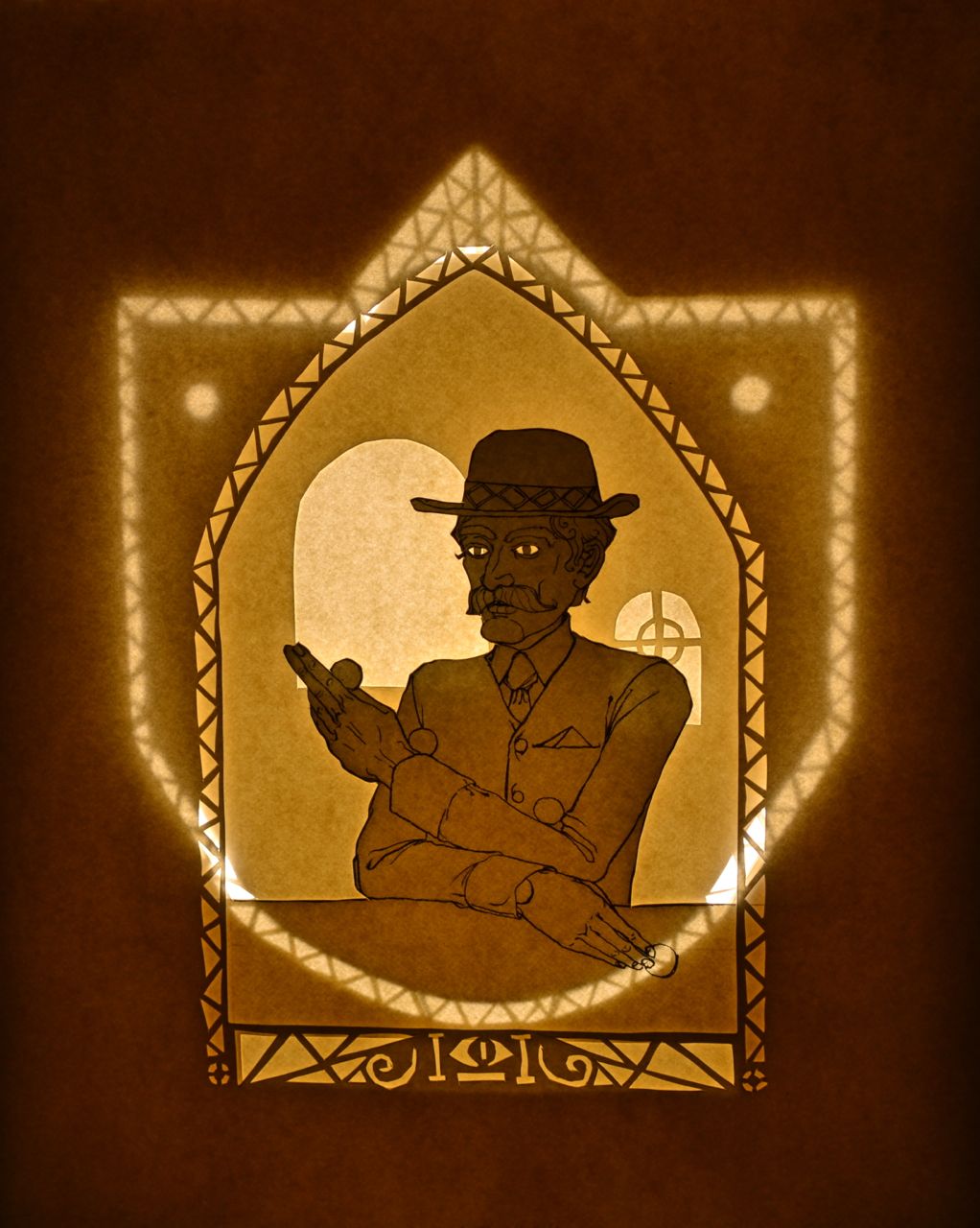
OLYMPUS DIGITAL CAMERA

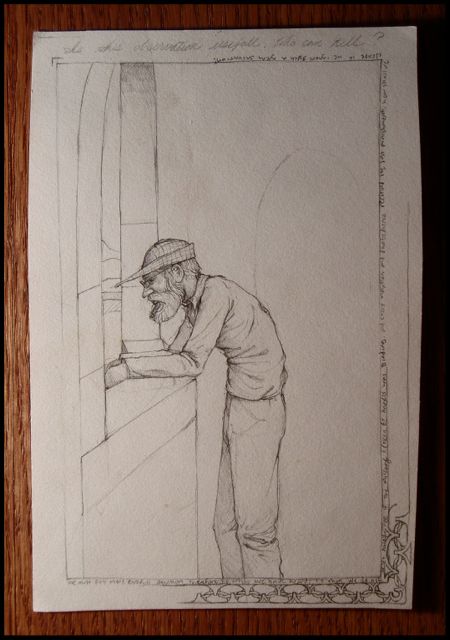
Walking Man looking out of a window 2001


The following is an early description of Walking Man as it appears in the play The Two Deaths of John Beartrist Laceroot:


Walking Man does quite a good bit of doing things, but often

is found plainly walking; in circles or in unjoined lines.

Also with regularity, in simple curves as well as complex

compounded curves accompanied with series of strait lines.

Less frequently, but often enough to be mentioned, he walks

in lines forming letters that sometimes are random and do

not spell out any sort of thing, but at other times they

make up words or sentences.

Walking Man is found often to have walked from one geographic­-

al location to another geographical location extremely far removed from the

first, kicking the leaves underneath the trees.

For the ‑ uhmm… individual, the imagination is much more endued

with the powerful swaying grip of reality than that of the

actual objective reality.  That is to say that, umm…ahh, to some people,

the life experienced within the imagination is just as real, if not more real,

than the life experienced outside the imagination…

if…the…ahh…two can be separated at all. In this consideration,

Walking Man is John Beartrist Laceroot.
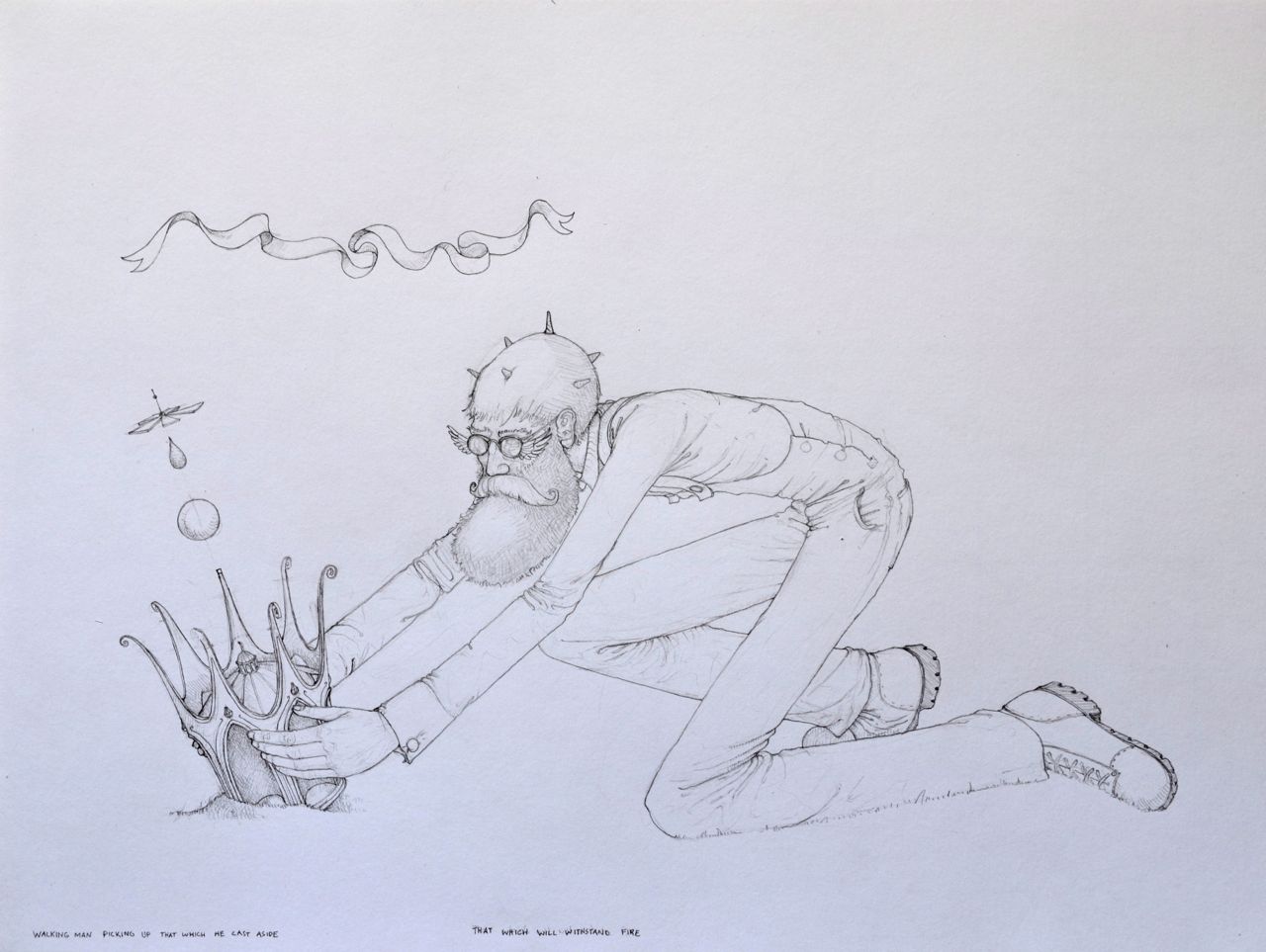
 

Zechariah

DSC_0048-2

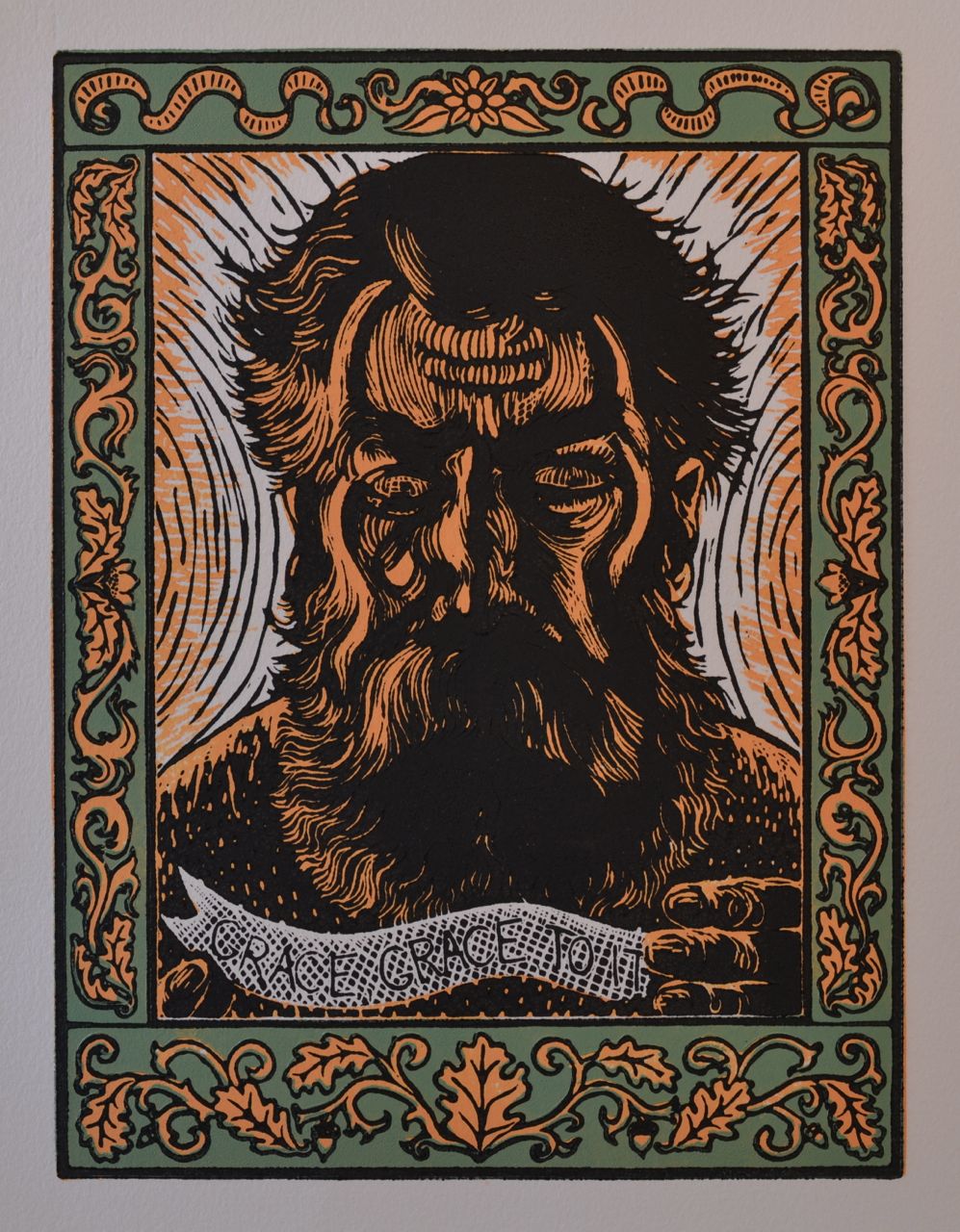
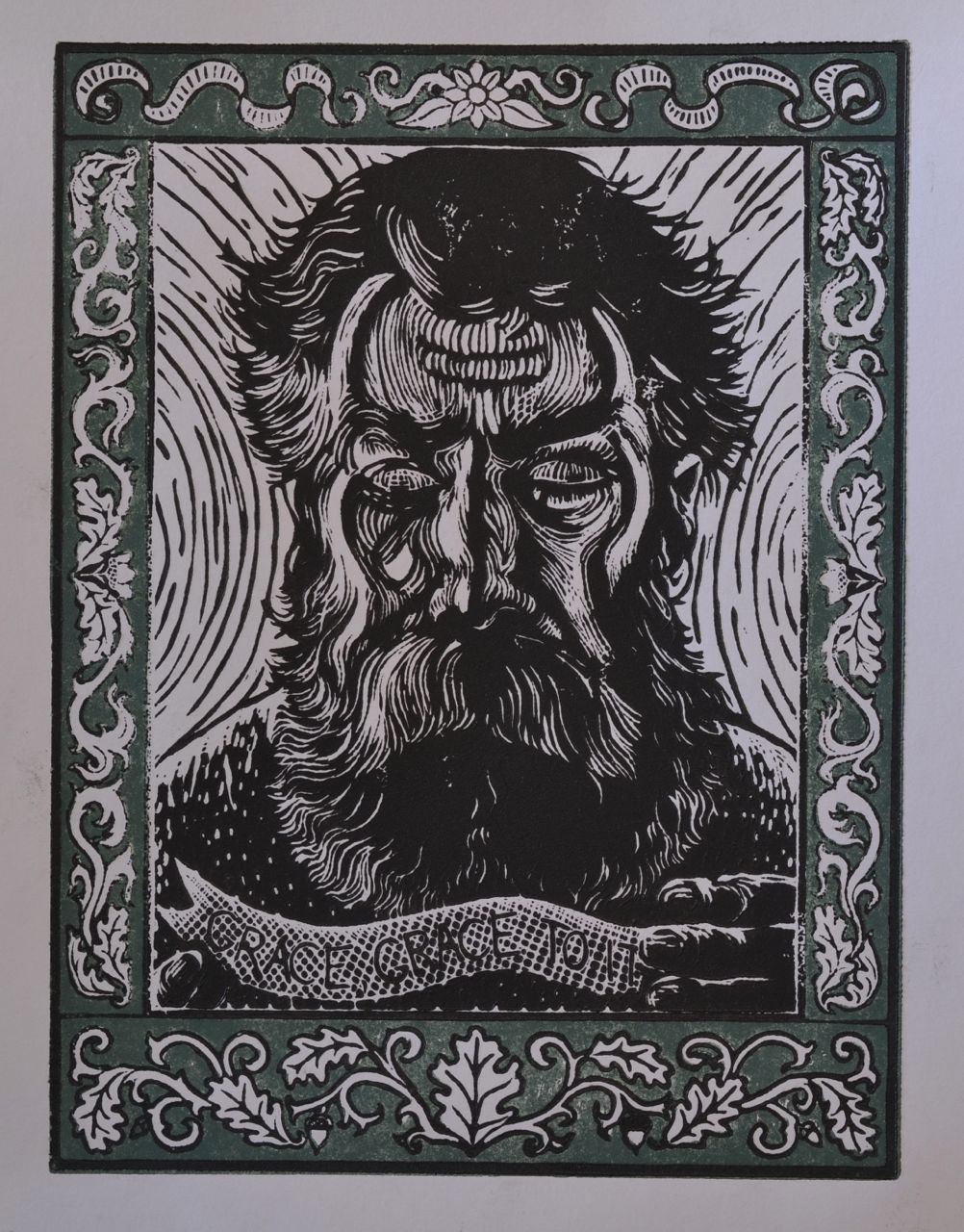
Zechariah, proof of a 3- color lino-cut.

DSC_0056

I’ve been tinkering with this print for a few months now trying to get it right- not really sure that I am getting anywhere.   While the 3rd block still needs a little adjusting- some of the lines are too narrow and gather ink to fast- it seemed ready to offer up here.  Maybe you can give me some insight.

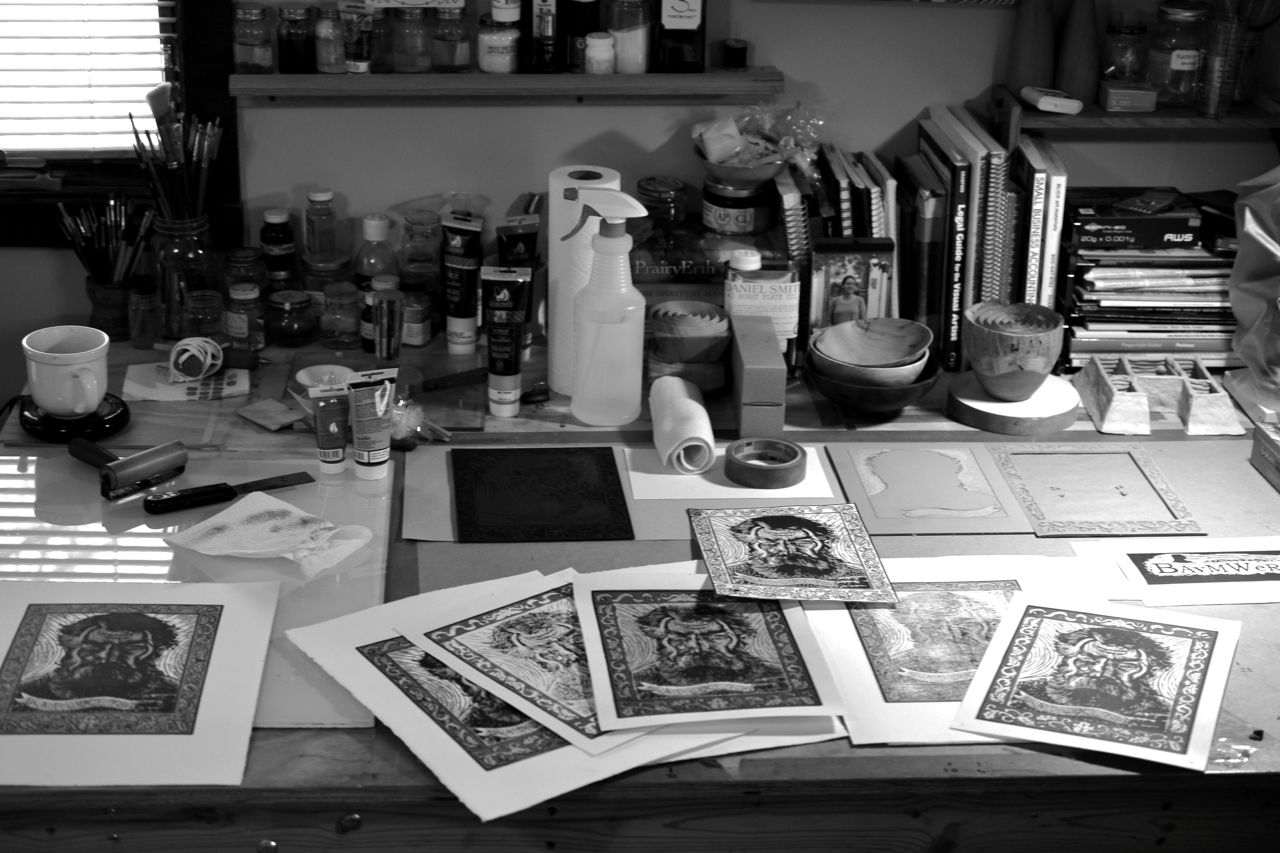
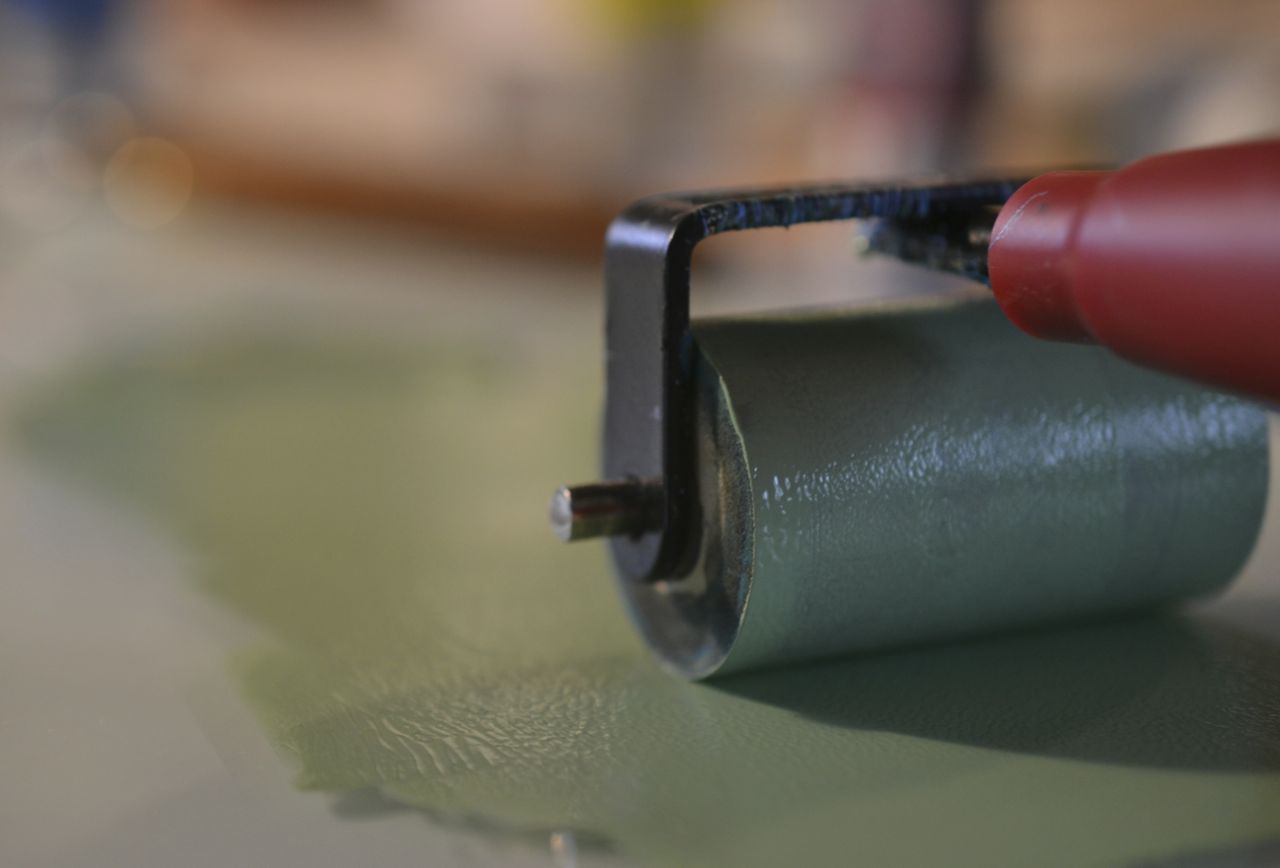
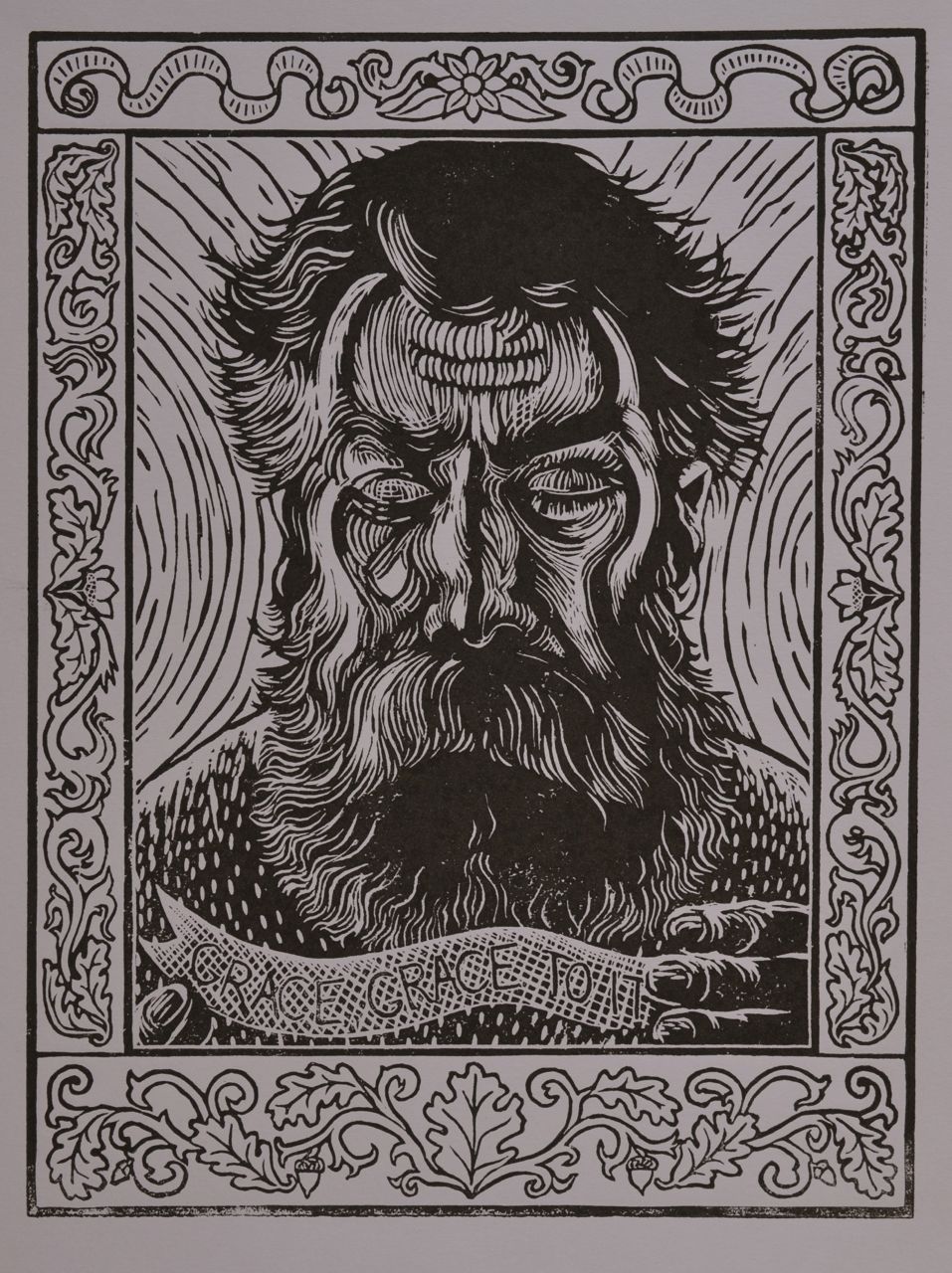
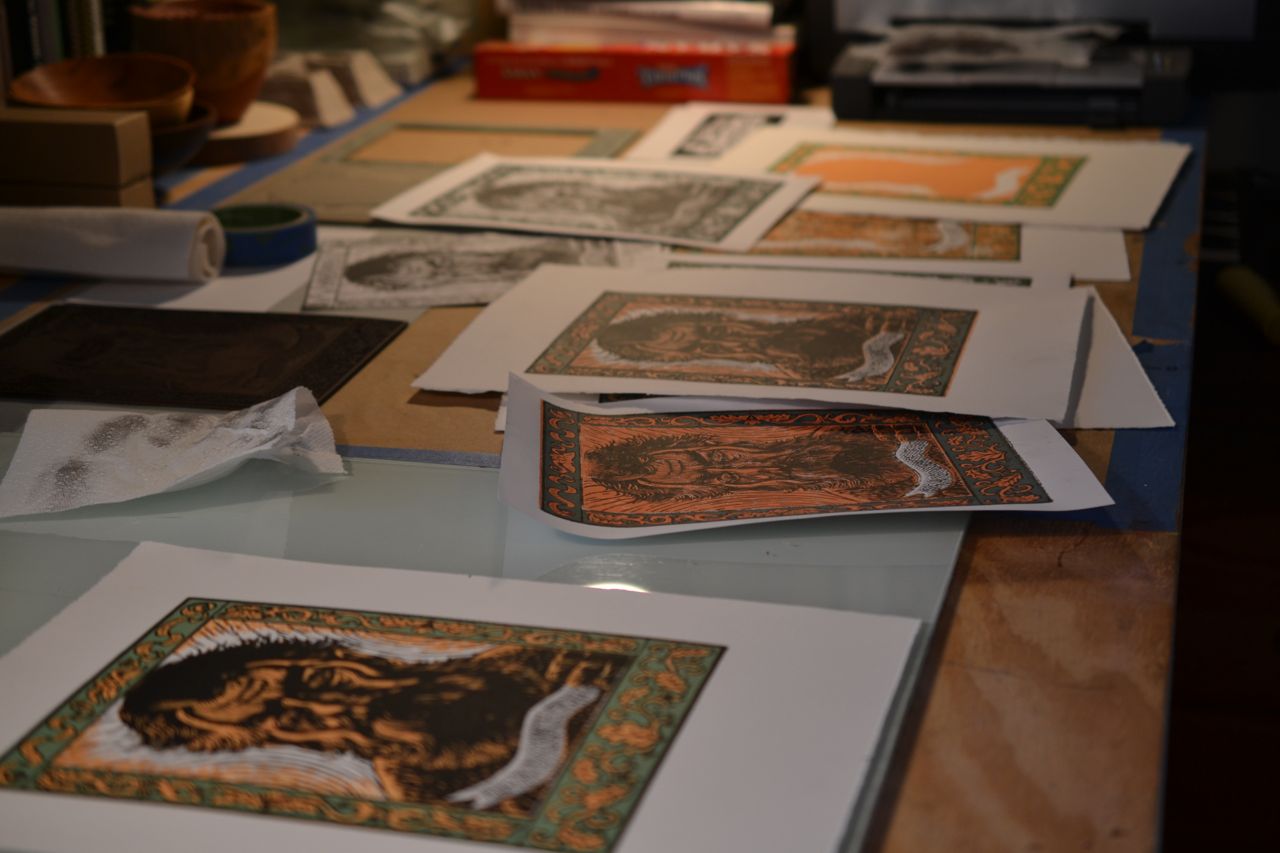
The print employs 3 different blocks, and there are in truth 4 colors if you include the white of the paper, which is part of the design.  To cut down on time between printings in developing the proofs, I have been using water based inks.  The final edition will use inks with oil as the vehicle.  I have included a number of images from my process and some variations of the actual print along the way.

1st block inked up

DSC_0047 DSC_0004 DSC_0068 DSC_0008 DSC_0040 DSC_0011 DSC_0006 DSC_0038 DSC_0048

Proof of the main block

DSC_0053

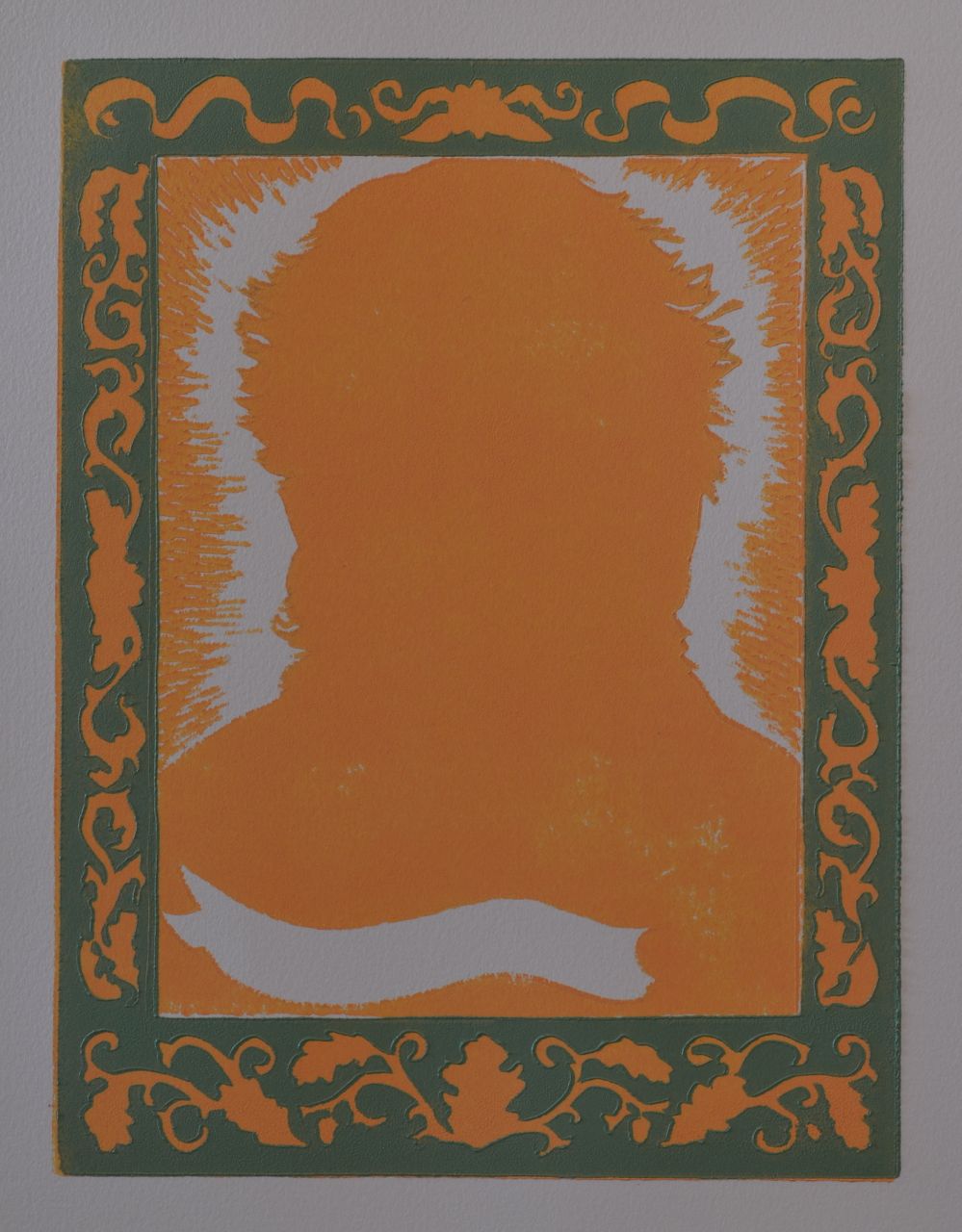
Obviously, not complete, but I like the silohuette

DSC_0054 DSC_0055

While not the best pull, this is my favorite one right now

DSC_0065

Introduction to the School of the Transfer of Energy

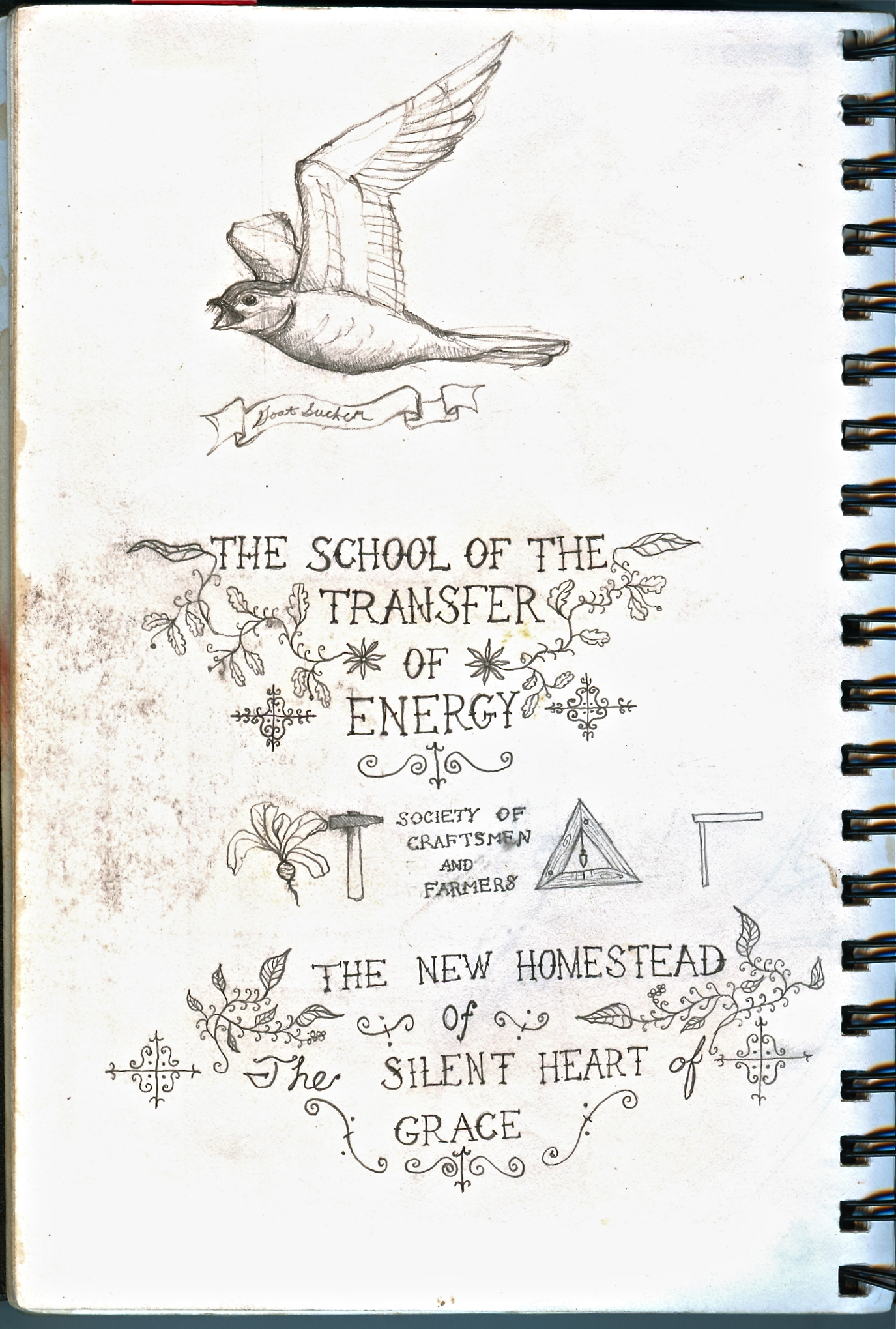
Early Fronts-piece design for The School of the Transfer of Energy, featuring a drawing of a goatsucker.

Cover for the first handbook of The School of the Transfer of Energy.

Below is a revised and very pared down introduction to what the School of the Transfer of Energy represents:

The School of the Transfer of Energy

The Institute of Signs and Levers

The School of the Transfer of Energy was established as a tool to bring a simple order and understanding to a broad range of arts, crafts and agriculture based disciplines and the outputs of those disciplines. The Institute of Signs and Levers refers to a view of those disciplines as a deliberate and purposeful technology towards the receiving, cultivation and realization of relationship to God the Father, Son and Spirit.


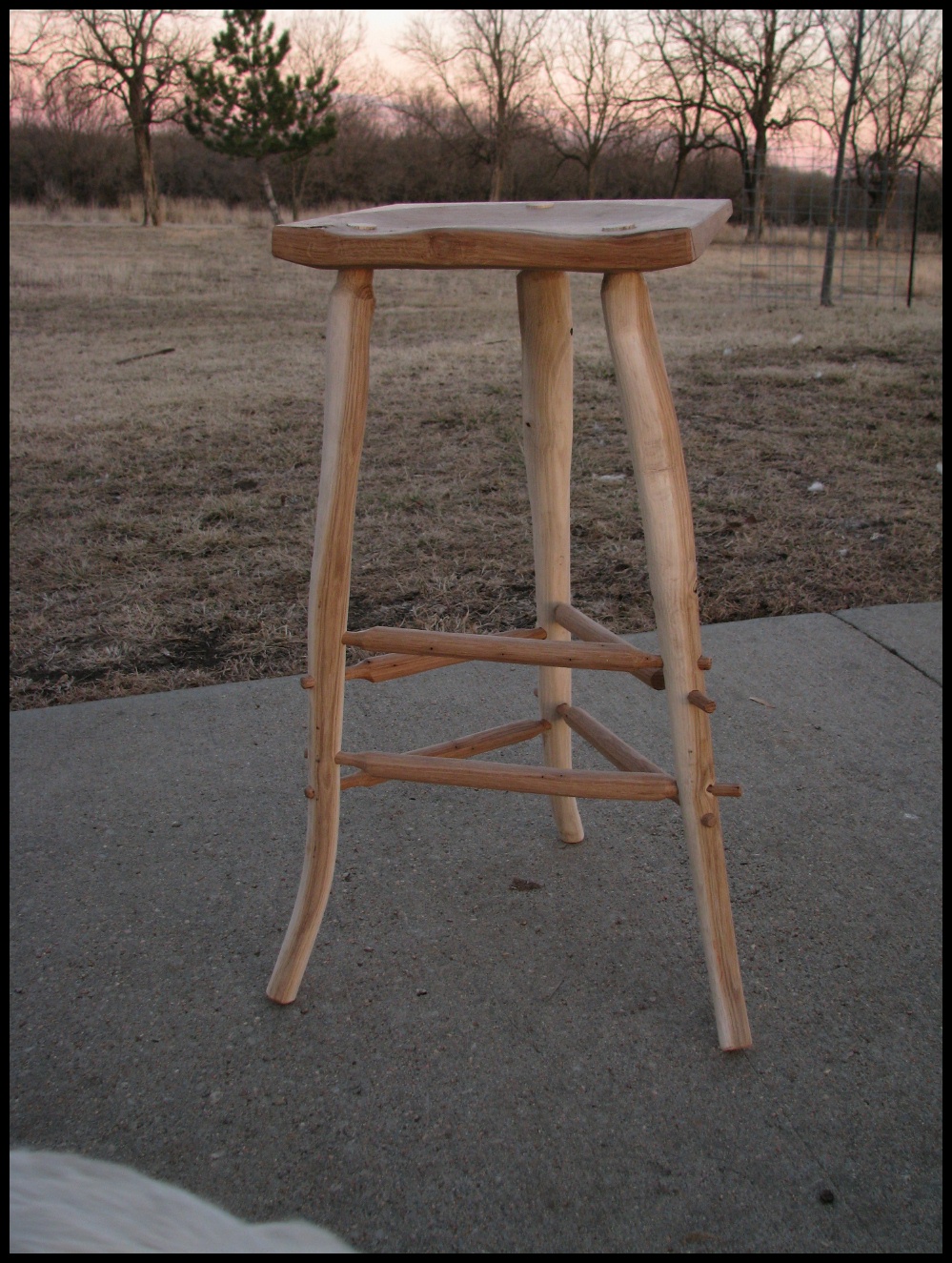
The will of a 3-legged stool

The stool declared loudly by snapping every black walnut rung I made- that it must be white oak throughout.  OK, says I, you win.

Still much work to be done, however, as of yet the  most complete sense of a stool that has pretty much dictated itself, and made me sweat in the process, and I still have to build his hopefully less mercurial brother.

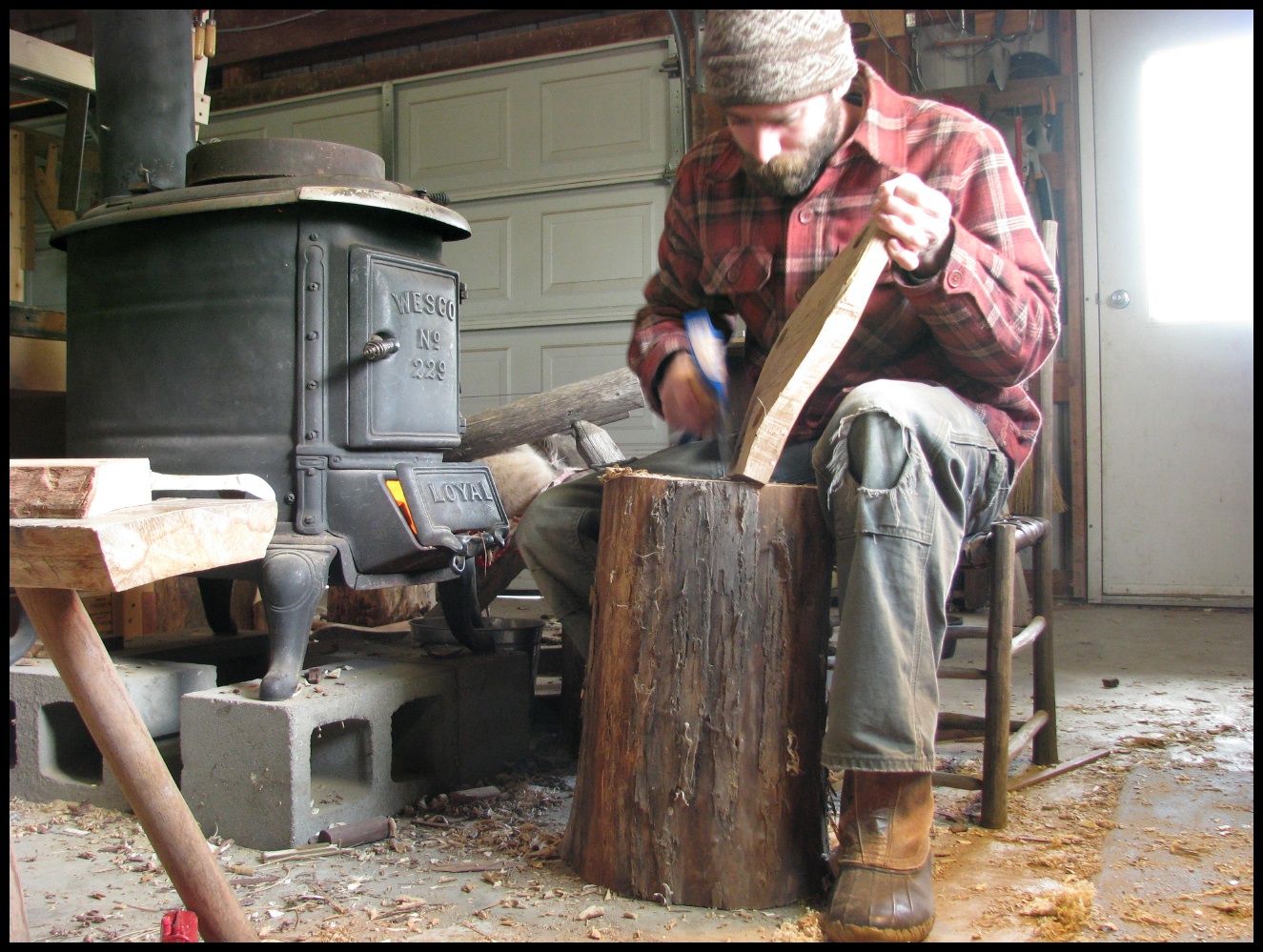
Below:  shaping the underside of the seat.

Workshop: White Oak Pedastal and Stool Legs

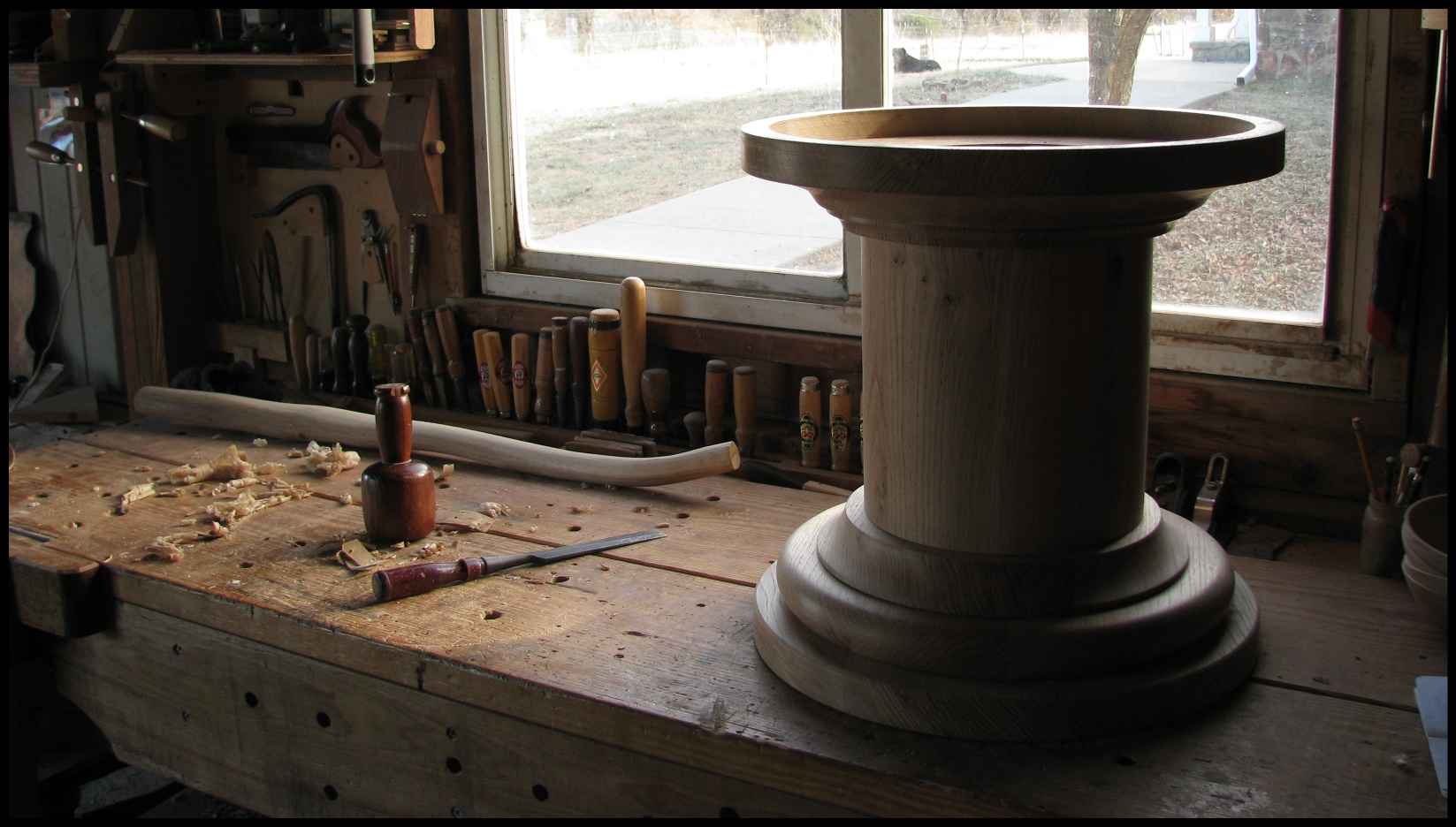
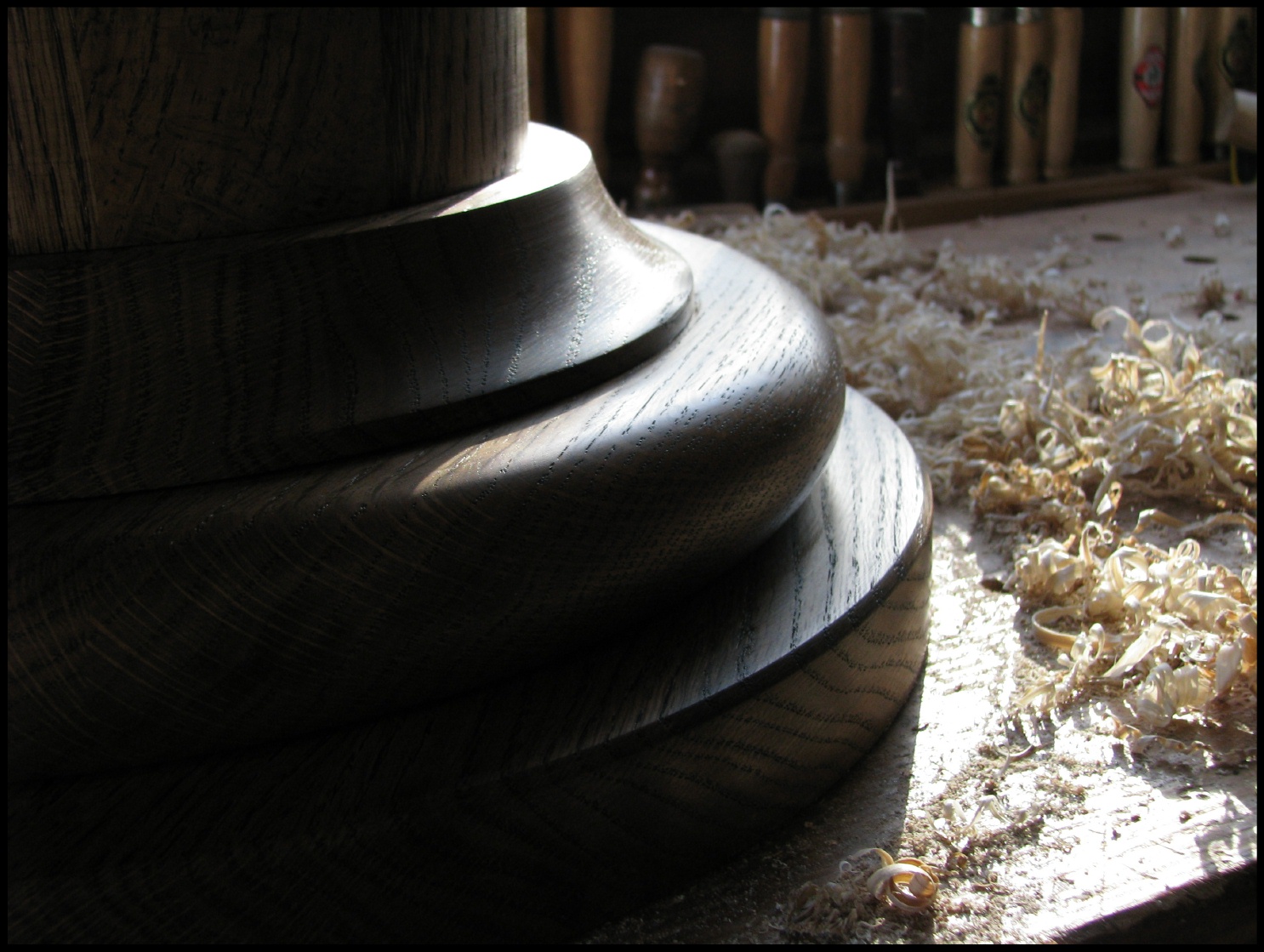
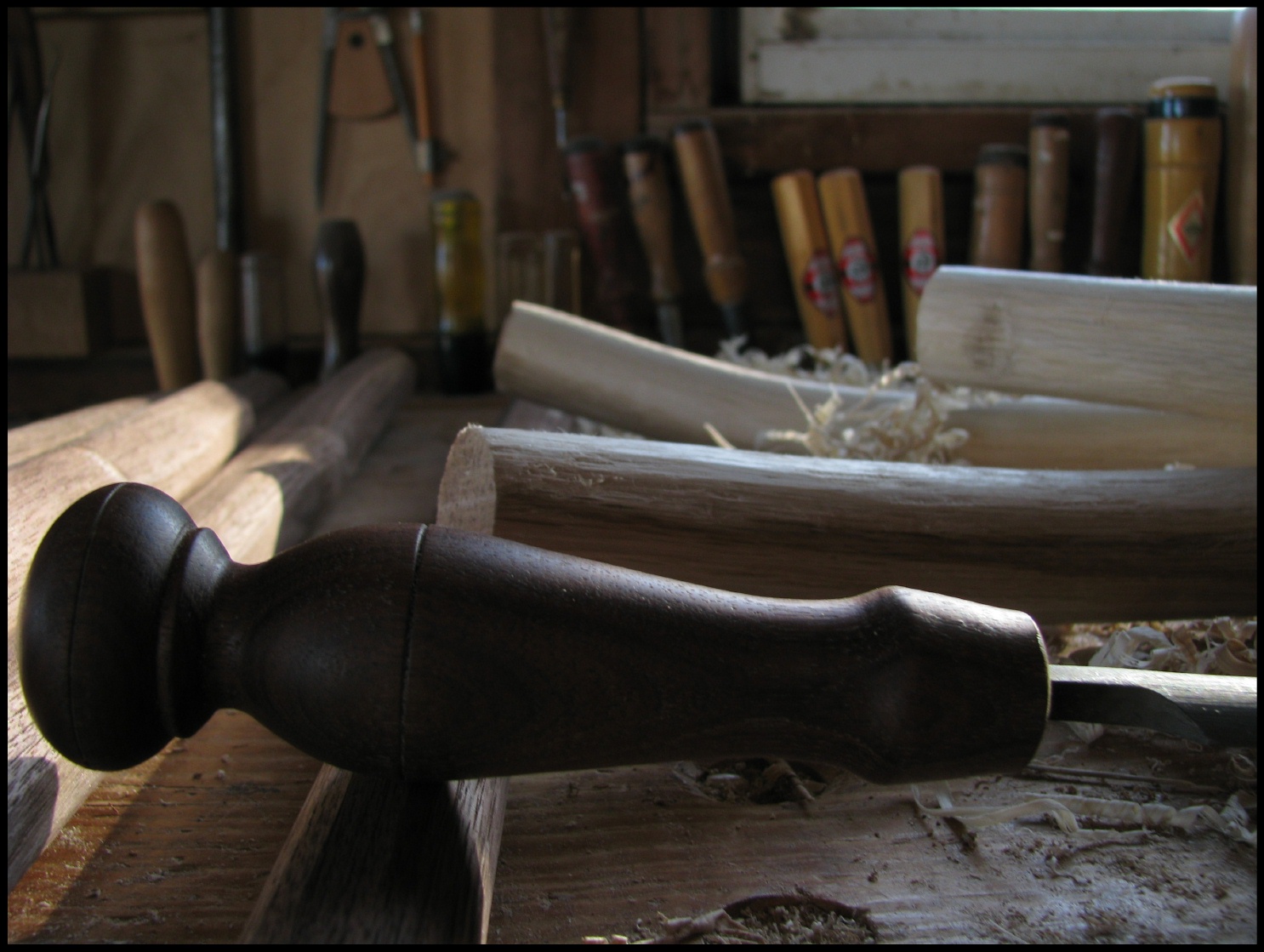
Here are some pictures of current work from the workshop.  First is a white oak Quercus alba pedestal commissioned for a bronze ballerina.  Second are three green-bent post oak Quercus  stellata (also a white oak variety) stool legs in the midst of shaping and their black walnut rungs that have been roughly shaved for another commission.

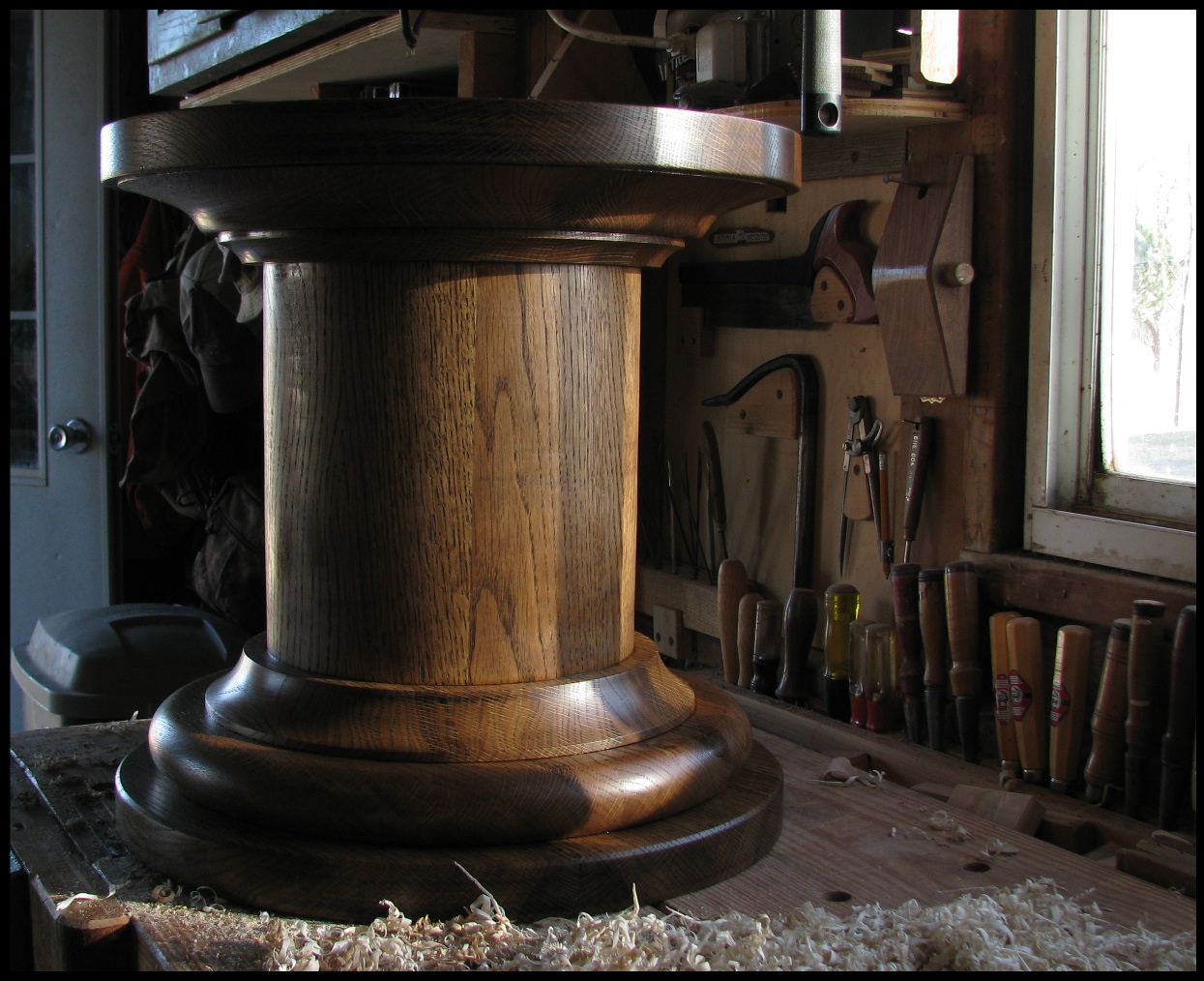
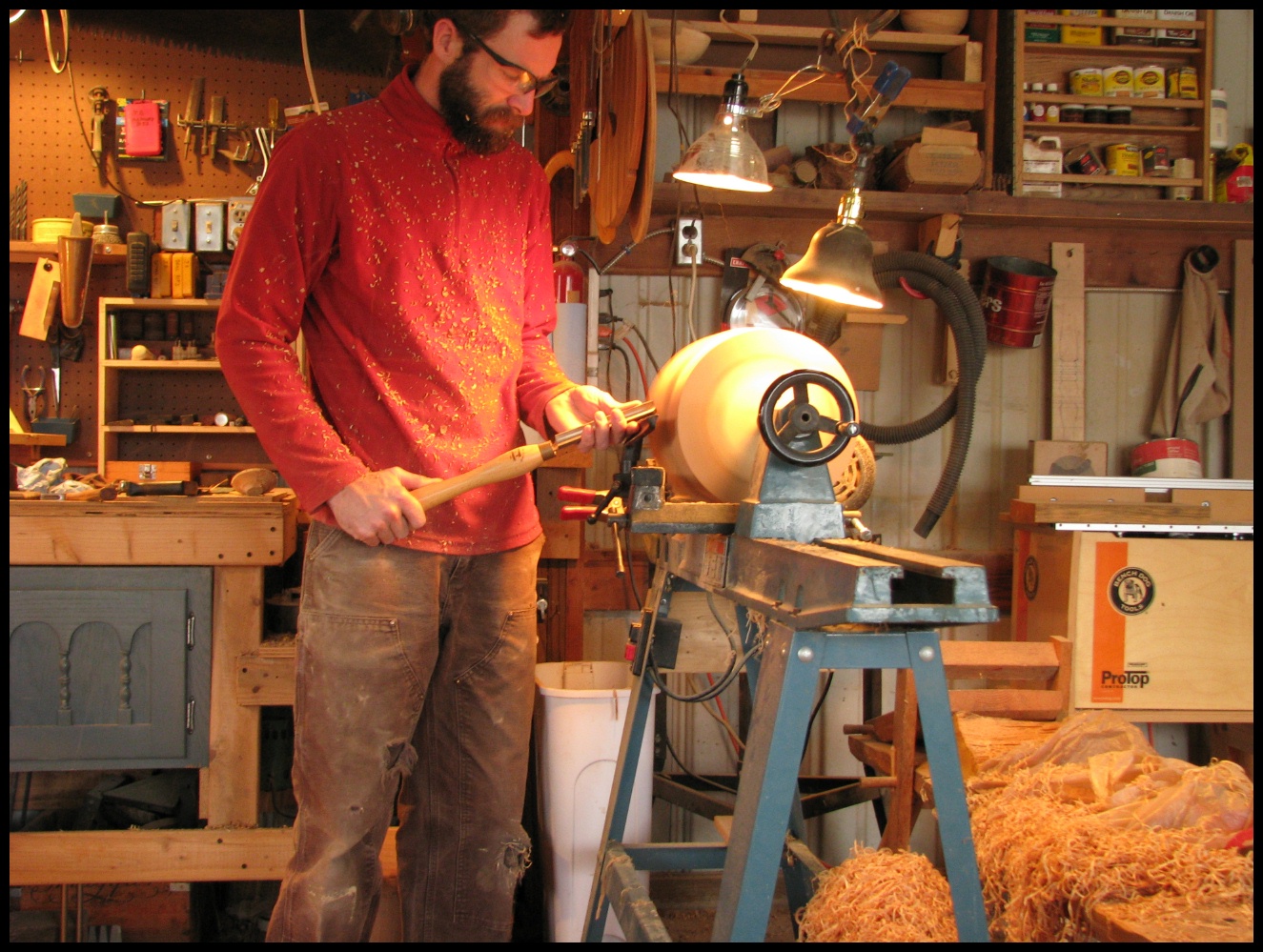
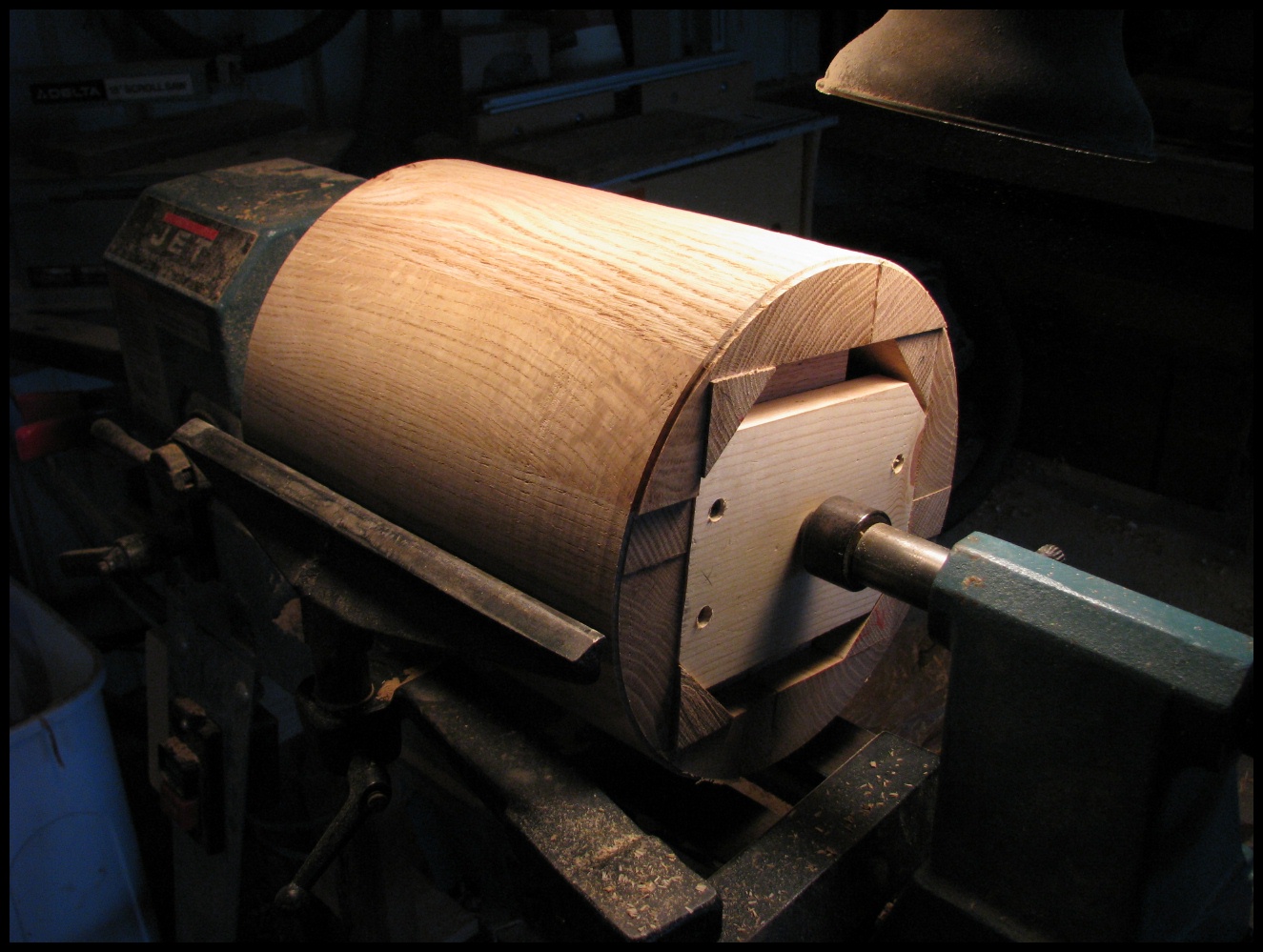
The pedestal, nearing completion here, was turned in segments on a faceplate made more broad with plywood.  The main cylinder was turned between centers.

The pedestal with one coat of min-wax black walnut, and one coat of Watco black walnut, which isn’t as dark as the min-wax, but has a little more red which warms the tone.  I will add at least one more coat of the Watco.

Detail of the large bead, cove, and fillets.

The post oak stool legs.

Walnut rasp handle.


Making of the Pedestal Cylinder:

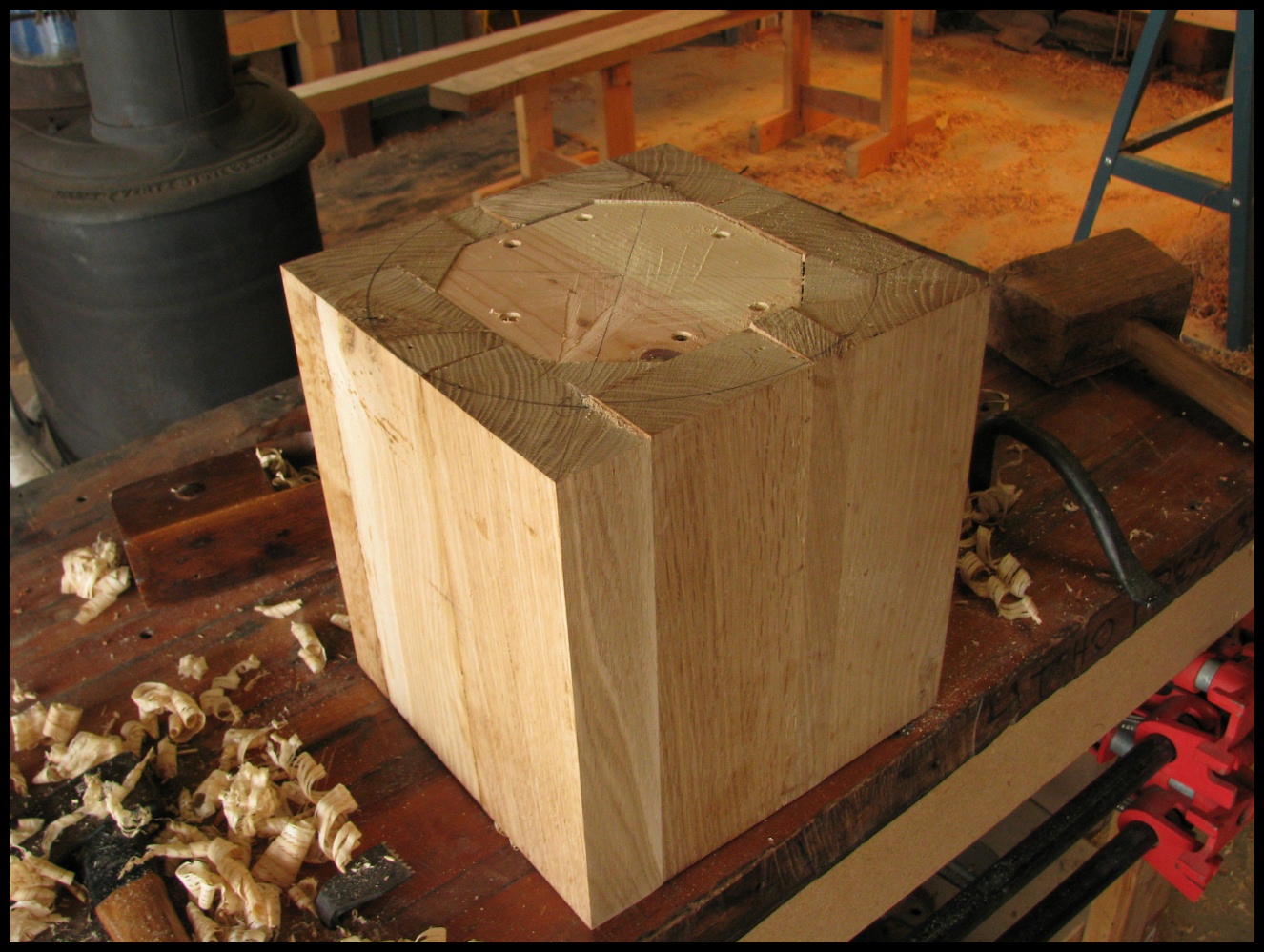
Composite box of 8/4″ white oak (harvested at Boaz, KS).  Recessed blocks were glued inside the box and then pine plates fitted and screwed on either end to allow installation on the lathe.

The corners trimmed at the table saw.

Spinning the box into a cylinder with a roughing gouge.  Very heavy, lots of inertia, but well balanced.

Cylinder.