


white oak
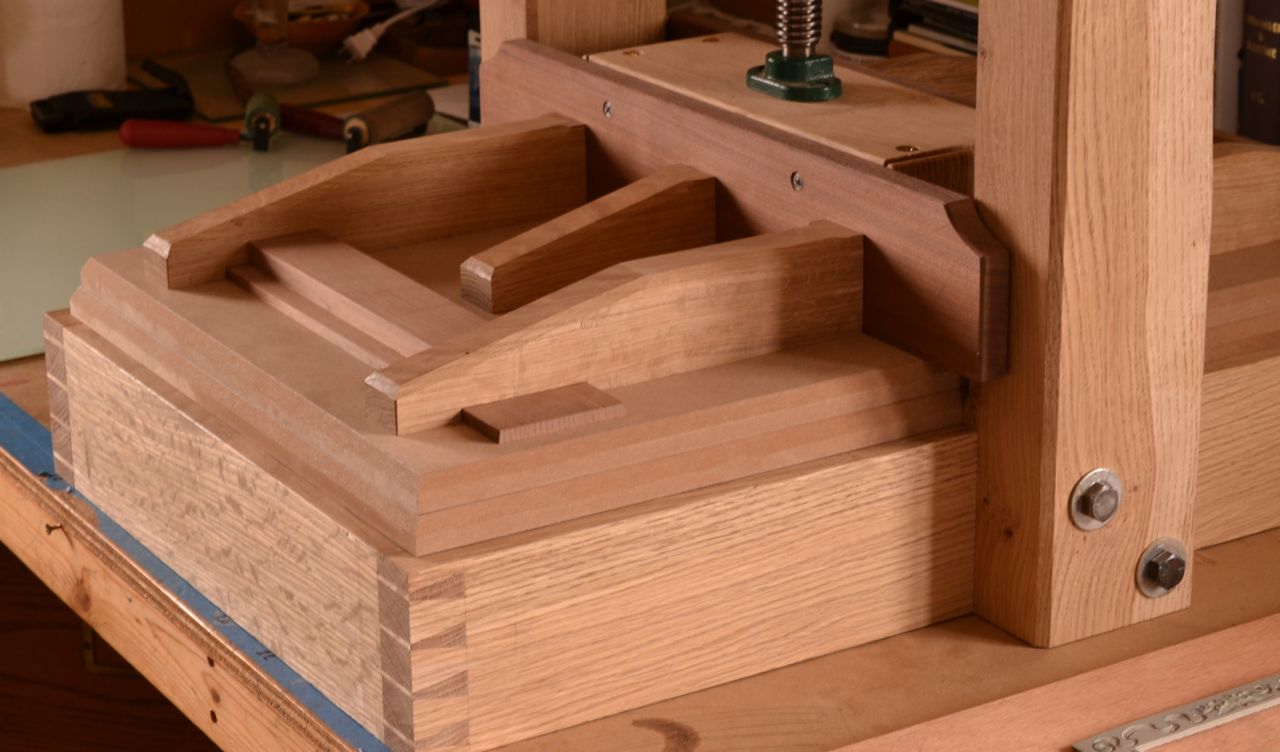
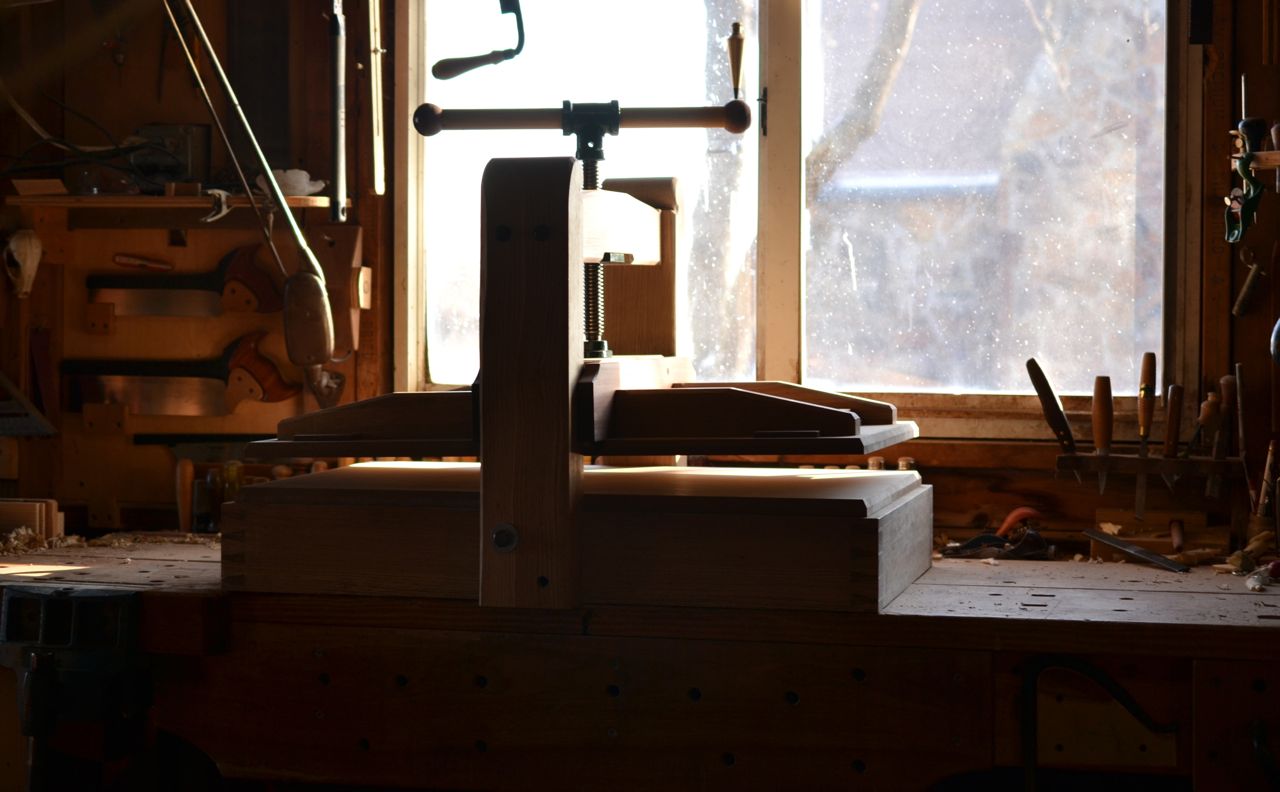
Druckpresse, Quercus Alba


Finished Three Legged Post-Oak Stools
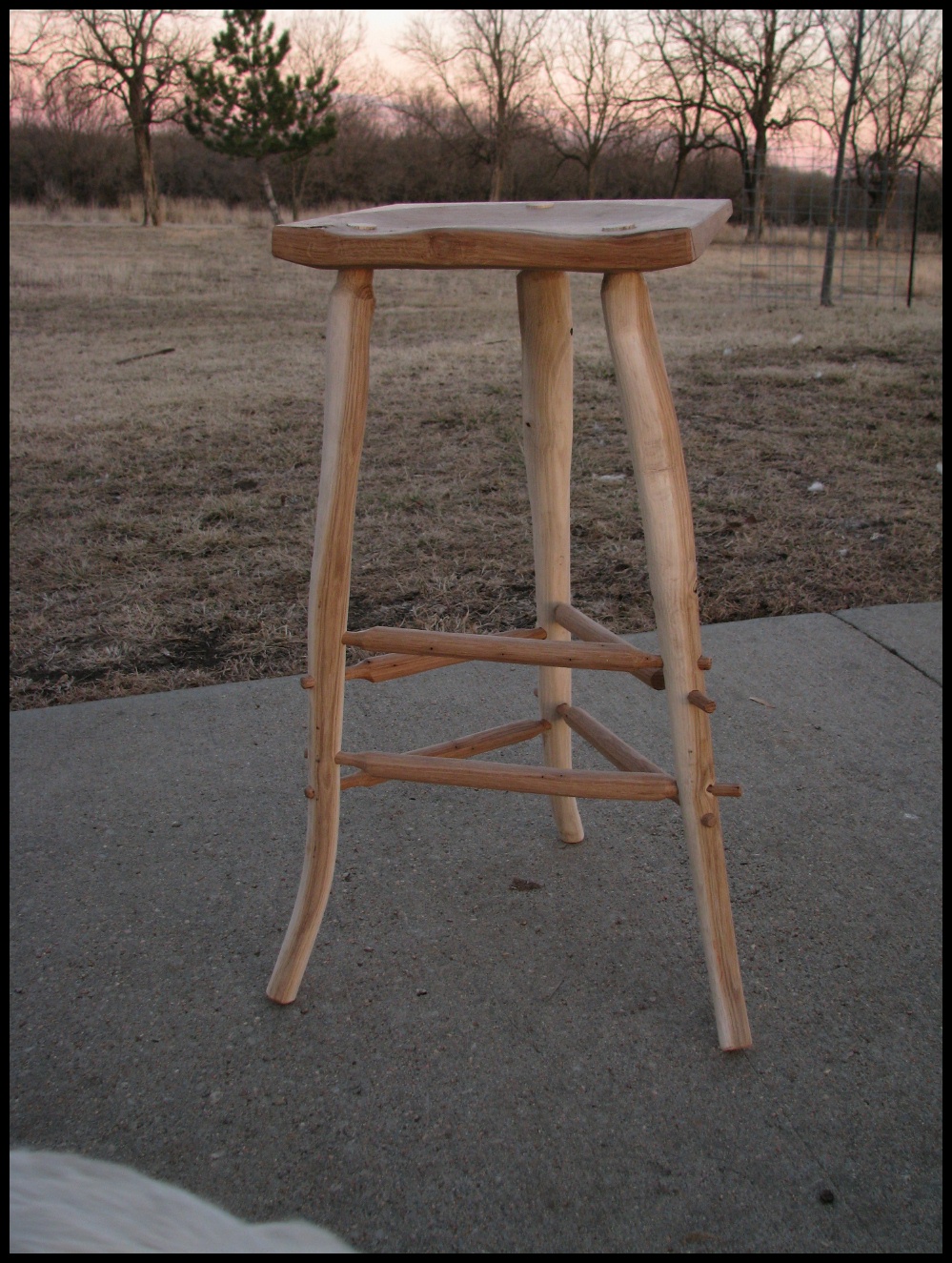
Here are some pictures of the finished three legged stools in post oak. The finish is danish oil and wax.


The will of a 3-legged stool
The stool declared loudly by snapping every black walnut rung I made- that it must be white oak throughout. OK, says I, you win.

Still much work to be done, however, as of yet the most complete sense of a stool that has pretty much dictated itself, and made me sweat in the process, and I still have to build his hopefully less mercurial brother.
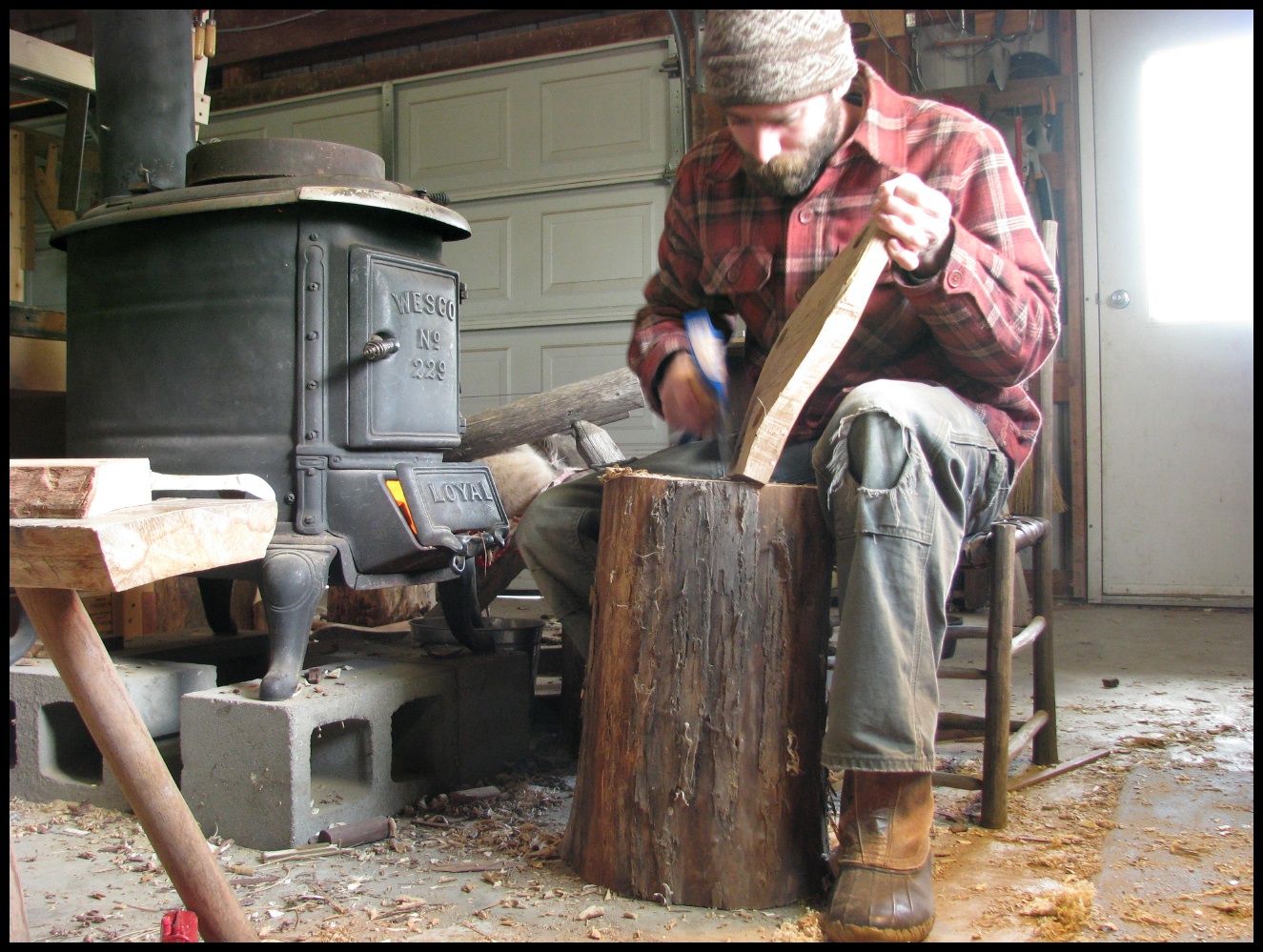
Below: shaping the underside of the seat.


Workshop: White Oak Pedastal and Stool Legs
Here are some pictures of current work from the workshop. First is a white oak Quercus alba pedestal commissioned for a bronze ballerina. Second are three green-bent post oak Quercus stellata (also a white oak variety) stool legs in the midst of shaping and their black walnut rungs that have been roughly shaved for another commission.
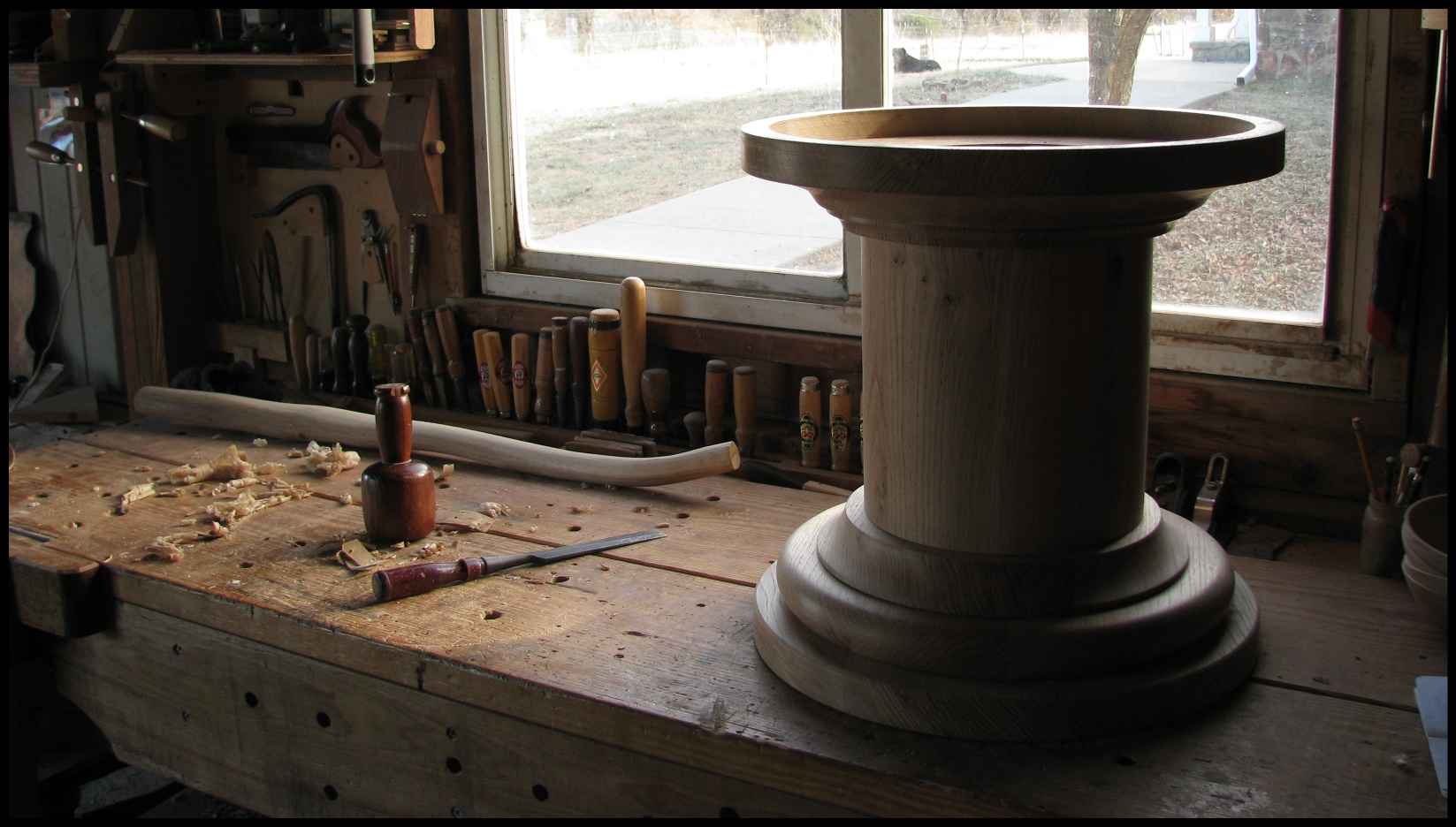
The pedestal, nearing completion here, was turned in segments on a faceplate made more broad with plywood. The main cylinder was turned between centers.
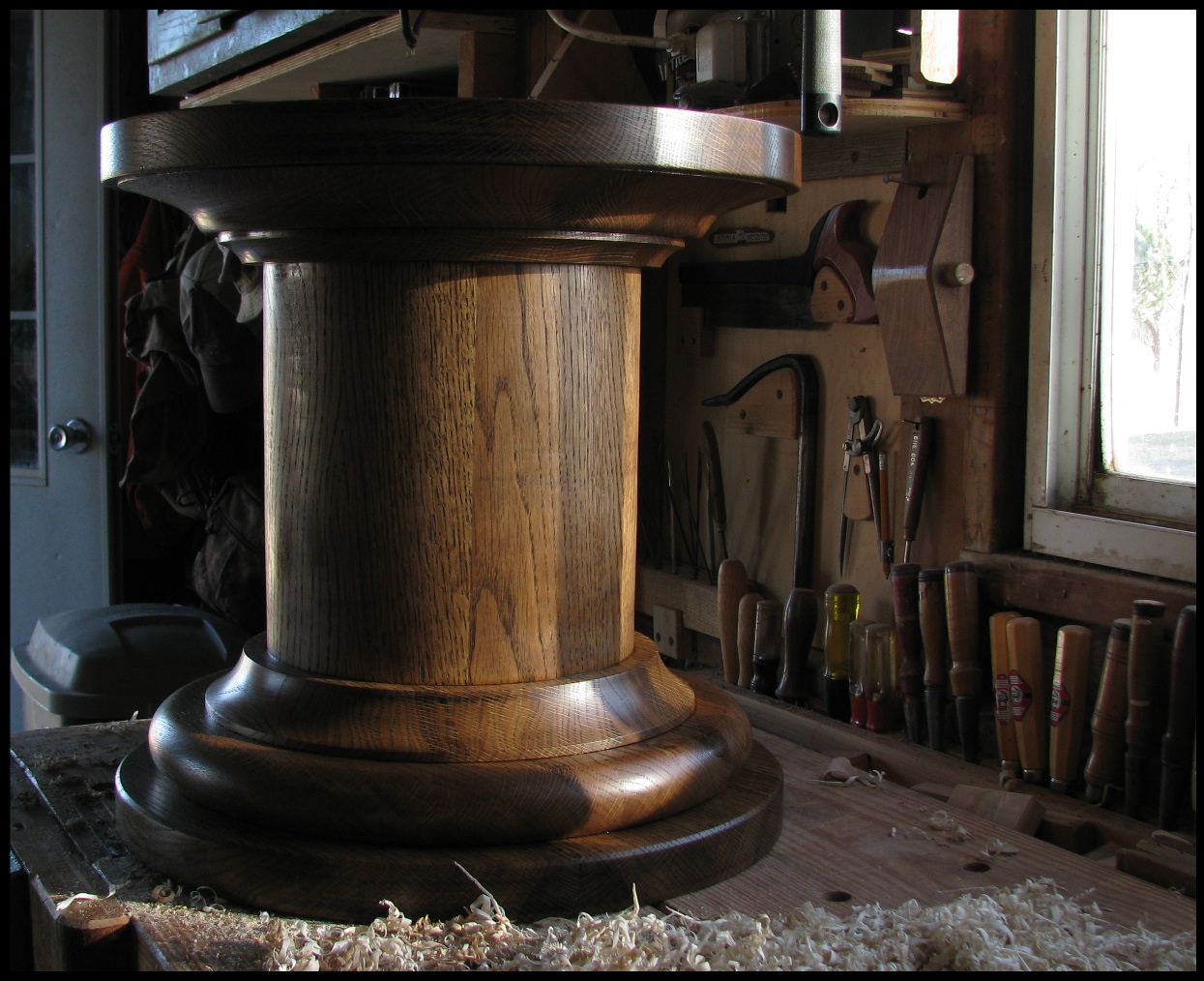
The pedestal with one coat of min-wax black walnut, and one coat of Watco black walnut, which isn’t as dark as the min-wax, but has a little more red which warms the tone. I will add at least one more coat of the Watco.
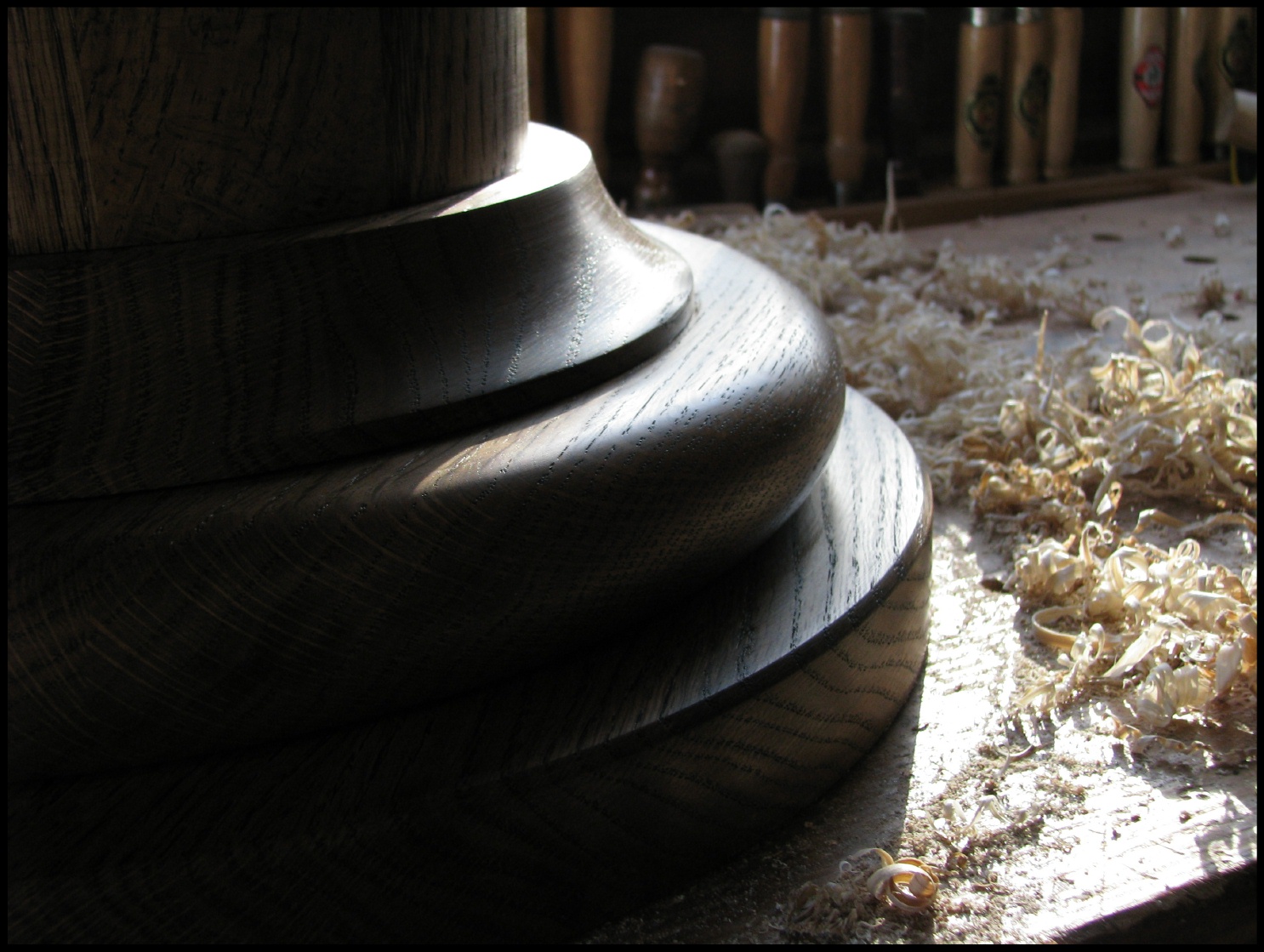
Detail of the large bead, cove, and fillets.

The post oak stool legs.
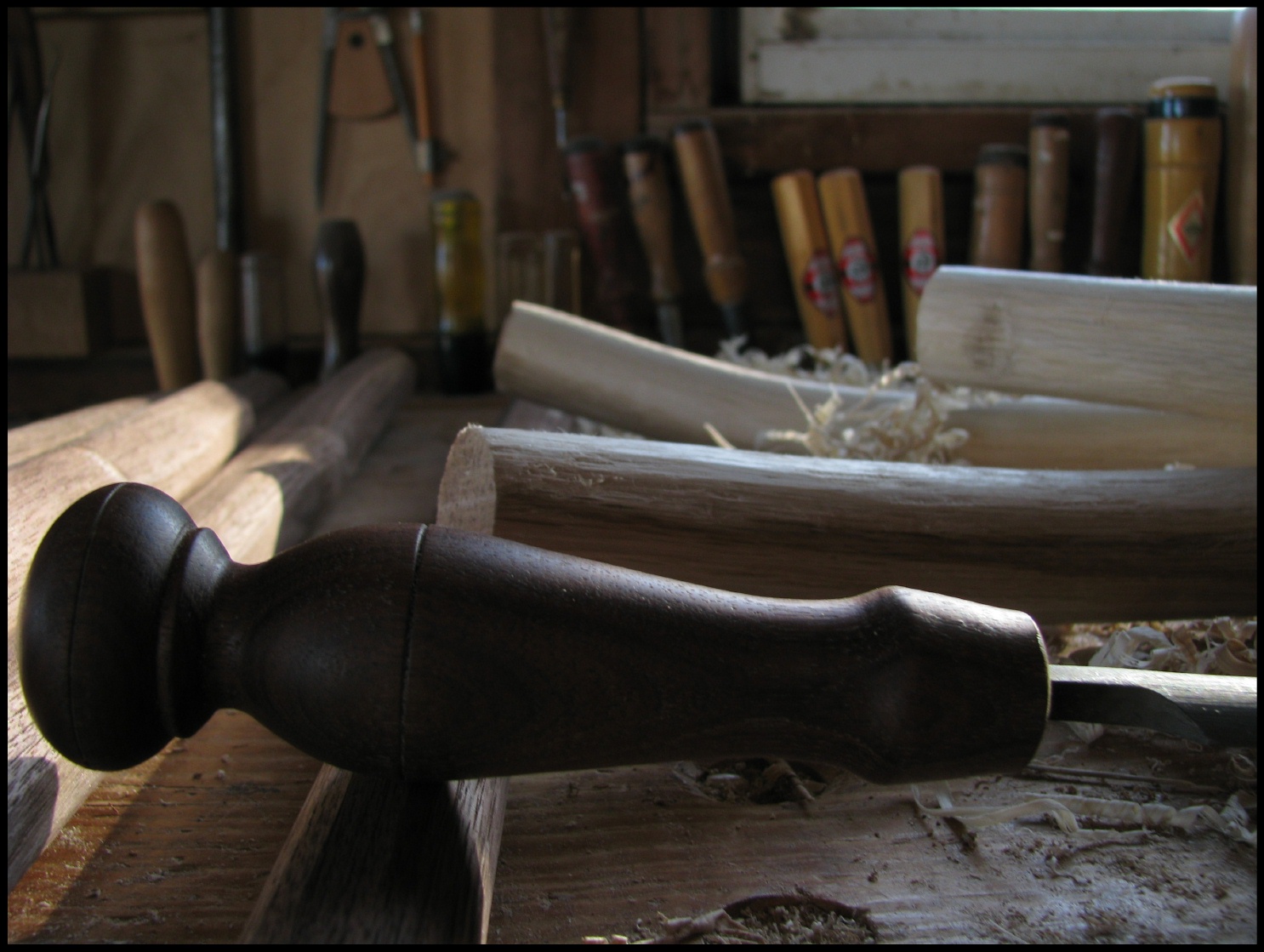
Walnut rasp handle.
Making of the Pedestal Cylinder:
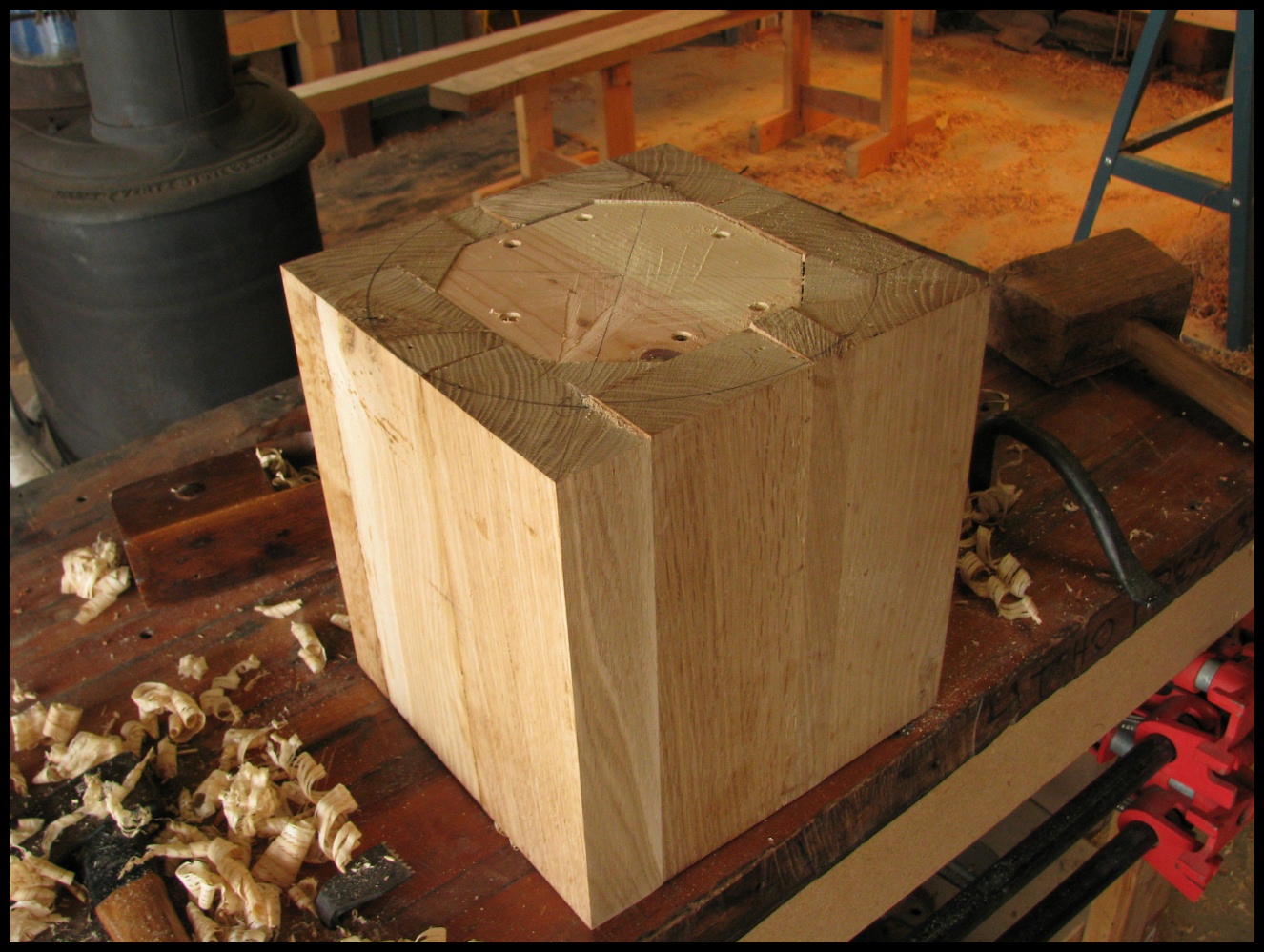
Composite box of 8/4″ white oak (harvested at Boaz, KS). Recessed blocks were glued inside the box and then pine plates fitted and screwed on either end to allow installation on the lathe.

The corners trimmed at the table saw.
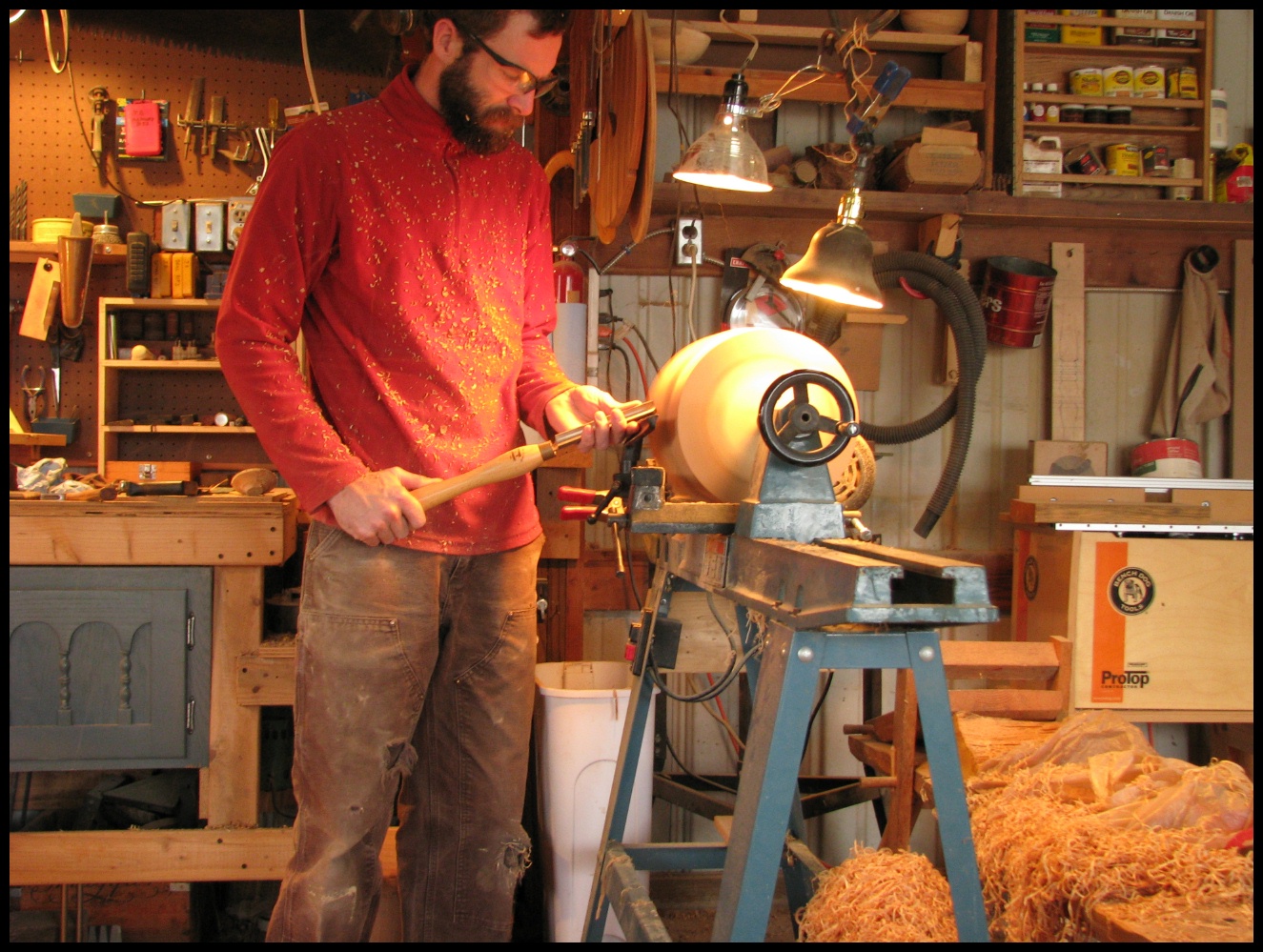
Spinning the box into a cylinder with a roughing gouge. Very heavy, lots of inertia, but well balanced.
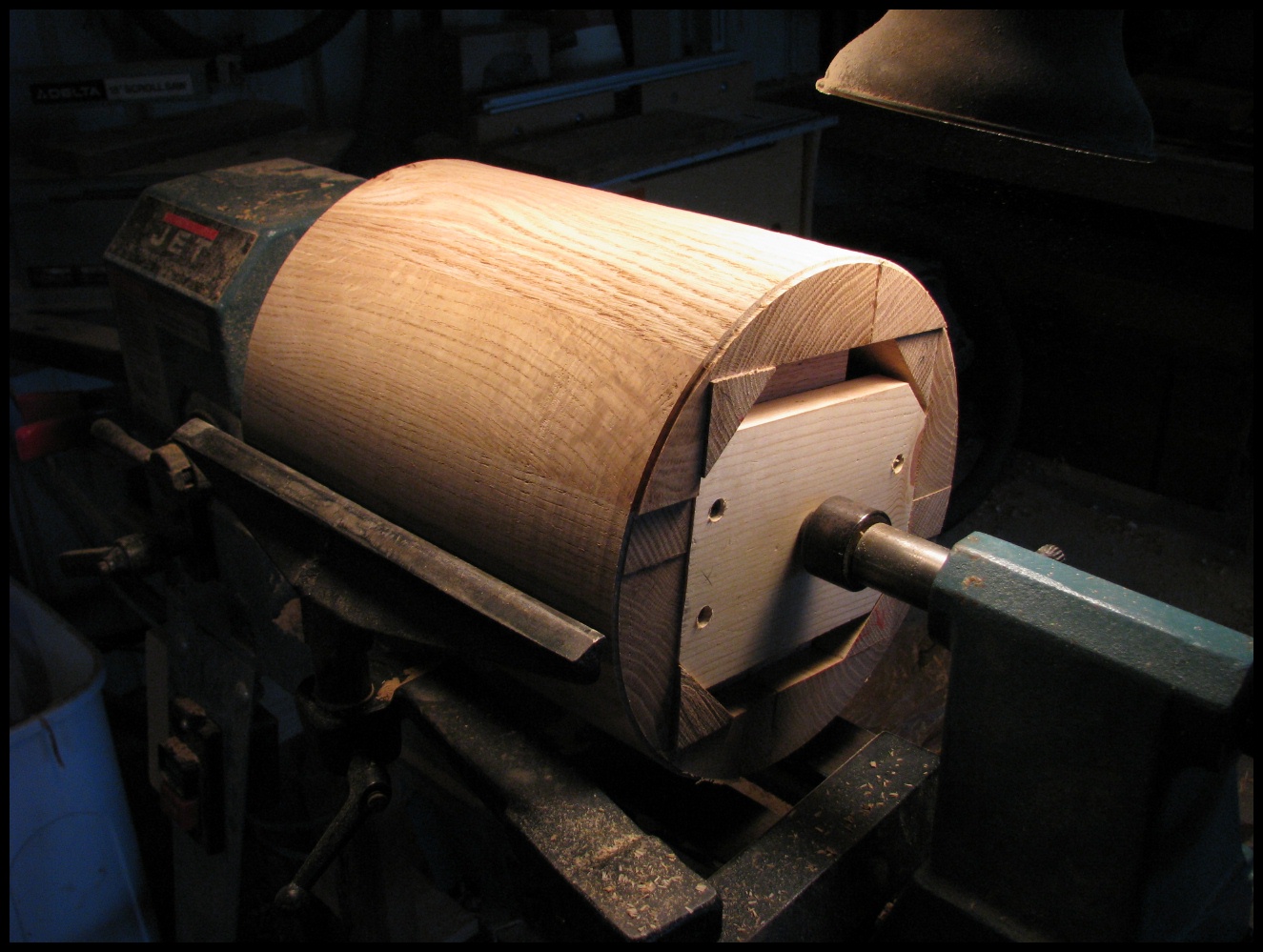
Cylinder.
Three Drawers
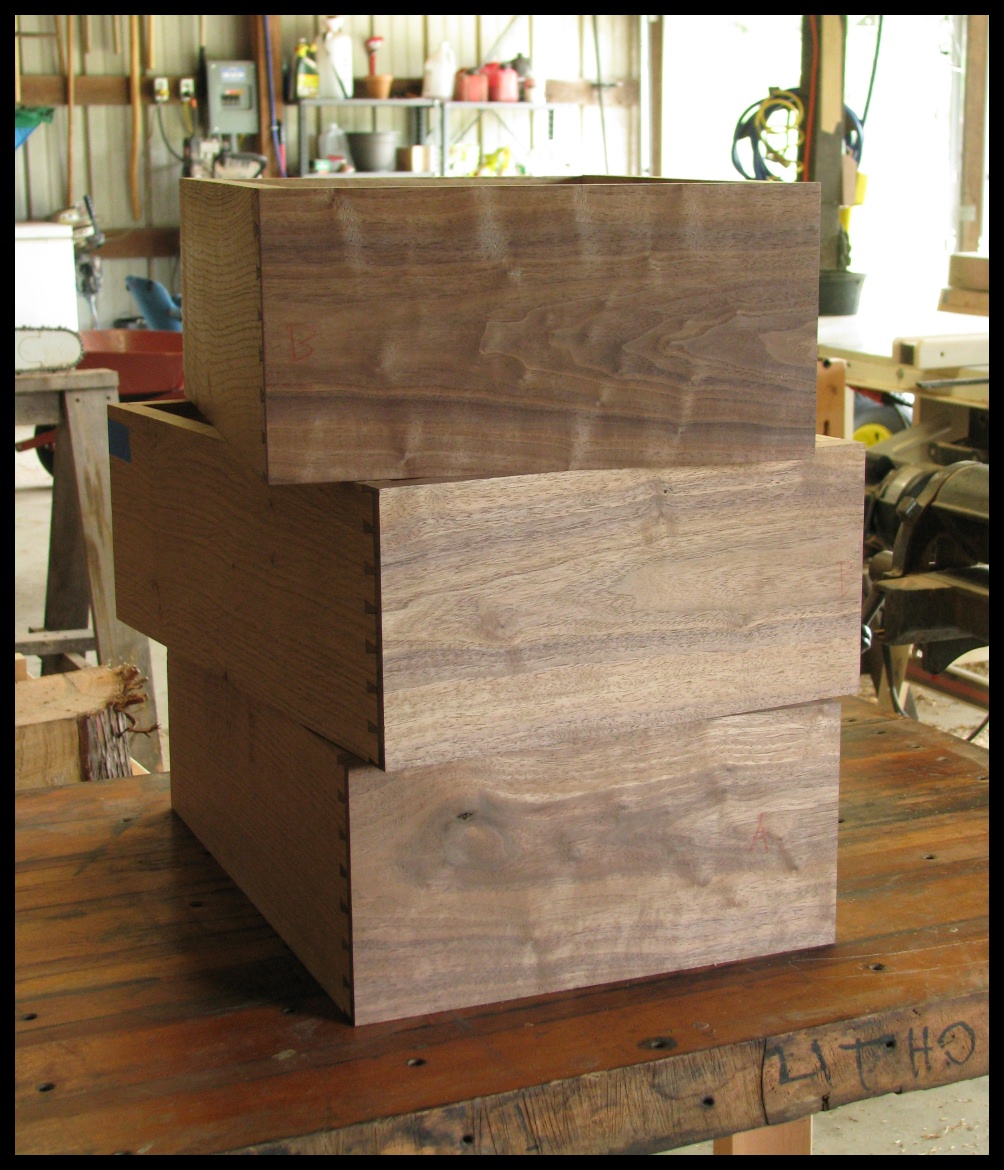
Here are a few photographs of the three drawers in the cherry and walnut hope chest currently in the shop. The faces on the drawers are walnut, while the secondary wood is white oak.


White Oak Painting Cabinet
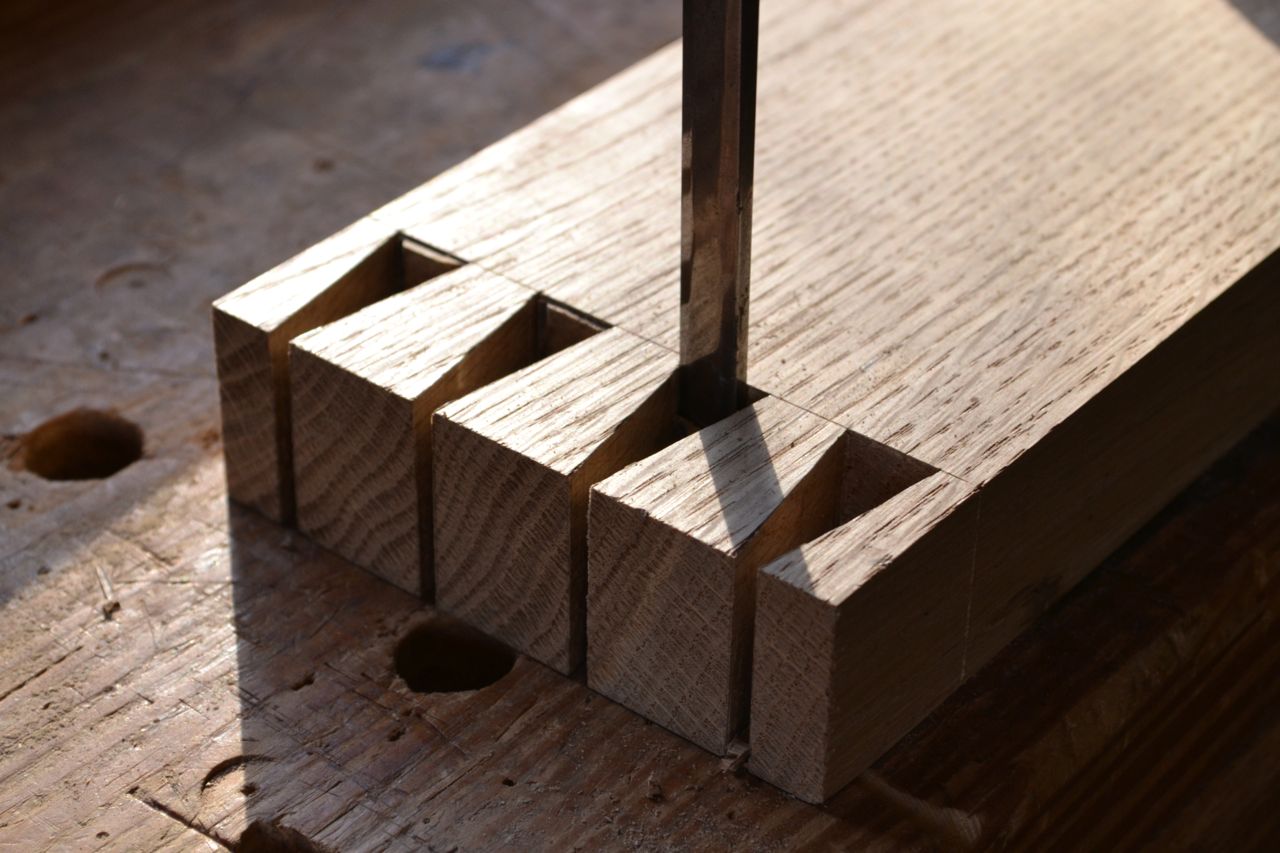
A dovetailed painting cabinet in quarter-sawn white oak. The tree grew along the Van Horn Branch just south of Boaz, Kansas, until it’s bank gave way. The panels will be gessoed and receive an oil painting. The cabinet is only dry fitted. It will not be glued up until the panels are fully prepared. In order to eliminate the center stiles of the frame and panel doors, the inside inch and 1/2 is a full tenon into the rail, while the rest of the panel will float in the customary grooves.


Chair Repair
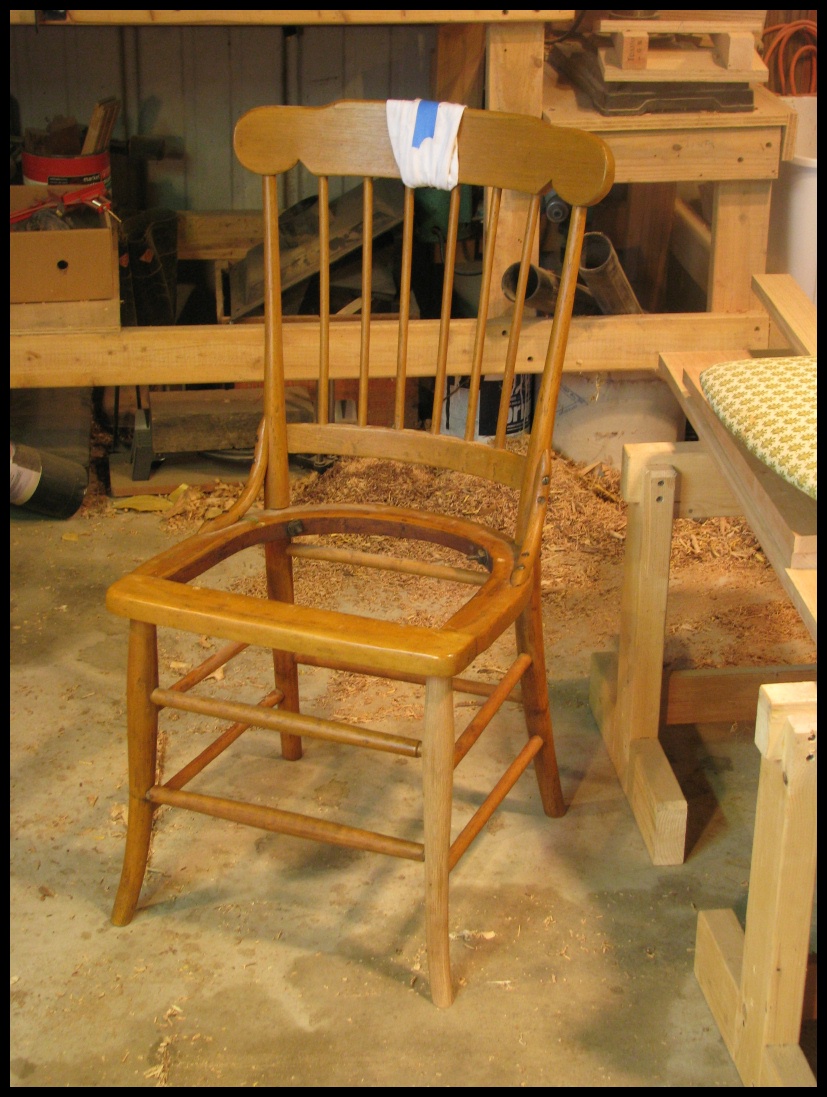
Repairing a hickory and oak chair that was brought to me with a broken front leg.

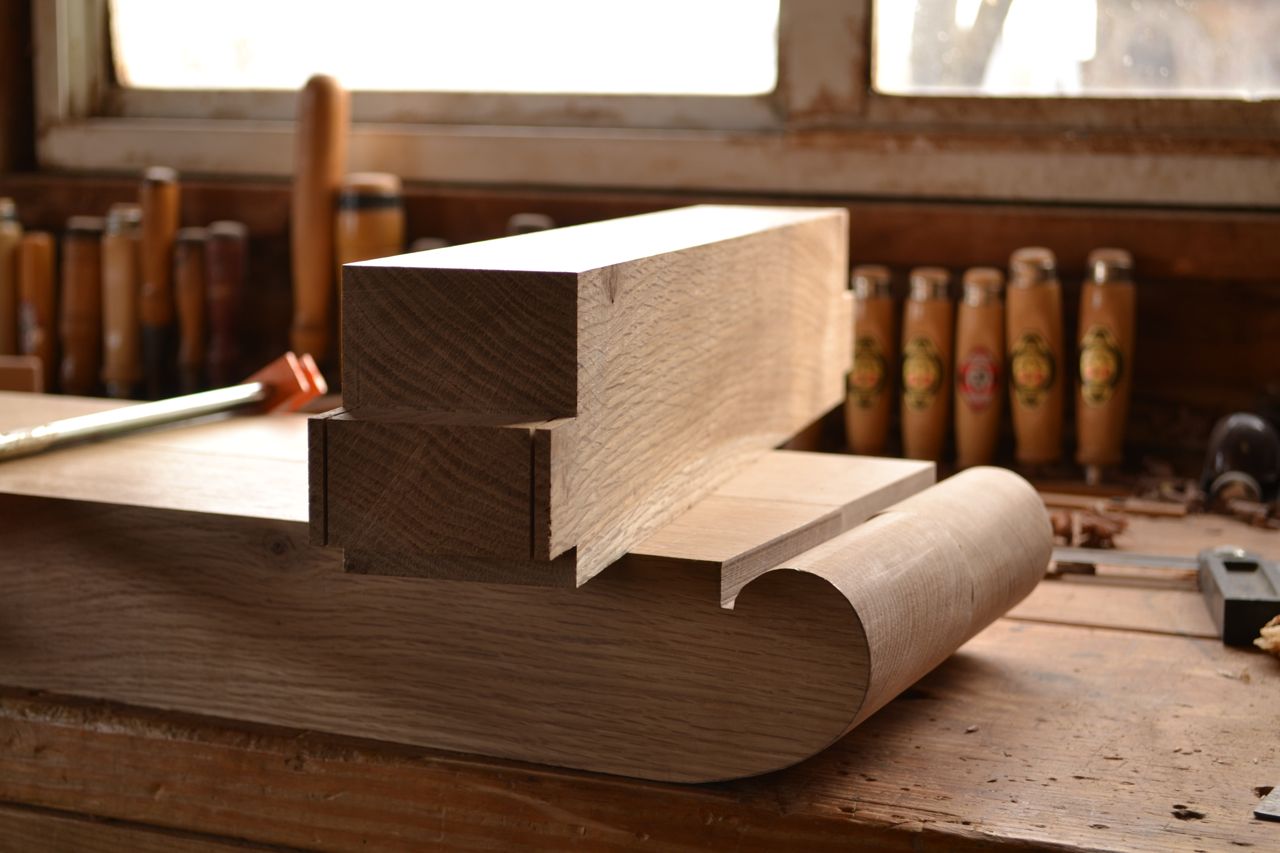
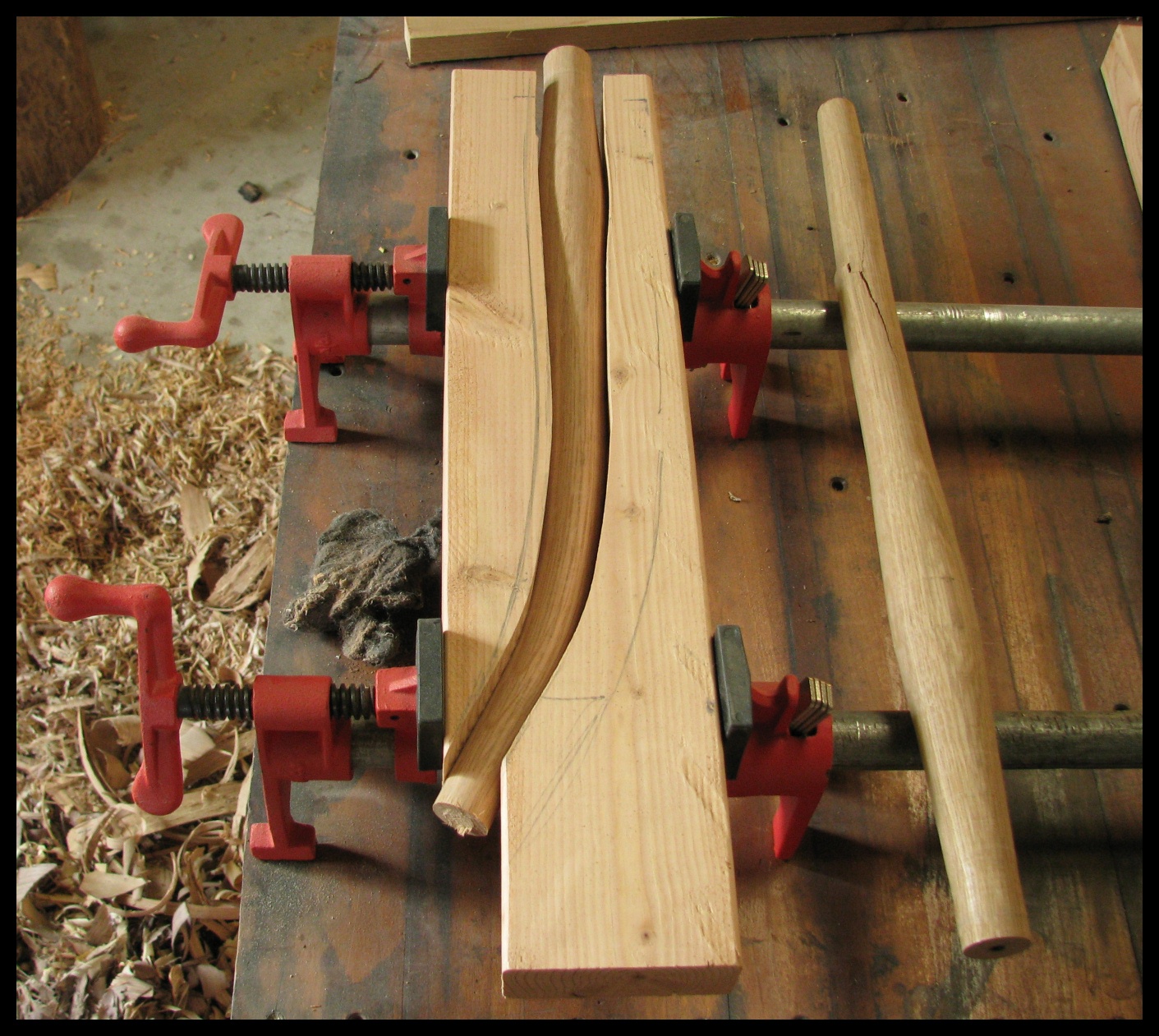
Riven white oak leg, turned on the lathe then bent green in the form.
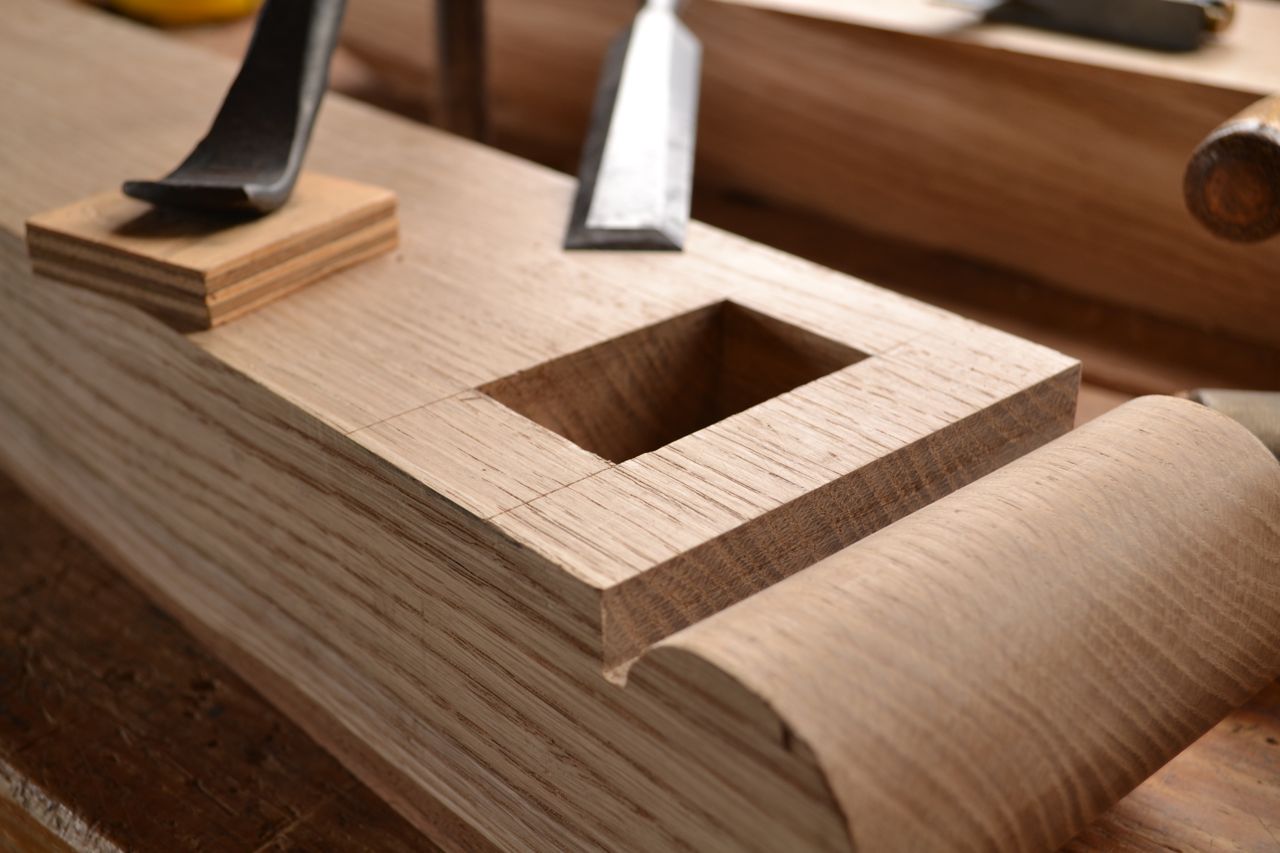
Marking the tenon on the top of the leg.

Splitting the waste from the tenon with a chisel.

Cleaning up the tenon with a rasp.

Workbench top with the leg and tools.

Drilling the holes for the stretchers with a brace.

The chair with its new leg.
Bald Cypress Bowl and More
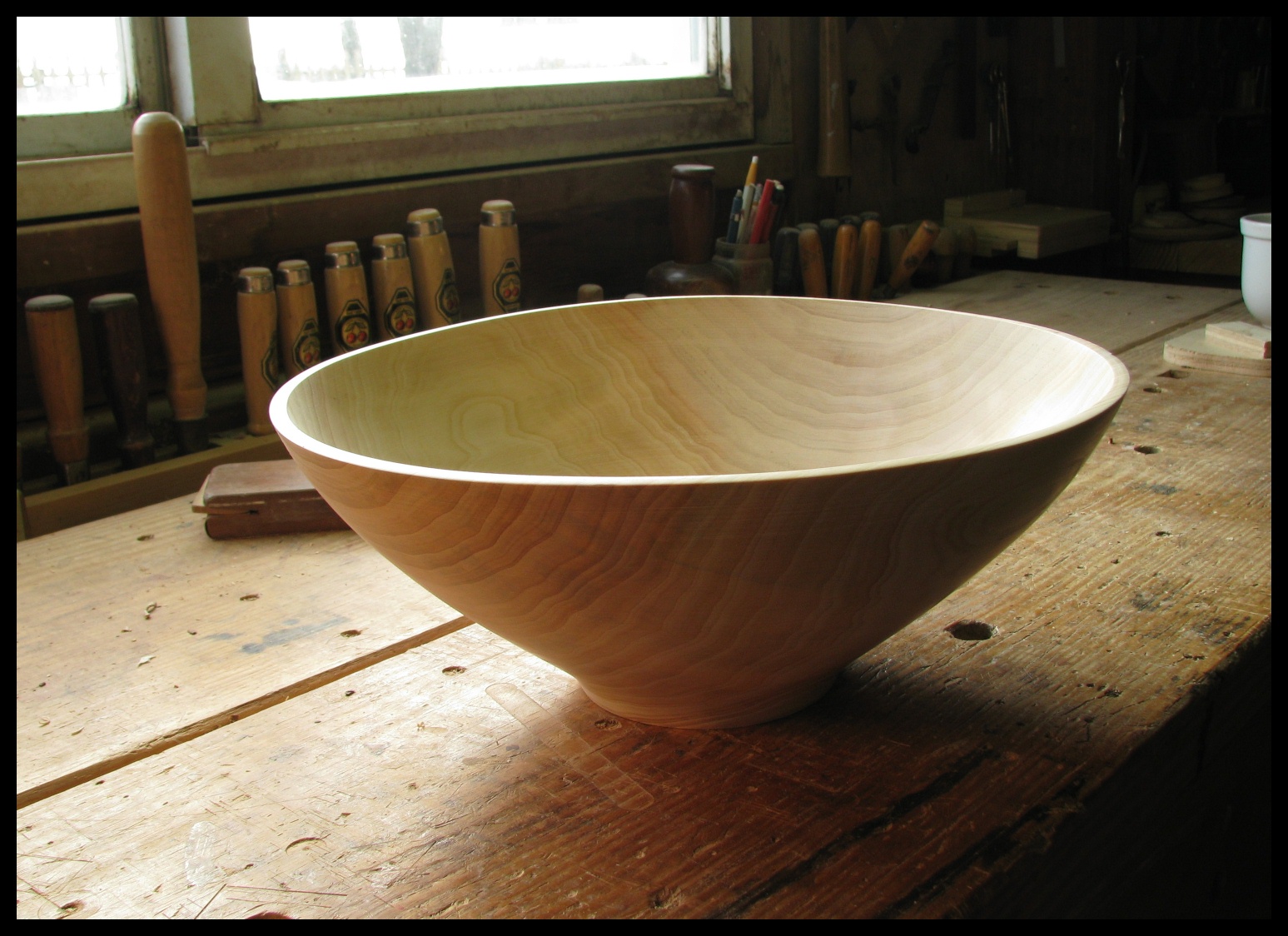
Cypress bowl on the lathe.

Same bowl on the bench.
A few other shop pictures…
A white oak chair leg for a repair job, being bent in a form. The leg was turned and bent while green. You can see my first failed attempt.
flattening a walnut half for turning with a fore-plane

 The School of the Transfer of Energy